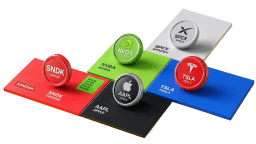
Wall Street Morning Briefing: Waller's Dovish Shift Ignites Risk Assets, Tesla, Crypto Stocks, and AI Software Take Center Stage

 Prefer us on Google


Every Monday to Friday morning, we focus on macroeconomics, US stocks, AI, precious metals, and crude oil, using data to review the market and trends to seize opportunities, produced by PANews.
Rate Hike Trading Suddenly Eases, Gold and Crypto Soar Amid Limited US Treasury Supply
Federal Reserve Governor Christopher Waller stated on Thursday that recent data has shown signs of easing inflation. If the trend continues over the next two weeks, he leans towards keeping the federal funds rate in the range of 3.50%-3.75%. This "conditional dovish" statement quickly suppressed rate hike pricing, with the CME FedWatch showing the probability of a 25 basis point hike in September falling from about 63% to around 50%, and Polymarket dropping even lower to 41%. Risk assets broadly rebounded, with US stocks, Treasuries, gold, and Bitcoin all strengthening.
The S&P 500 rose 1.07%, marking the largest single-day gain since August 4; the Nasdaq Composite increased by 1.40%, and the Dow Jones Industrial Average climbed 1.18%, with all three major indices closing higher for the second consecutive trading day. The Russell 2000 only gained 0.51%, significantly underperforming small-cap stocks. The VIX fear index fell nearly 6% to 14.30, with market sentiment shifting from cautious to optimistic.
However, Waller did not completely pivot dovishly. He emphasized that the next steps largely depend on the August inflation data to be released next week; if the CPI is hot, he would still consider supporting a rate hike. Inflation pressures have not dissipated alongside rate hike expectations, as the August ISM services prices paid index rose to 72.6, the highest since August 2022. The market is closely watching the August non-farm payroll report set to be released on September 4, which is the first key data point Waller referred to as "data over the next two weeks." Jim Bianco of Bianco Research stated that following Waller's remarks, the September meeting could turn into a situation of "six votes for maintaining rates, five votes for a hike, and one undecided," with the crucial vote potentially resting on Powell.
The bond market rebounded, but the momentum was limited. The 2-year yield fell to about 4.3%, and the 10-year Treasury yield dropped to a low of 4.73%; the 30-year yield briefly fell to 5.22%. Goldman Sachs' chief strategist pointed out that the bond market has become a "speed limiter" for stocks, as long-duration bonds are simultaneously facing three pressures: fiscal concerns, diversion of AI investment funds, and sticky inflation. US broker Mischler also warned that after Labor Day next week, there will be concentrated auctions for 3-year, 10-year, and 30-year Treasuries, making supply pressures difficult to alleviate.
The dollar index fell 0.58% to 98.95, dipping below the 99 mark during trading. The yen became the focus of the forex market, with the dollar falling nearly 1.8% against the yen to around 155.76, accumulating a two-day decline of nearly 3%, marking the largest two-day gain since August 2024. The market attributes this to rising expectations of a rate hike by the Bank of Japan in September—overnight index swaps have fully priced in a 25 basis point hike rather than direct intervention.
JPMorgan warned that if the dollar falls below 155 against the yen, approximately 16 trillion to 17 trillion yen, equivalent to about 102.6 billion USD in yen shorts, may be forced to cover, theoretically pushing the dollar down to the 142 to 146 range against the yen. Bloomberg estimates that major market pension and insurance institutions in Japan and Canada hold about 4.6 trillion USD in US assets, but the forex hedge ratio is only 41%, the lowest since 2015; if the hedge ratio rises by 5 percentage points, it could trigger about 230 billion USD in dollar selling.
Gold is the biggest beneficiary of the reversal in rate hike expectations, briefly surpassing 4500 USD, while spot silver rose 2.54%, peaking at 67.32 USD. Bitcoin was also reignited, rising 5.08% yesterday to a high of 82300 USD, the highest since May 11. Crude oil remained relatively restrained at high levels. Risks in the Middle East and the Strait of Hormuz persist, but Saudi Aramco set the official selling price for Arab Light crude oil to the US in October at a premium of 4.60 USD per barrel over Argus sour crude, leading the market to judge that spot tightness is lower than previously expected. US Vice President Vance reiterated that the US will not negotiate with Iran until it stops attacking commercial vessels, and analysts believe the risk of escalation in the Strait of Hormuz remains high.
Compared to crude oil, the refined oil market is tighter. Due to the situation in the Middle East, the flow of refined oil has been obstructed, and market supply remains tight. According to data from the American Automobile Association, the national average retail price for diesel in the US has risen to 5.783 USD per gallon, surpassing the wartime peak in April and setting a four-year high.
AI Software and Data Platforms Lead, Hardware Faces Pressure
Overnight, high-beta US stocks exploded, driven not only by Waller's dovish signals but also by Dell and Snowflake's better-than-expected earnings, reinforcing market confidence in AI infrastructure and enterprise demand. Goldman Sachs' US Broad AI Index rose 1.24%, outperforming the non-AI sector's 0.64%. OpenAI officially released the GPT-6 Astra model, claiming to have trained it with over 100,000 GPUs, achieving new heights in computer operations and cybersecurity, further igniting the narrative around AI spending.
Most of the seven tech giants saw gains, with Tesla leading at 5.42%, Meta up 3.01%, Microsoft up 2.68%, Nvidia up 1.78%, Google and Amazon rising over 1.5%, and Apple up 1%. The Philadelphia Semiconductor Index initially fell over 2% but recovered slightly to close up 0.11%.
The AI software sector has become the strongest narrative in the market, with Snowflake's earnings report exceeding expectations across the board, and product revenue growth accelerating for the third consecutive quarter, leading the market to believe that the commercialization of enterprise AI and data infrastructure is taking shape. Palantir's expanded collaboration with PwC also makes the story of "AI moving from pilot projects to core business transformation" more attractive to investors.
Trading in AI hardware has become more selective; Broadcom's Q3 earnings exceeded expectations, with AI semiconductor revenue soaring 221% year-on-year, but the Q4 revenue guidance was slightly below expectations, and AI revenue guidance was only slightly above expectations, leading to a 2.74% drop in stock price, with an intraday decline of nearly 7%. Ciena, a fiber optics stock, fell over 10%, as its performance exceeded expectations but subsequent guidance and gross margins did not meet high market expectations. Goldman Sachs' Rich Privorotsky believes that the peak valuation may have been established during the rebound in Q2, and the market now needs to prove whether AI spending can sustain itself against economic pressures.
Additionally, the wearable devices and health tech sector is seeing a new IPO trend. Oura has applied for a US listing, aiming to land on Nasdaq with the stock code "OURA". The company's revenue surged 74% to 1.21 billion USD in the nine months ending June 30, with net profit rising from 1.6 million USD in the same period last year to 60.8 million USD; its business model is "hardware sales + membership subscriptions," with a membership subscription gross margin as high as 89%, boasting about 5 million paying members.
Specific Project Actions and Stock Price Fluctuations:
Tesla up 5.42%: The Cybercab was officially launched in Austin and put into limited operation, featuring no steering wheel or pedals, with a target price below 30,000 USD. Currently, about 45 Cybercabs have been registered in Texas, putting pressure on traditional ride-hailing platforms like Uber and Lyft to reprice their autonomous driving business models, while Waymo continues to compete for voice with safety and operational mileage. Morgan Stanley analyst Andrew Percoco pointed out that if 25-50 vehicles can be deployed in Texas for paid passenger service within days to weeks after the launch, the stock price is likely to respond positively.
Volkswagen surged 9%: Plans to expand layoffs to about 100,000 people, with the company's supervisory board approving the "Future Plan 2030" restructuring plan, aiming to cut the number of models by about half, doubling the previously planned layoffs.
SpaceX up 6.42%: The company applied for permission from the US FCC to carry and operate Starlink terminals during the 14th flight test of the Starship. Oppenheimer raised SpaceX's target price to 280 USD, believing it may benefit from a short-term computing power shortage.
Nvidia up 1.80%: The company announced it would acquire the AI open-source platform Hugging Face for about 12.93 billion USD, stating it would keep the platform open. Nvidia also announced that RTX Spark devices equipped with the N1X chip will be shipped in October. Related semiconductor stocks showed mixed performance, with the Philadelphia Semiconductor Index up 0.11%, Micron up 0.22%, Broadcom down 2.74%, Western Digital down 1.63%, and Seagate down 1.23%.
Palantir up 7.71%: The company expanded its collaboration with PwC to help enterprises apply AI in supply chain, customer management, and network risk. Related AI application software stocks rose broadly, with ServiceNow up over 6%, Salesforce up 2.92%, Adobe up over 2%, and Datadog up nearly 3%.
Dell Technologies up 4.91%, hitting a record high. The market continues to trade on demand for AI servers and enterprise AI infrastructure, with Dell's previous performance and AI server orders enhancing investor confidence in the hardware deployment cycle.
Innovative drugs surged: Summit Therapeutics rose 17.33% (partner Kangfang Bio's Ivosidenib phase III clinical trial achieved positive results), and Hutchison China MediTech rose 17.19% (driven by a deal with GSK worth up to 1.3 billion USD for innovative drug licensing).
Post-earnings stock performance: Snowflake rose 16.55%, hitting a record high (Q2 revenue grew 35% year-on-year to 1.547 billion USD, with product revenue growth accelerating for the third consecutive quarter, and full-year product revenue guidance raised); Broadcom down 2.74% (the company's AI semiconductor revenue grew 221% year-on-year, but Q4 revenue guidance was below high market expectations); Ciena down 10.36% (despite exceeding expectations, subsequent guidance and gross margins did not meet high market expectations for the optical communication chain); Huiyu Technology up 5.04% (the company's quarterly revenue and profit exceeded market estimates, and full-year guidance for FY2026 and FY2027 was raised); ChargePoint, a new energy company, surged 74.95% (quarterly revenue exceeded guidance, gross margin hit a record high, and losses narrowed significantly).
Lululemon fell over 18% after hours: The company once again lowered its full-year performance expectations, forecasting a 5% to 7% year-on-year decline in FY2026 revenue, down from a previous expectation of flat to a 1% decline; full-year earnings per share are expected to be between 9.48 and 9.73 USD, down from 10.95 to 11.15 USD previously. Q2 revenue fell 4% year-on-year to 2.42 billion USD, with same-store sales down 9%.
Other giants: Meta up 3.01%, Google up 1.59%, Amazon up 1.54%, Apple up 1.00% (facing a lawsuit from BASF subsidiary trinamiX in Texas, alleging that Face ID technology in iPhone 15 to 17 series and iPad Pro infringes on 7 related patents); Microsoft up 2.68% (the company will begin disclosing Azure cloud business revenue quarterly, with the latest quarter's Azure revenue reaching 29.4 billion USD).
Upcoming Focus:
September 4 (Friday) 20:30 US August Non-Farm Payrolls, Unemployment Rate, Average Hourly Earnings: This week's top global market data, with expectations of about 55,000 to 58,000 new non-farm jobs and an unemployment rate of 4.1%; if employment and wages are stronger than expected, it will strengthen September rate hike trading, pushing the dollar and short-term bond yields up, while the Nasdaq, gold, and long-duration growth stocks may come under pressure; if non-farm data shows significant weakness, it will weaken Waller's hawkish pricing, potentially leading to rebounds in US Treasuries, gold, and tech stocks.
September 6 (Sunday) OPEC+ Monthly Meeting of Seven Countries: The meeting will assess the implementation of the September production increase of 188,000 barrels per day and global crude oil supply and demand. If US-Iran tensions do not ease, OPEC+ wording will directly affect Brent and WTI risk premiums; if signals of maintaining production discipline or cautious production increases are released, oil prices may find support; otherwise, they may suppress energy stock gains.
-- Price
This content is provided for general informational purposes only and doesn't constitute financial, investment, legal, or tax advice. Any events, rewards, online promotions, or related information mentioned herein should not be considered a recommendation, solicitation, or invitation to purchase, sell, trade, or otherwise deal in any crypto assets. Crypto assets are highly volatile and may result in loss. The availability of WEEX services, products, and related events may vary by region. You are responsible for ensuring that your participation is in accordance with applicable local laws and regulations.
You may also like
Cybercrime, Child Gambling, and Underground Banking

Fomo Earns $1.2 Million Daily, Why Are Two Major Exchanges Nervous?

iPronics Secures $125 Million in Series B Funding with Participation from Nvidia
Trader Taiki Maeda: Why Did He Sell ZEC at the Bottom and Buy Back at a High Point?

Vice President Vance Asks Central Bank for Interest Rate Cut

Bitcoin (BTC): China Turns Off the Credit Tap, the Market Remains Unfazed (For Now)

Giertych Wanted to Extort Information Regarding Zondacrypto? Suszka's Sister Reveals the Background
Japan's 10-Year Bond Yield Surpasses 3%, BTC Drops to $77,000

New Rules for Electric Scooters and Fines for Drivers Introduced in Ukraine

Fires in Skarżysko-Kamienna and Lublin are not a coincidence. Government confirms sabotage
Sorare's Premier League Sponsorship Funds Frozen

Brussels Targets €10 Trillion in Dormant Savings

Harry Potter Pen Used by Messi for His Retirement Letter Costs 22 Dollars

Crypto Scam in Saint-Tropez: Villa Sale Ends in a Trap Worth Over 1 Million Euros

Stablecoins: The Hidden Gear Behind American Debt Revealed
Bitcoin: American Bitcoin Achieves Record Production Despite Cost Debate

Iran claims it shot down a U.S. MQ-9 Reaper drone near the Strait of Hormuz
Israel to Build Air Defense System for Greece for 3 Billion Euros
AI Scam Hits $3.2 Million Per Incident, Crypto Security Battlefield Shifts from 'Code' to 'Scams'

Bitcoin Hard Fork Scheduled for September 1, OCEAN Pool Faces Leadership Changes

Japanese Opposition Alliance on the Brink of Collapse After Failed Merger

Wall Street Morning Brief: Hawkish Waller Interrupts Computing Frenzy, Cloud Giants Thrive on 'AI Rent', Price Hikes Hit Upstream
US Debt: Grayscale Identifies 3 Cryptos That Could Benefit

Core Lightning Releases Update 26.06.7 After Detecting Vulnerabilities
Lawmakers accuse RFK Jr. of misleading the Senate and call for an investigation
![[Energy Analysis] The Next Bottleneck for AI Is Not GPUs... It's the Power Grid](/public-static/16_c530d6305c.png?format=avif)
[Energy Analysis] The Next Bottleneck for AI Is Not GPUs... It's the Power Grid
Investment Options for FAL: Only 8 ONs, Green Light for Sovereign Bonds, and Currently Excluded Provincial Bonds
Bitcoin Mining Uses 30% of Paraguay's Electric Energy: Crisis Warned for 2029
Cloud 9, the galaxy candidate with no stars

Federal Reserve Holds Rates Steady at 9-3 Vote, Stock and Long-Term Bond Markets Shaken
Cybercrime, Child Gambling, and Underground Banking
Fomo Earns $1.2 Million Daily, Why Are Two Major Exchanges Nervous?
iPronics Secures $125 Million in Series B Funding with Participation from Nvidia
Trader Taiki Maeda: Why Did He Sell ZEC at the Bottom and Buy Back at a High Point?
Vice President Vance Asks Central Bank for Interest Rate Cut
Bitcoin (BTC): China Turns Off the Credit Tap, the Market Remains Unfazed (For Now)