
Central Bank Strengthens Control: Cryptocurrency Sales to Be Monitored Due to Misleading Risks

 Prefer us on Google


The Bank of Russia is preparing a monitoring system for how financial organizations structure the sale of cryptocurrencies and other digital assets to private clients. The main risk for the regulator is misleading: a situation where a person is shown only the attractive side of investments while the volatility, technical threats, and lack of familiar guarantees are downplayed. This was stated by Deputy Chairman of the Central Bank Mikhail Mamuta.
Why the Digital Asset Market is Under the Central Bank's Attention
The Russian cryptocurrency market is just entering the regulated field, and at this stage, according to the Central Bank, it is especially important not to allow unscrupulous players to take advantage of the uncertainty. Cryptocurrency may appear to a novice as a quick way to earn money, but in practice, its price can change sharply even over a short period.
Mikhail Mamuta emphasized that the regulator's task is not just to allow access to individual assets but to ensure that banks and brokers honestly explain to clients what they are dealing with. Bitcoin, Ethereum, and other blockchain-based instruments are not like bank deposits: there is no guaranteed return, and the market risk fully rests with the investor.
The regulator fears that an information vacuum may arise in the young market. In such an environment, it is easier for sellers to emphasize potential profits while downplaying sharp declines, cybersecurity issues, and the technical peculiarities of asset storage. Monitoring should reduce the likelihood that unqualified investors make decisions based on incomplete or distorted information.
Which Crypto Assets Have Been Approved
The Bank of Russia has already outlined a list of assets that may enter public platforms. It includes the largest representatives of the market: Bitcoin (BTC), Ethereum (ETH), and the stablecoin Tether (USDT). This choice was not arbitrary: the regulator focused on parameters that allow assessing the maturity and stability of the instrument.
The key criteria for admission are as follows:
- Criterion: Market Capitalization. Description: The scale of the asset in the global market.
- Criterion: Average Daily Trading Volume. Description: A measure of liquidity and real demand.
- Criterion: Price History. Description: At least five years of trading on foreign exchanges, allowing for the assessment of the asset's behavior under different market conditions.
In essence, only the largest and time-tested crypto assets are allowed into public circulation. For Russians without qualified investor status, these may represent a limited entry into the digital finance segment, where each blockchain token carries its own set of risks.
How the Regulator Will Look for Signs of Fraud
Control will not be limited to a formal check of documents. The Central Bank intends to analyze advertising, presentations, consultations, and other communications of financial organizations with clients. Special attention will be paid to formulations that may create the impression that income from crypto assets is almost guaranteed.
For a market where banks, brokers, online digital currency exchange services, and large platforms like Bybit operate side by side, transparent risk disclosure becomes a key condition for trust. If a person is offered to buy a digital asset, they must be explained in advance that this is not a bank transaction with a clear set of protective mechanisms, but an investment in a volatile instrument.
Separately, the regulator will look at how fully companies disclose technical risks, cybersecurity issues, and the lack of insurance guarantees typical of classic banking products. In other words, the Central Bank wants to work proactively: to prevent attempts to present a speculative asset as a reliable and safe investment rather than dealing with the consequences after mass complaints.
-- Price
How to Sell Cryptocurrency and Withdraw Money
Cryptocurrency can be converted into rubles or other fiat currencies by finding a buyer or a platform that supports the exchange. Most often, sales are made through exchanges, P2P transactions, or crypto exchanges; offline transactions also occur but require particularly careful verification of the counterparty.
- Exchange: assets are sold through a trading terminal, and money is withdrawn in an available way; liquidity, fees, and withdrawal rules are important here.
- P2P: the seller chooses the buyer, fixes the rate, and receives payment directly; reliability depends on the counterparty's rating, limits, payment confirmation, and arbitration work.
- Exchange: the service shows the rate and payment method in advance; before the transaction, it is worth checking the reputation, fees, reserves, and processing speed.
- Offline: the settlement occurs directly between the parties; this option increases the requirements for security and verification of the source of funds.
Where to Trade and How to Reduce Risks
For trading and selling cryptocurrency, one usually chooses between large exchanges, P2P platforms, and exchanges. They should be compared not just by one rate but by reliability, fees, withdrawal speed, liquidity, quality of support, transparency of rules, and client verification requirements.
It is possible to earn from cryptocurrency trading due to price changes, but profit is not guaranteed: the result is influenced by volatility, liquidity, fees, the chosen strategy, discipline, and the ability to limit losses in time.
Selling Cryptocurrency in Russia: Taxes, Banks, and Security
For a resident of the Russian Federation, the process usually boils down to several steps: choose a method of sale, verify the platform or counterparty, fix the rate and fees, conduct the transaction, receive fiat money, and keep documents related to the operation.
Income from the sale of cryptocurrency may be subject to tax. It is usually declared as personal income: it is important to keep confirmations of purchase, sale, rates, fees, and receipt of money to correctly calculate the tax base.
A bank may stop or check a transaction if the transfer looks unusual: a large amount, a series of similar receipts, payments from different people, dubious purpose of the transfer, or connection with suspicious counterparties. Reducing risk helps to have a clear transaction history, documents related to the operation, moderate limits, and avoiding schemes with other people's cards.
Minimum Security Measures: enable two-factor authentication, check the website address and details, do not share codes from SMS, do not confirm the transaction until the actual receipt of money, use escrow on P2P, and study the rating of the platform or buyer in advance.
This content is provided for general informational purposes only and doesn't constitute financial, investment, legal, or tax advice. Any events, rewards, online promotions, or related information mentioned herein should not be considered a recommendation, solicitation, or invitation to purchase, sell, trade, or otherwise deal in any crypto assets. Crypto assets are highly volatile and may result in loss. The availability of WEEX services, products, and related events may vary by region. You are responsible for ensuring that your participation is in accordance with applicable local laws and regulations.
You may also like
Crypto: Solana ETFs Record Their Biggest Day of the Year
Xbox and PlayStation Reassess Their Multiplatform Strategy, Emphasizing Exclusivity Again

Interview: Aptos CEO on AI Agents, Stablecoins, and Machine Commerce
BlackRock Lowers Minimum Investment for Bitcoin ETF to $1 Million
Previously Bearish on Crypto Market, Jiang Zhuoer Quickly Turns Bullish: Ethereum is the Engine of the Bull Market
Michael Saylor Targets Bitcoin Orthodoxy: 'Satoshi Is Not a Prophet'

Strive by Vivek Ramaswamy Becomes the 7th Largest Public Holder of Bitcoin
The Best AI Models for Trading: A Comparison of the Top 10 Models

Enflame, the Chinese competitor of Nvidia in AI chips, goes public

AI is in a Credit Expansion Phase: The Stronger AI Becomes, the More the Federal Reserve Needs to Cut Rates
Short-Term U.S. Treasury Holdings Decrease by $29 Billion, Testing Demand for Stablecoins

Analysis of Mining Machine Asset Depreciation and Tax Cost Recovery
Bitcoin Transfer by Metaplanet: Sale or Just Custody on Coinbase?
Opinion: The Bull Market Has Arrived, How to Position in This Cycle?

80% of Gas Stations in Russia Face AI-95 Gasoline Shortage
Bitcoin Bull Run: Arthur Hayes Sees Crypto Market Soaring Higher

Goldman Sachs Optimistic About Crypto Brokerage Trading Platforms: Can the Market Support a New Cycle?
Strive CEO: The Bitcoin Bull Market Has Just Begun, ASST Has Passed Its Bottom

Ravencoin (RVN) Price Forecast for 2026–2050

AI Agent's 'Coming of Age': What Step Is Missing from Simulation Training to Real Trading?
Bitcoin Just Hit $80,000: Last Week WEEX's Prediction Came True — What's Next?
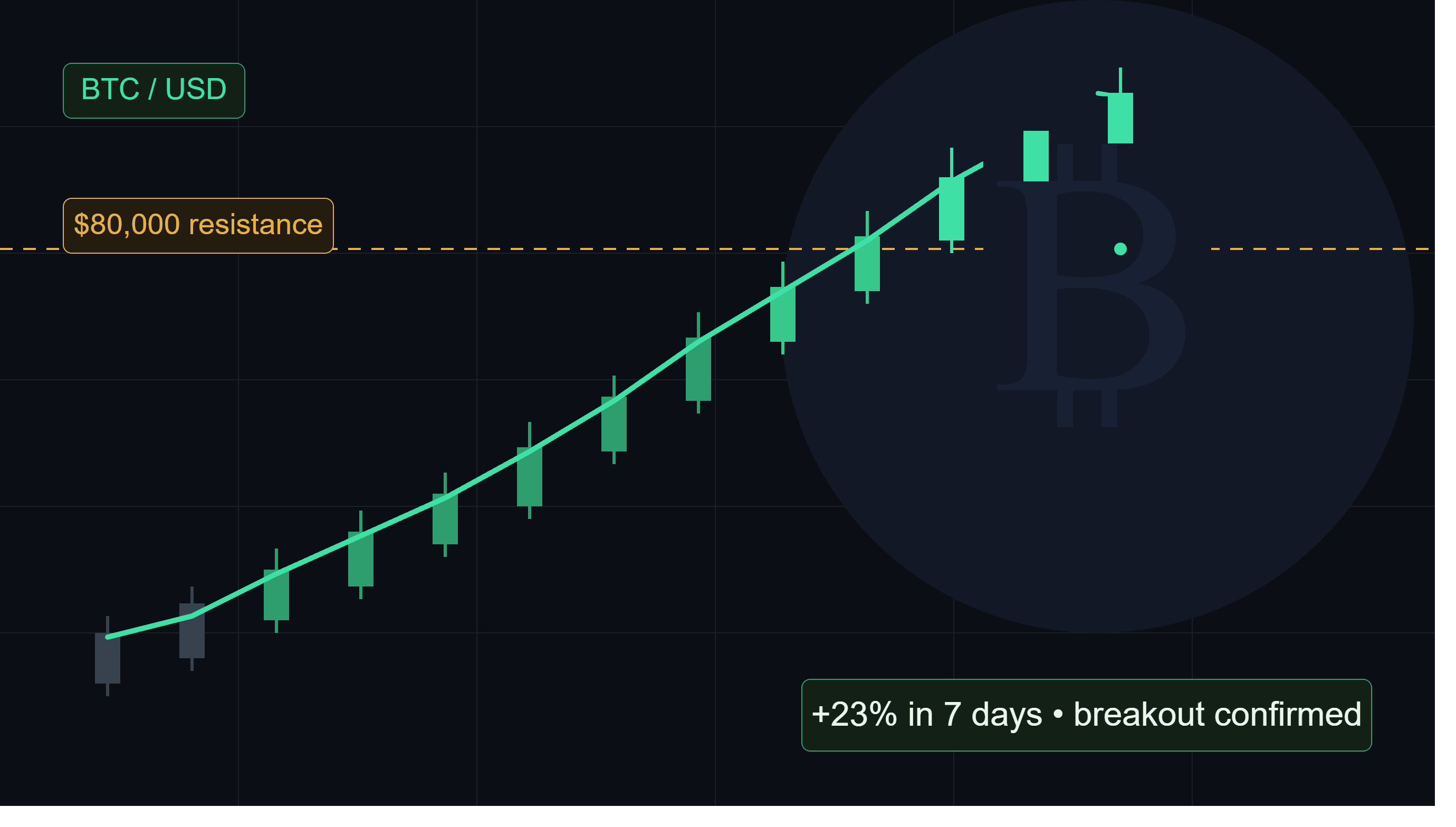
Bitcoin hit $80,000 as WEEX predicted last week. See what drove the breakout, current key levels, and whether $90,000 is next.
Mining Artificial Intelligence: Why Bitcoin Miners Are Changing Their Business Model
CFTC Considers the Viability of Perpetual Futures in GPU Computing

Bitcoin is once again being 'buried' on social media: what this could mean for its price

They Thought They Were Talking to Apple: $195,000 in Cryptos Vanished in Singapore

Traffic Through the Strait of Hormuz Hits Lowest Level Since May
![[SCAN 2026 Final Interview] ⑬ BITSkrieg: Indian Engineering Students' Challenge for SCAN2026 Victory](/public-static/40_d9655504cd.png?format=avif)
[SCAN 2026 Final Interview] ⑬ BITSkrieg: Indian Engineering Students' Challenge for SCAN2026 Victory
New Project in the ZEC Space: Vitalik's Only Coin Purchase in Two Years
Reassessing $HTX Amidst the Bull Market: The Equity Token for Global Assets Entering the Crypto World
Cryptocurrency Trading at Bank Leumi: Israel's Largest Bank Partners with Galaxy
Crypto: Solana ETFs Record Their Biggest Day of the Year
Xbox and PlayStation Reassess Their Multiplatform Strategy, Emphasizing Exclusivity Again
Interview: Aptos CEO on AI Agents, Stablecoins, and Machine Commerce
BlackRock Lowers Minimum Investment for Bitcoin ETF to $1 Million
Previously Bearish on Crypto Market, Jiang Zhuoer Quickly Turns Bullish: Ethereum is the Engine of the Bull Market
Michael Saylor Targets Bitcoin Orthodoxy: 'Satoshi Is Not a Prophet'