
- Buy Crypto
- Markets
 Futures
- Spot
- Copy Trade
- Earn
- More
why intangible assets dominate the economy
By: bitcoin ethereum news|2025/05/16 05:15:05
0
Share
The value of the virtual is no longer an abstract concept: today it represents the backbone of economic and cultural innovation. More and more often, objects that exist only digitally, such as NFT and cryptocurrencies, are establishing themselves as leading financial assets. And as economies digitalize, the recurring question is: how can something intangible, without physical form, acquire real economic value? To understand it, it is necessary to explore the role of intellectual property and the revolutions that have allowed intangible assets to support and drive global growth. The value of the virtual conquers the global scene The issue of the value of the virtual has deep roots. In 1709, the British Parliament enacted the Statute of Anne, the first modern copyright law. This regulation recognized the creators’ right to own their works, excluding publishers from the monopoly and allowing authors to benefit directly from their creations. With these foundations, intellectual property became one of the driving forces of modernity, fostering an unprecedented explosion of creativity and knowledge. As a result, literary and scientific masterpieces were born that laid the foundations of the Age of Enlightenment and the Scientific Revolution. Jane Austen, Charles Dickens, Voltaire, Darwin, Marie Curie are just a few of the names that represent this new autonomy of creators in the world of ideas. The protection of intellectual property has not only fueled cultural progress. It has had disruptive economic effects. By allowing creators to monetize their inventions, intangible property has incentivized continuous innovation and the creation of new assets. Nations like China, which for decades neglected IP rights, then experienced an innovative boom by strengthening these very protections. The result? Today, intangible property is at the center of the most advanced economies and supports millions of jobs worldwide. Intangible assets generate more wealth than material goods in many sectors. According to the United States Patent and Trademark Office (USPTO), in 2019, industries with high intellectual property intensity accounted for 41% of domestic economic activity and supported 44% of employment. The impact is comparable to the importance of physical infrastructure during the industrial revolution. In 2023, the World Intellectual Property Organization (WIPO) assessed intangible assets at approximately 62 trillion dollars. An impressive figure, especially when compared to the value of gold—estimated between 17 and 25 trillion dollars. Digital data, brands, and goodwill: invisible but real capital Every day, millions of digital activities generate valuable data that companies and platforms leverage as the new “oil of the economy.” Recognized brands and goodwill—meaning the reputational value of a company—are assets that, although not physically existing, decisively influence financial statements and financial strategies. Even NFTs and cryptocurrencies, including Bitcoin, have entered this category: assets lacking material form, but endowed with value thanks to digital scarcity, verifiable ownership, and the ability to be exchanged securely and in a decentralized manner. Blockchain technology has led to a groundbreaking shift in the management of digital assets. It allows for the certification of ownership, scarcity, and provenance of a digital asset in a secure, public, and decentralized manner, without the need for centralized intermediaries or government entities. Traditionally, the registration of property was expensive, bureaucratic, and vulnerable; now, with blockchain, everything becomes more efficient, traceable, and resistant to fraud. This innovation opens new frontiers not only for Bitcoin, NFTs, and cryptographic tokens, but also for the automatic management of royalties, the monitoring of digital works, and the recognition of copyright globally. The theme of intellectual property has become even more pressing in the era of artificial intelligence. AI platforms, as in the case of images generated in Miyazaki style or digital imitations of actors, raise doubts about who should own the new creations. Unions and companies struggle to find a balance between innovation and the protection of rights. The blockchain appears as a technical and legal solution: it can transparently trace the authorship of works created by AI, ensure the automatic payment of royalties, and recognize the contributions of the original authors quickly and economically. The future of digital ownership and new financial assets People often wonder how NFT, Bitcoin, and cryptocurrencies can “be worth something” if they are just strings of bits. However, the value of the virtual is now established: intellectual property demonstrates that the immaterial can generate wealth, work, and opportunities for millions of people. Owning a digital creation is equivalent to controlling the benefits it can produce, just like what happens with a patent or a musical composition. The democratization of digital asset ownership—putting creators and users at the center—is the mission of companies like Animoca Brands, but above all, it represents the new frontier of the global economy. Today the ownership of intangibles has a disruptive impact on the real economy. From the metaverse to blockchain resources, up to the capital of ideas circulating online, everything confirms that value is no longer tied to physicality. The extension of the principles that fueled the Enlightenment and the industrial revolution to the digital world promises to unlock unprecedented opportunities for creators, businesses, and investors. Recognizing, defending, and enhancing digital ownership will be the key to a more creative, fair, and innovative economy. Those who can grasp this potential will be ready to lead growth in the new era of virtual value. Source: https://en.cryptonomist.ch/2025/05/15/the-value-of-the-virtual-why-intangible-assets-dominate-the-digital-economy/
You may also like

Pantera Capital: How has Crypto as a Service affected us?
If you are planning to start a business in 2026, my advice is simple: Instead of just talking about technology, focus more on how you can solve real-world problems.

Pantera Capital: What changes have we made when crypto is treated as a service?
If you are planning to start a business in 2026, my advice is simple: stop talking excessively about technology and focus more on the actual problems you can solve.
Wall Street Shorts ETH: Vitalik is aware and has front-run, while Tom Lee remains oblivious
"The Ethereum token economic model has collapsed, wake up and see this clearly."

Social Capital CEO: How Equity Tokenization is Reshaping Capital Markets from US Stocks to SpaceX?
Equity tokens represent the next challenge: can tokenization expand from payments to ownership of financial assets?

CoinGecko Report: Surge of 346% vs Dip of 20.8%, The Wild Rise of DEX
A large-scale capital migration driven by platforms such as Hyperliquid towards decentralized infrastructure from centralization.

a16z: The Real Opportunity of Stablecoins Lies Not in Disruption but in Filling Gaps
The opportunity for stablecoins lies with those merchants that have yet to emerge.

Mining Exodus: Someone Holds $12.8 Billion AI Order
Mining Farms are Turning to AI Hashpower with no Turning Back.

March 6 Market Key Intelligence, How Much Did You Miss?
1. On-chain Funds: $16.3M USD has flowed into the OP Mainnet today; $13.7M USD has flowed out of Arbitrum
2. Largest Price Swings: $XPT, $AIX
3. Top News: Vitalik Calls on Ethereum Community to Shift Mindset, Uphold Core Principles, and Rethink Application Design "From Scratch"

a16z: The True Opportunity of Stablecoins is in Complementing, Not Disrupting
The stablecoin opportunity lies with those merchants yet to come onboard.

Predict LALIGA Matches, Shoot Daily & Win BTC, USDT and WXT on WEEX
The WEEX × LALIGA campaign brought together football excitement and crypto participation through a dynamic interactive experience. During the event, users predicted matches, completed trading tasks, and took daily shots to compete for rewards including BTC, USDT, WXT, and exclusive prizes.

Ray Dalio Dialogue: Why I'm Betting on Gold and Not Bitcoin
Gold is the only asset with a long-term history that can be transferred, is not easily replicable, and does not rely on anyone else's promise. Most currencies, debts, stocks, etc., are just promises of someone honoring their purchasing power.

Who Took the Money in the AI Era? A Must-See Investment Checklist for HALO Asset Trading
A one-page paper listed a series of questions about the potential impact of AI progress. Looking back over two years later, these questions appear particularly prescient, although none of them provided a definitive answer at the time.
Wall Street Bears Target Ethereum: Vitalik In the Know Takes Flight, Tom Lee Remains Bullish
「The Ethereum Tokenomics Has Collapsed, Wake Up and Realize It」
Pump.fun Hacker Steals $2 Million, Receives 6-Year Prison Sentence, Opts for 'Self-Detonation'
Life of Talent, Paranoia, and Setbacks

6% Annual Percentage Yield as Musk Declares War on Traditional Banks
A black metal card, 600x rate delta.
36 years, 4 wars, 1 script: How does capital price the world in conflict?
When the cannon fires, 10,000 ounces of gold. In a turbulent era, the wealth choice of the common people.

Mining Companies' Great Migration: Some Have Already Secured $12.8 Billion in AI Orders
Mining companies turn to AI computing power, with no turning back.
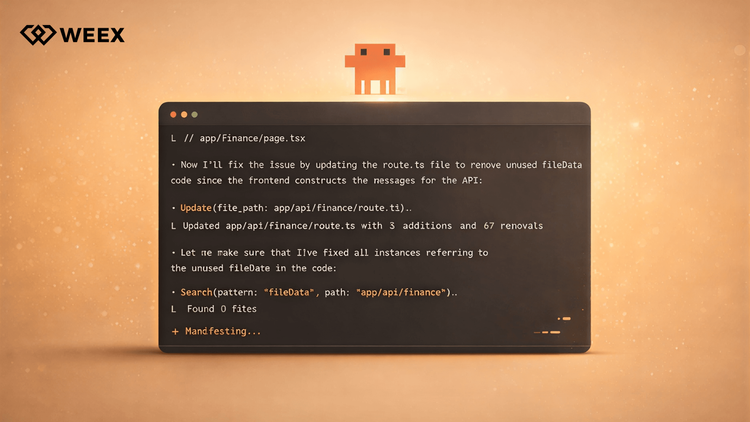
What Is Vibe Coding? How AI Is Changing Web3 & Crypto Development
What is vibe coding? Learn how AI coding tools are lowering the barrier to Web3 development and enabling anyone to build crypto applications.
Pantera Capital: How has Crypto as a Service affected us?
If you are planning to start a business in 2026, my advice is simple: Instead of just talking about technology, focus more on how you can solve real-world problems.
Pantera Capital: What changes have we made when crypto is treated as a service?
If you are planning to start a business in 2026, my advice is simple: stop talking excessively about technology and focus more on the actual problems you can solve.
Wall Street Shorts ETH: Vitalik is aware and has front-run, while Tom Lee remains oblivious
"The Ethereum token economic model has collapsed, wake up and see this clearly."
Social Capital CEO: How Equity Tokenization is Reshaping Capital Markets from US Stocks to SpaceX?
Equity tokens represent the next challenge: can tokenization expand from payments to ownership of financial assets?
CoinGecko Report: Surge of 346% vs Dip of 20.8%, The Wild Rise of DEX
A large-scale capital migration driven by platforms such as Hyperliquid towards decentralized infrastructure from centralization.
a16z: The Real Opportunity of Stablecoins Lies Not in Disruption but in Filling Gaps
The opportunity for stablecoins lies with those merchants that have yet to emerge.


 App
App