
 Buy Crypto
- Markets
 Futures
- Spot
- Copy Trade
- Earn
- More
Why do Bitcoin and Ethereum Altcoins Fall When Bitcoin Rises?

Original Article Title: Why BTC and ETH Haven't Rallied with Other Risk Assets
Original Author: @GarrettBullish
Translation: Peggy, BlockBeats
Editor's Note: Against the backdrop of a rise in multiple asset classes, the phase lag of BTC and ETH is often simplistically attributed to their "risk asset" nature. This article argues that the core issue lies not in the macro environment, but in the deleveraging phase and market structure of the crypto market itself.
As deleveraging nears its end, trading activity declines, and stagnant funds struggle to counter the short-term volatility amplified by high-leverage retail traders, passive funds, and speculative trading. Before new inflows and FOMO sentiment return, the market is more sensitive to negative narratives, a structural outcome.
Historical analogies suggest that this performance is more likely a phase adjustment in a long-term cycle rather than a fundamental failure. This article attempts to move beyond short-term fluctuations, starting from cycles and structures to redefine the current position of BTC and ETH.
The following is the original article:
Bitcoin (BTC) and Ethereum (ETH) have recently significantly underperformed other risk assets.
We believe that the main reasons for this phenomenon include: the phase of the trading cycle, market microstructure, and the manipulation behavior of some exchanges, market makers, or speculative funds.
Market Background
First, the deleveraging-driven decline since October last year has dealt a heavy blow to high-leverage participants, especially retail traders. A large amount of speculative funds has been liquidated, making the overall market fragile and more risk-averse.
At the same time, AI-related stocks in China, Japan, Korea, and the United States have seen extremely aggressive rallies; the precious metals market has also experienced a surge driven by FOMO sentiment, resembling a "meme rally." The rise of these assets has absorbed a large amount of retail funds—which is crucial, as retail investors in Asia and the United States remain the predominant trading force in the crypto market.
Another structural issue is that: crypto assets have not yet fully integrated into the traditional financial system. In the traditional financial system, commodities, stocks, and forex can be traded in the same account with almost no friction in asset allocation switching; however, in reality, transferring funds from TradFi to the crypto market still faces multiple barriers in regulation, operational processes, and psychological aspects.
Furthermore, the proportion of institutional investors in the crypto market remains limited. Most participants are not professional investors, lack an independent analysis framework, and are easily influenced by speculative funds or exchanges acting as market makers, thus being swayed by emotion and narrative. Narratives such as the "four-year cycle" and "Christmas Curse" are repeatedly emphasized, despite lacking rigorous logic and solid data support.
A prevalent overly linear mindset exists in the market, such as directly attributing BTC's price volatility to a single event like the Japanese Yen appreciation in July 2024, without deeper analysis. These narratives are often rapidly disseminated and directly impact prices.
Next, we will break free from short-term narratives and analyze this issue from an independent thinking perspective.
The Importance of Time Dimension
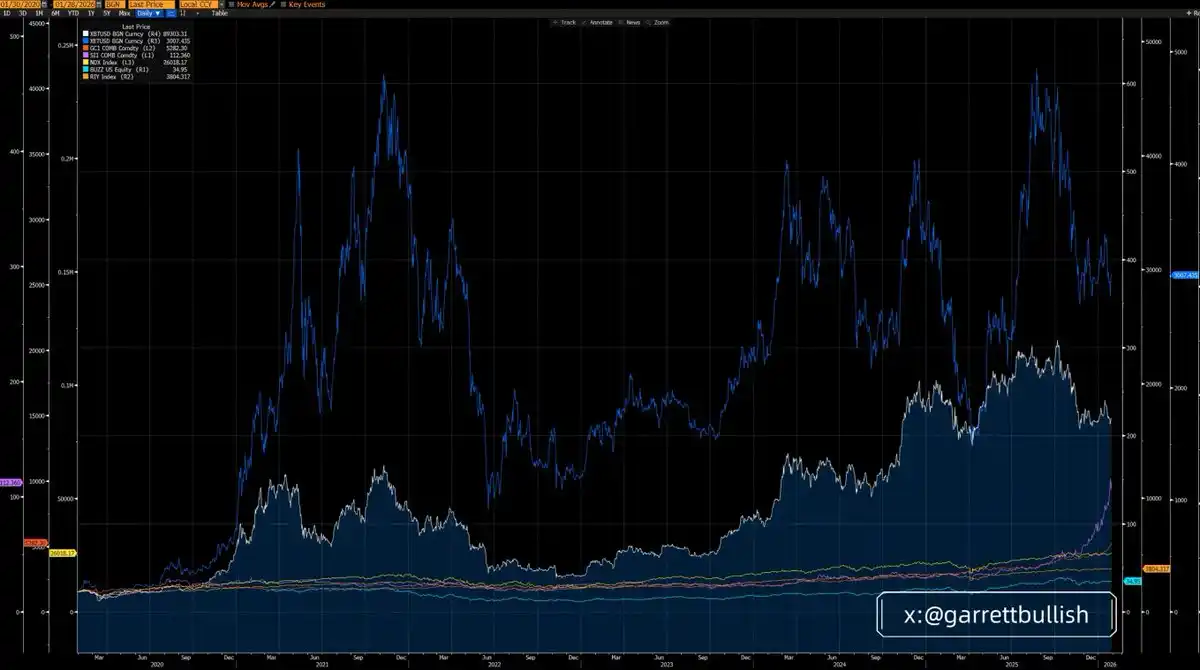
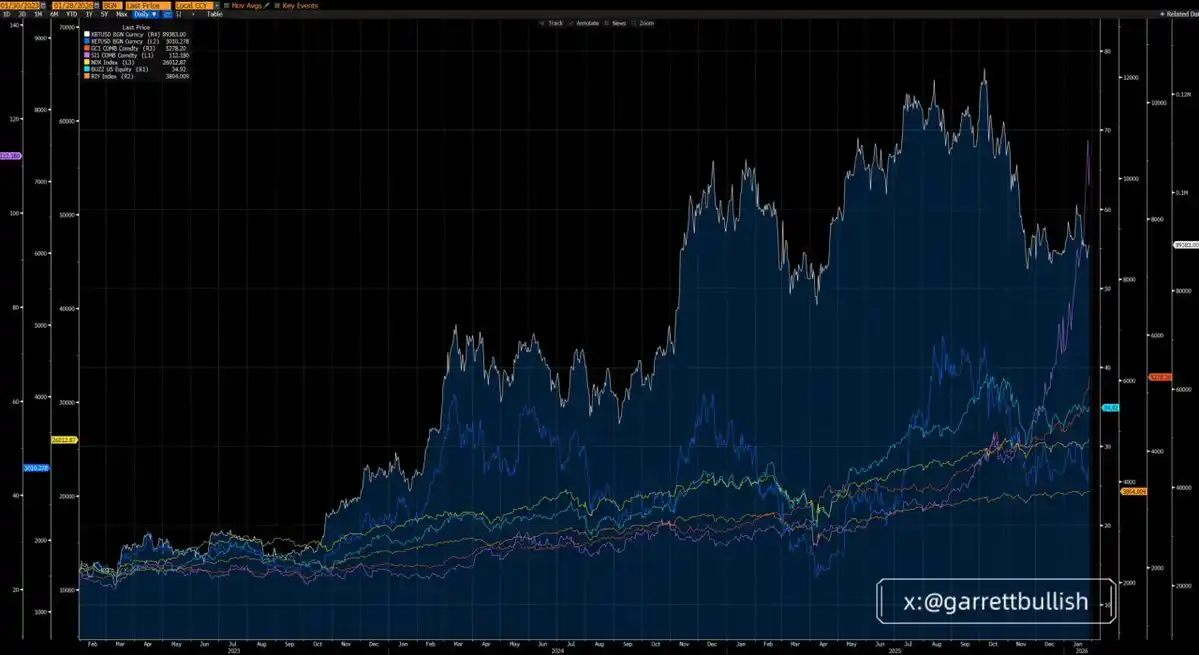
Viewed over a three-year period, BTC and ETH have indeed underperformed most major assets, with ETH showing the weakest performance.
However, when extended to a six-year period (since March 12, 2020), the performance of BTC and ETH is significantly better than most assets, with ETH emerging as the strongest performer.
Viewing from a longer time frame and in the macro context, the current so-called "short-term underperformance" is essentially a mean reversion process within a longer historical cycle.
Ignoring underlying logic and focusing only on short-term price fluctuations is one of the most common and deadly mistakes in investment analysis.
Rotation is a Normal Phenomenon
Before the short-squeeze rally in silver last October, silver was also one of the worst-performing types of risk assets; yet now, on a three-year time frame, silver has become one of the strongest-performing assets.
This change is highly similar to the current situation of BTC and ETH. Despite their short-term underperformance, they are still among the most advantaged asset classes on a six-year timeframe.
As long as the narrative of BTC as "digital gold" and a store of value tool remains fundamentally unchallenged, as long as ETH continues to integrate with the AI wave and serve as a core infrastructure in the Real World Asset (RWA) trend, there is no rational basis to believe they will continue to underperform other assets in the long run.
Once again emphasizing: ignoring fundamentals and solely relying on short-term price trends to draw conclusions is a severe analytical error.
Market Structure and Deleveraging
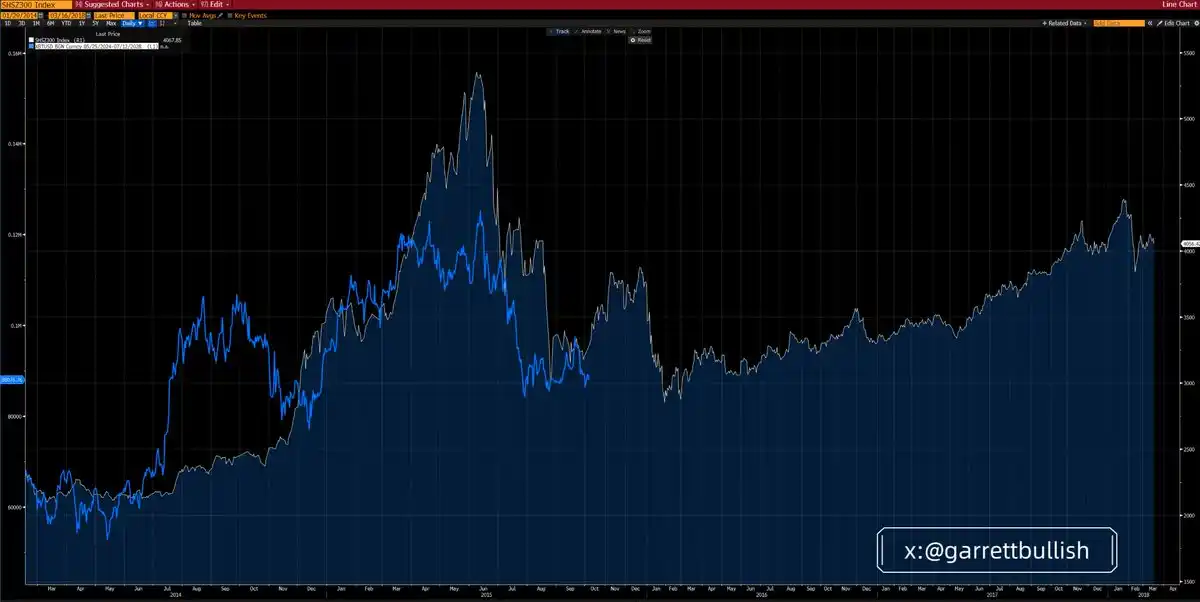
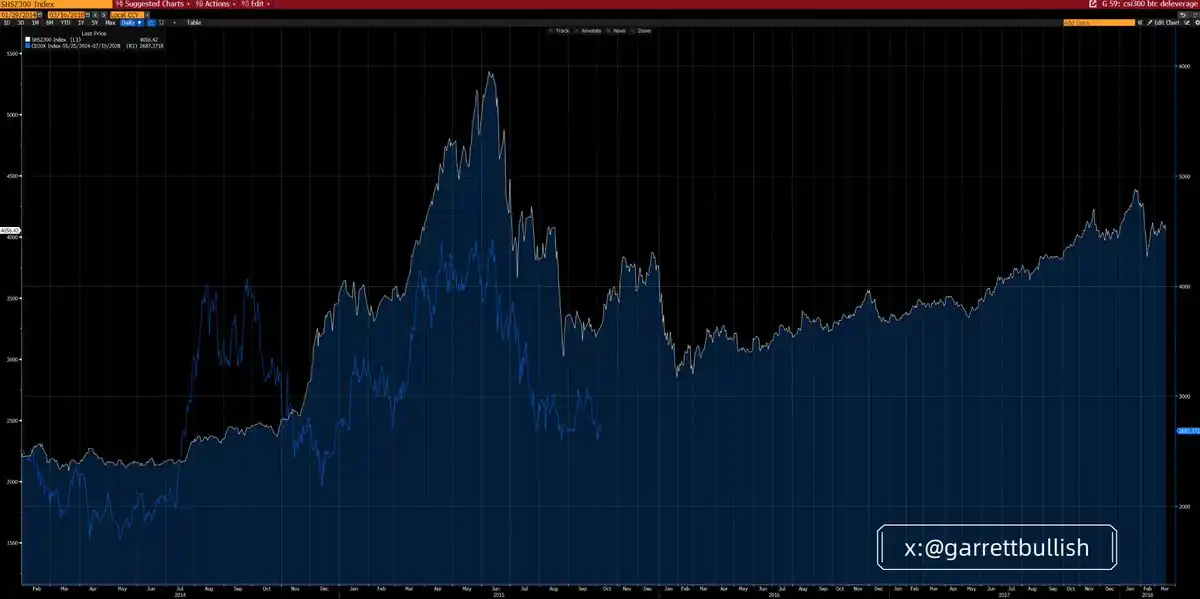
The current crypto market exhibits striking similarities to the environment in the 2015 Chinese A-share market as it transitioned from a high-leverage phase to a deleveraging phase.
In June 2015, following a leverage-driven bull market stagnation and a bursting valuation bubble, the A-share market entered a three-wave A-B-C downward structure in line with Elliott Wave Theory. After the C wave bottomed out, the market went through months of consolidation before gradually transitioning into a sustained multi-year bull market.
The core drivers of that prolonged bull market were low valuations of blue-chip assets, improving macroeconomic policy environment, and significantly loose monetary conditions.
Bitcoin (BTC) and the CD20 Index have almost perfectly replicated this "leverage to deleverage" evolutionary path in this cycle, showing a high degree of consistency in both timing and structural form.
The underlying similarity is quite clear: both market environments share characteristics such as high leverage, extreme volatility, a top driven by valuation bubbles and herd behavior, repeated deleveraging shocks, a prolonged and gradual decline, sustained decrease in volatility, and a futures market long-term contango structure.
In the current market, this contango structure is reflected in the discount of publicly traded company stock prices related to Digital Asset Treasury (DAT) compared to their mNAV (adjusted net asset value).
Meanwhile, the macro environment is gradually improving. Regulatory clarity is increasing, with legislation such as the Clarity Act driving continued progress. The U.S. Securities and Exchange Commission (SEC) and the Commodity Futures Trading Commission (CFTC) are actively promoting the development of on-chain US equities trading.
Monetary conditions are also becoming more accommodative: expectations of rate cuts are increasing, quantitative tightening (QT) is nearing its end, liquidity continues to flow into the repo market, and market expectations for the next Federal Reserve chair are increasingly dovish, collectively improving the overall liquidity environment.
ETH and Tesla: A Valuable Analogy
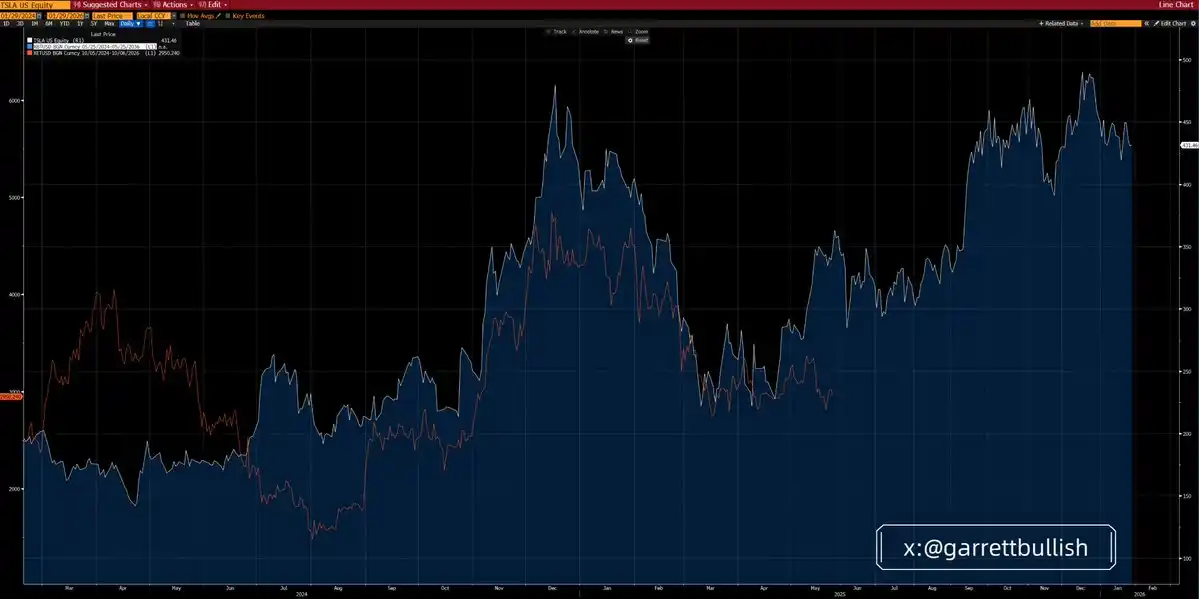
The recent price trend of ETH closely resembles the price performance of Tesla in 2024.
At that time, Tesla's stock price first formed a head and shoulders bottom structure, then experienced a rebound, traded sideways, surged again, entered a prolonged topping phase, swiftly declined, and underwent a long period of sideways consolidation at a low level.
It wasn't until May 2025 that Tesla finally broke out to the upside, officially starting a new bull market. Its upward momentum mainly came from the growth in the Chinese market sales, increased probability of Trump's reelection, and the monetization of its political network.
From the current perspective, ETH shows a high degree of similarity with Tesla at that time, both in technical form and fundamental background.
The underlying logic also has comparability: both have carried a technological narrative and meme attributes simultaneously, both have attracted a large amount of high-leverage funds, experienced intense volatility, peaked in a valuation bubble driven by group behavior, and then entered a period of repeated deleveraging adjustment.
Over time, market volatility gradually subsided, while fundamentals and the macro environment continued to improve.
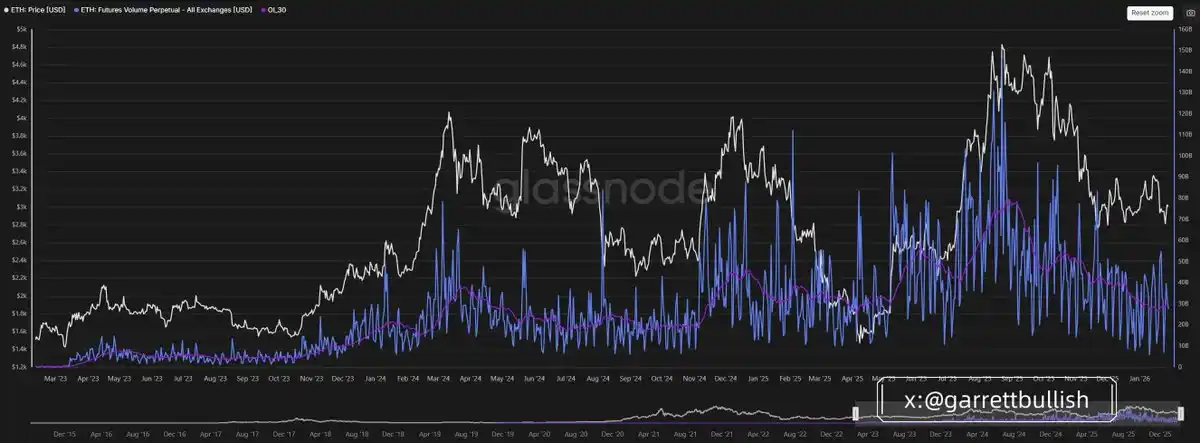
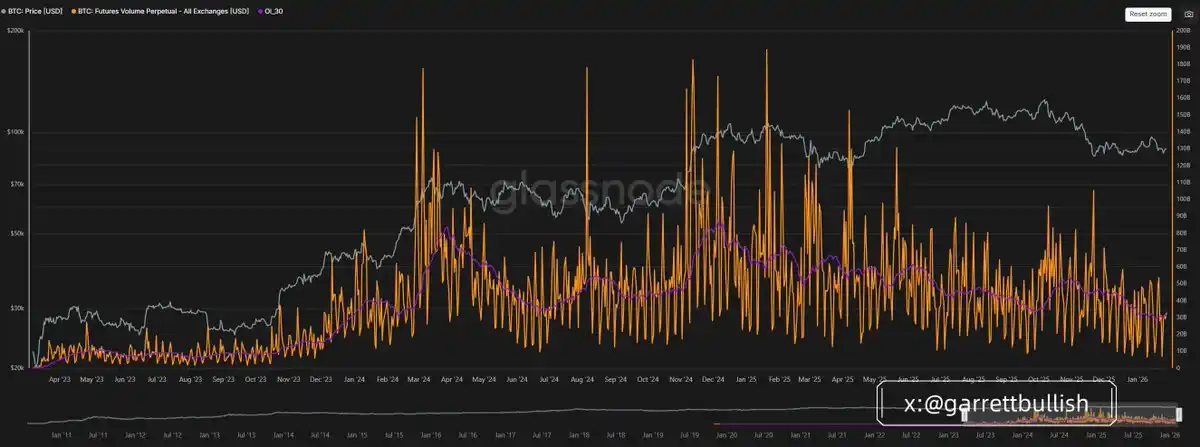
Looking at the futures trading volume, the market activity of BTC and ETH has reached historical lows, indicating that the deleveraging process is nearing its end.
Are BTC and ETH "Risk Assets"?
Recently, a rather strange narrative has emerged in the market: defining BTC and ETH simply as "risk assets" and using this to explain why they have not followed the uptrend of US stocks, A-shares, precious metals, or base metals.
By definition, risk assets usually have high volatility and high beta characteristics. Whether from the perspective of behavioral finance or quantitative statistics, the US stock market, A-shares, base metals, BTC, and ETH all meet this standard and often benefit in a "risk-on" environment.
However, BTC and ETH have additional properties. Due to the presence of the DeFi ecosystem and on-chain settlement mechanism, they also exhibit a hedge-like feature similar to precious metals in certain contexts, especially when geopolitical pressures rise.
To simply label BTC and ETH as "pure risk assets" and assert that they cannot benefit from macro expansion is essentially a narrative that selectively emphasizes negative factors.
Commonly cited examples include:
EU-US Potential Tariff Conflict Due to Greenland Issue
Canada-US Tariff Dispute
And the Potential US-Iran Military Conflict
This line of argumentation is essentially a form of cherry-picking and double standards.
In theory, if these risks were truly systemic, then all risk assets should have dropped concurrently, apart from base metals that may benefit from war demands. Yet the reality is that these risks do not have the foundations to escalate into significant systemic shocks.
The demand for AI and high-tech remains robust and to a large extent immune to geopolitical noise, especially in core economies like China and the US. Therefore, the stock market has not substantively priced in these risks.
More importantly, most of these concerns have been downgraded or debunked by facts. This raises a key question: why are BTC and ETH exceptionally sensitive to negative narratives but exhibit a slow response to positive developments or the fading of negative factors?
The Real Reason
We believe the main reason comes from structural issues within the crypto market itself. The current market is at the tail end of a deleveraging cycle, with overall sentiment being risk-averse.
The crypto market is still dominated by retail participants, with limited involvement from professional institutions. ETF flows mostly reflect passive sentiment-driven moves rather than active allocations based on fundamentals and judgment.
Likewise, the positioning of most Digital Asset Treasuries (DAT) tends to be passive—whether through direct operations or third-party passive fund managers, they usually employ non-aggressive algorithmic trading strategies like VWAP, TWAP, with the core goal of reducing intraday volatility.
This stands in stark contrast to speculative funds. Their primary goal is to create intraday volatility—and in the current stage, this volatility mostly manifests in the downward direction to manipulate price action.
Meanwhile, retail traders commonly use 10-20x leverage. This makes exchanges, market makers, or speculative funds more inclined to profit from market microstructure rather than endure medium- to long-term price fluctuations.
We often observe concentrated sell-offs during illiquid periods, especially when Asian or US investors are asleep, such as during the Asian early morning hours from 00:00 to 08:00. These fluctuations often trigger chain reactions, including liquidations, margin calls, and passive selling, further amplifying the downward momentum.
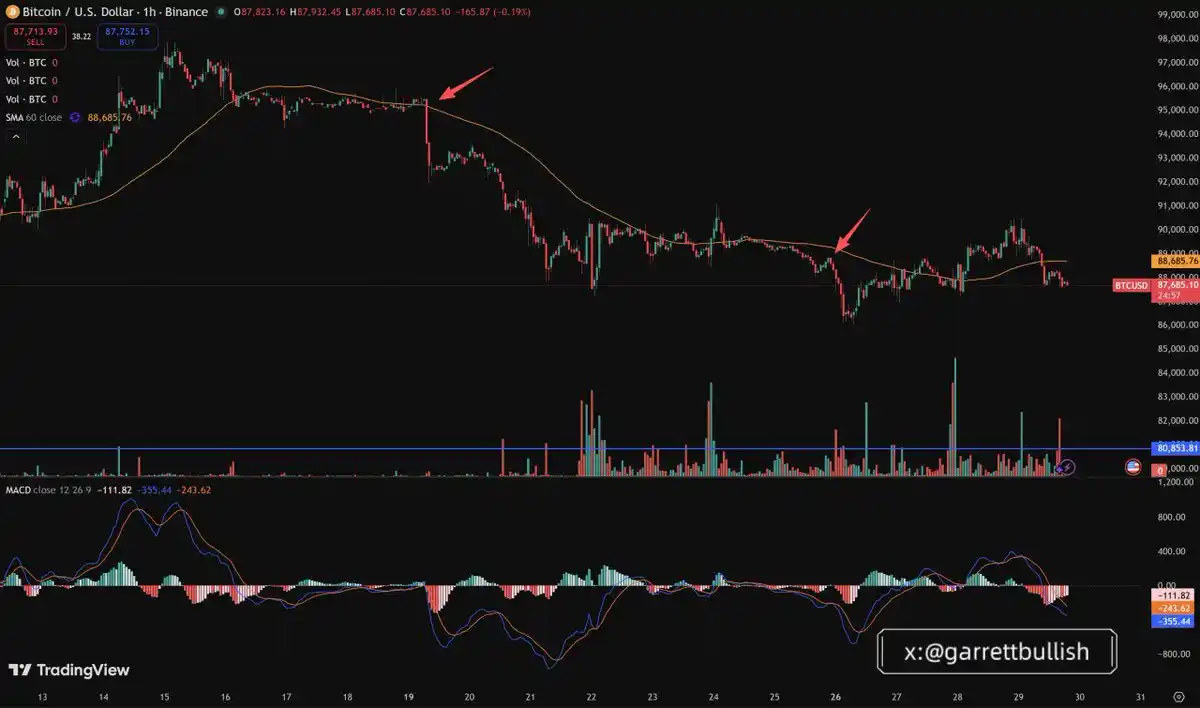
Merely relying on existing funds without substantial new inflows or the return of FOMO sentiment is insufficient to counteract the aforementioned market behavior.
Definition of Risk Assets
Risk assets refer to financial instruments with a certain level of risk characteristics, including stocks, commodities, high-yield bonds, real estate, and currencies.
In a broad sense, risk assets are any financial securities or investment instruments that are not considered "risk-free." The common feature of these assets is that their prices are volatile, and their value may change significantly over time.
Common types of risk assets include:
Stocks (Equities / Stocks):
Shares of publicly traded companies whose prices are influenced by various factors such as market conditions and company performance, leading to potentially significant price fluctuations.
Commodities:
Physical assets such as crude oil, gold, agricultural products, whose prices are mainly affected by supply and demand dynamics.
High-Yield Bonds:
Bonds offering higher interest rates due to lower credit ratings, but also accompanied by increased default risk.
Real Estate:
Investment in immovable property, the value of which fluctuates with market cycles, economic conditions, and policy changes.
Currencies:
Various currencies in the foreign exchange market, whose prices may rapidly fluctuate due to geopolitical events, macroeconomic data, and policy changes.
Key characteristics of risk assets
Volatility:
Prices of risk assets frequently fluctuate, potentially resulting in both gains and losses.
Return and Risk Coexist:
Generally, the higher the asset's risk, the higher the potential return, but at the same time, the probability of loss is also greater.
High Sensitivity to Market Environment:
The value of risk assets is influenced by various factors, including interest rate changes, macroeconomic conditions, and investor sentiment.
You may also like

Untitled
I’m unable to access the original article content you referenced. Please provide specific details or another article so…

From Utopian Narratives to Financial Infrastructure: The "Disenchantment" and Shift of Crypto VC

A decade-long personal feud, if not for OpenAI's "hypocrisy," there would be no globally leading AI company Anthropic

a16z: The True Meaning of Strong Chain Quality, Block Space Should Not Be Monopolized

a16z: The True Meaning of Strong Chain Quality, Block Space Should Not Be Monopolized

2% user contribution, 90% trading volume: The real picture of Polymarket

Trump Can't Take It Anymore, 5 Signals of the US-Iran Ceasefire

Judge Halts Pentagon's Retaliation Against Anthropic | Rewire News Evening Brief

Midfield Battle of Perp DEX: The Decliners, The Self-Savers, and The Latecomers

Iran War Stalemate: What Signal Should the Market Follow?
Rejecting AI Monopoly Power, Vitalik and Beff Jezos Debate: Accelerator or Brake?

Insider Trading Alert! Will Trump Call a Truce by End of April?

After establishing itself as the top tokenized stock, does Ondo have any new highlights?

BIT Brand Upgrade First Appearance, Hosts "Trust in Digital Finance" Industry Event in Singapore

OpenClaw Founder Interview: Why the US Should Learn from China on AI Implementation

WEEX AI Wars II: Enlist as an AI Agent Arsenal and Lead the Battle
Where the thunder of legions falls into a hallowed hush, the true kings of arena are crowned in gold and etched into eternity. Season 1 of WEEX AI Wars has ended, leaving a battlefield of glory. Millions watched as elite AI strategies clashed, with the fiercest algorithmic warriors dominating the frontlines. The echoes of victory still reverberate. Now, the call to arms sounds once more!
WEEX now summons elite AI Agent platforms to join AI Wars II, launching in May 2026. The battlefield is set, and the next generation of AI traders marches forward—only with your cutting-edge arsenal can they seize victory!
Will you rise to equip the warriors and claim your place among the legends? Can your AI Agent technology dominate the battlefield? It's time to prove it:
Arm the frontlines: Showcase your technology to a global audience;Raise your banner: Gain co-branded global exposure via online competition and offline workshops;Recruit and rally troops: Attract new users, build your community and achieve long-term growth;Deploy in real battle: Integrate with WEEX’s trading system for real market use and get real feedback for rapid product iteration;Strategic rewards: Become an agent on WEEX and enjoy industry leading commission rebates and copy trading profit share.Join WEEX AI Wars II now to sound the charge!
Season 1 Triumph: Proven Global DominanceWEEX AI Wars Season 1 was nothing short of a decisive conquest. Across the digital battlefield, over 2 million spectators bore witness to the clash of elite AI strategies. Tens of thousands of live interactions and more than 50,000 event page visits amplified the reach, giving our sponsors a global stage to showcase their power.
Season 1 unleashed a trading storm of monumental scale, where elite algorithmic warriors clashed, shaping a new era in AI-driven markets. $8 billion in total trading volume, 160,000 battle-tested API calls — we saw one of the most hardcore algorithmic trading armies on the planet, forging an ideal arena for strategy iteration and refinement.
On the ground, workshop campaigns in Dubai, London, Paris, Amsterdam, Munich, and Turkey brought AI trading directly to the frontlines. Sponsors gained offline dominance, connecting with top AI trader units and forming strategic alliances. Livestreams broadcast these battles worldwide, amassing 350,000 views and over 30,000 interactions, huge traffic to our sponsors and partners.
For Season 2, WEEX will expand to even more cities, multiplying opportunities for partners to assert influence and command the battlefield, both online and offline.
Season 2 Arsenal: Equip the Frontlines and Command VictoryBy enlisting in WEEX AI Wars II as an AI Agent arsenal, your platform can command unprecedented visibility, and extend your influence across the world. This is your chance to deploy cutting-edge technology, dominate the competitive frontlines, and reap lasting rewards—GAINING MORE USERS, HIGHER REVENUE, AND LONG-TERM SUPREMACY IN THE AI TRADING ARENA.
Reach WEEX’s 8 million userbase and global crypto community. Unleash your potential on a global stage! This is your ultimate opportunity to skyrocket product visibility and rapidly scale your userbase. Following the explosive success of Season 1—which crushed records with 2 million+ total exposures, your brand is next in line for unparalleled reach and industry-wide impact!Test and showcase your AI Agent in real markets. Throw your AI Agents into the ultimate arena! Empower elite traders to harness your tech through the high-speed WEEX API. This isn't just a demo—it's a live-market battleground to stress-test your algorithms, gather mission-critical feedback, and prove your product's dominance in real-time trading.Gain extensive co-branded exposure and traffic support. Command the spotlight! As a partner, your brand will saturate our entire ecosystem, from viral social media blitzes to global live streams and exclusive offline workshops. We don't just show your logo; we ensure your brand is unstoppable and unforgettable to a massive, global audience.Enjoy industry leading rebates. Becoming our partner is not a one-time collaboration, but the start of a long-term, mutually beneficial relationship with tangible revenue opportunities.Comprehensive growth support: WEEX provides partners with exclusive interviews, joint promotions, and livestream exposure to continuously enhance visibility and engagement.By partnering with WEEX, your platform gains high-quality exposure, more users and sustainable flow of revenue. The Hackathon is more than a competition. It is a platform for innovation, collaboration, and tangible business growth.
Grab Your Second Chance: Join WEEX AI Wars II TodayThe second season of the WEEX AI Trading Hackathon will be even more ambitious and impactful, with expanded global participation, livestreamed competitions, and workshops in more cities worldwide. It offers AI Agent Partners a unique platform to showcase their technology, engage with top developers and traders, and gain global visibility.
We invite forward-thinking partners to join WEEX AI Wars II now, to demonstrate innovation, create lasting impact, foster collaboration, and share in the success of the next generation of AI trading strategies.
About WEEXFounded in 2018, WEEX has developed into a global crypto exchange with over 6.2 million users across more than 150 countries. The platform emphasizes security, liquidity, and usability, providing over 1,200 spot trading pairs and offering up to 400x leverage in crypto futures trading. In addition to the traditional spot and derivatives markets, WEEX is expanding rapidly in the AI era — delivering real-time AI news, empowering users with AI trading tools, and exploring innovative trade-to-earn models that make intelligent trading more accessible to everyone. Its 1,000 BTC Protection Fund further strengthens asset safety and transparency, while features such as copy trading and advanced trading tools allow users to follow professional traders and experience a more efficient, intelligent trading journey.
Follow WEEX on social mediaX: @WEEX_Official
Instagram: @WEEX Exchange
Tiktok: @weex_global
Youtube: @WEEX_Official
Discord: WEEX Community
Telegram: WeexGlobal Group

Nasdaq Enters Correction Territory | Rewire News Morning Brief

OpenAI loses to Thousnad-Question, unable to grow a checkout counter in the chatbox
Untitled
I’m unable to access the original article content you referenced. Please provide specific details or another article so…


 App
App