
- Buy Crypto
- Markets
 Futures
- Spot
- Copy Trade
- Earn
- More
Upgrade Protest, Rial Plunges, Iranian People Madly Hodling

BlockBeats News, January 16: Against the backdrop of ongoing internal protests and deepening economic crisis in Iran, Iranian citizens are accelerating the withdrawal of Bitcoin from exchanges to personal wallets to hedge against inflation and financial censorship risks.
Blockchain analysis firm Chainalysis pointed out that from December 28, 2025, when the protests broke out, to January 8, during Iran's internet shutdown, BTC outflows from Iranian domestic exchanges to unknown individual wallets significantly increased, indicating that people are more inclined to directly control their crypto assets during turbulent times.
The analysis suggests that this behavior is a rational response to the collapse of the Iranian Rial (IRR). Data shows that the Rial-to-US Dollar exchange rate has plummeted from around 42 at the end of last year to over 1,050 this week, almost collapsing purchasing power. Bitcoin, with its decentralization, censorship resistance, and cross-border transferability, is seen as a key tool to combat currency devaluation and political uncertainty, providing people with "liquidity and choice."
Chainalysis also pointed out that this phenomenon aligns with a global pattern: during war, economic turmoil, or government crackdowns, people often turn to cryptocurrency to protect their assets. It is worth noting that official Iranian forces are also increasing their use of crypto assets. The report shows that wallets associated with the Islamic Revolutionary Guard Corps (IRGC) in Iran accounted for over 50% of Iran's crypto activity receipts in the fourth quarter of 2025, with an annual on-chain transaction volume exceeding $3 billion (likely still underestimated).
You may also like

Particle Founder: The entrepreneurial insights I have gained the most from in the past year

Huang Renxun's latest podcast transcript: The future of Nvidia, the development of embodied intelligence and agents, the explosion of inference demand, and the public relations crisis of artificial intelligence

OKX Ventures Research Report: AI Agent Economic Infrastructure Research Report (Part 1)

The migration of settlement rights: B18 and the institutional starting point of on-chain banks

From Tencent and Circle: Looking at the Simple and Difficult Questions of Investment

The second half of stablecoins no longer belongs to the crypto circle

Cursor "Shell" Kimi Controversy Reversed: From Copyright Infringement Allegations to Authorized Collaboration, China's Open Source Model Once Again Becomes a Global AI Foundation

The Real Reason Tokens Don't Sell: 90% of Crypto Projects Overlook Investor Relations

Is the income of pump.fun real, earning a million dollars a day despite the market downturn?

The real reason why tokens are not selling: 90% of crypto projects neglect investor relations

Who is the true winner of the "Tokenization" narrative?

Moss: The Era of AI-Traded by Anyone | Project Introduction

Chip Smuggling Case Exposes Regulatory Loophole | Rewire News Evening Update

How a Structured AI Crypto Trading Bot Won at the WEEX Hackathon
Ritmex demonstrates how disciplined risk control and structured signals can make an AI crypto trading bot more stable and reliable on WEEX, highlighting the importance of combining execution discipline with scalable AI trading systems.

Old Indicator Fails, Three Major New Signals Emerge: BTC True Bottom May Still Be Below $60K

Meeting OpenClaw Founder at a Hackathon: What Else Can Lobsters Do?
Huang Renxun's Latest Podcast Transcript: NVIDIA's Future, Embodied Intelligence and Agent Development, Soaring Demand for Inferencing, and AI's PR Crisis
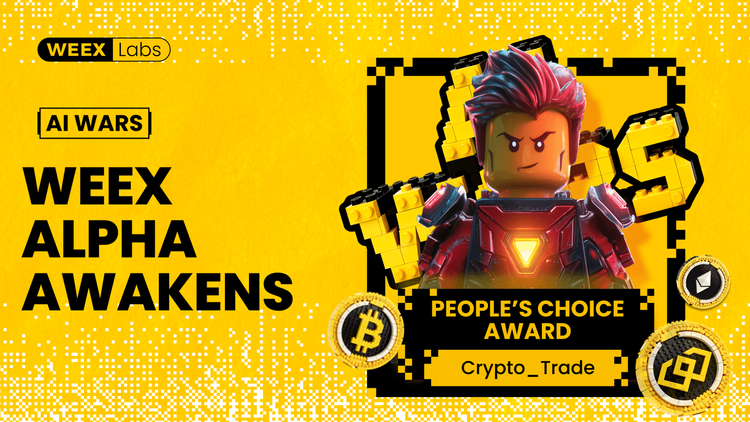
How a Structured AI Crypto Trading Bot Won at the WEEX Hackathon
Crypto_Trade shows how structured inputs and controlled adaptability can build a more stable and reliable AI crypto trading bot within the WEEX AI Trading Hackathon, highlighting a practical path toward scalable AI trading systems.


 App
App