
The Trump 2.0 Era: What New Changes in Cryptocurrency Regulation? Key Policy Adjustments Checklist




Original Article Title: "The Trump 2.0 Era: What New Changes in Cryptocurrency Regulation? A Review of Key Policy Adjustments in the First 8 Weeks"
Original Article Author: Weilin, PANews
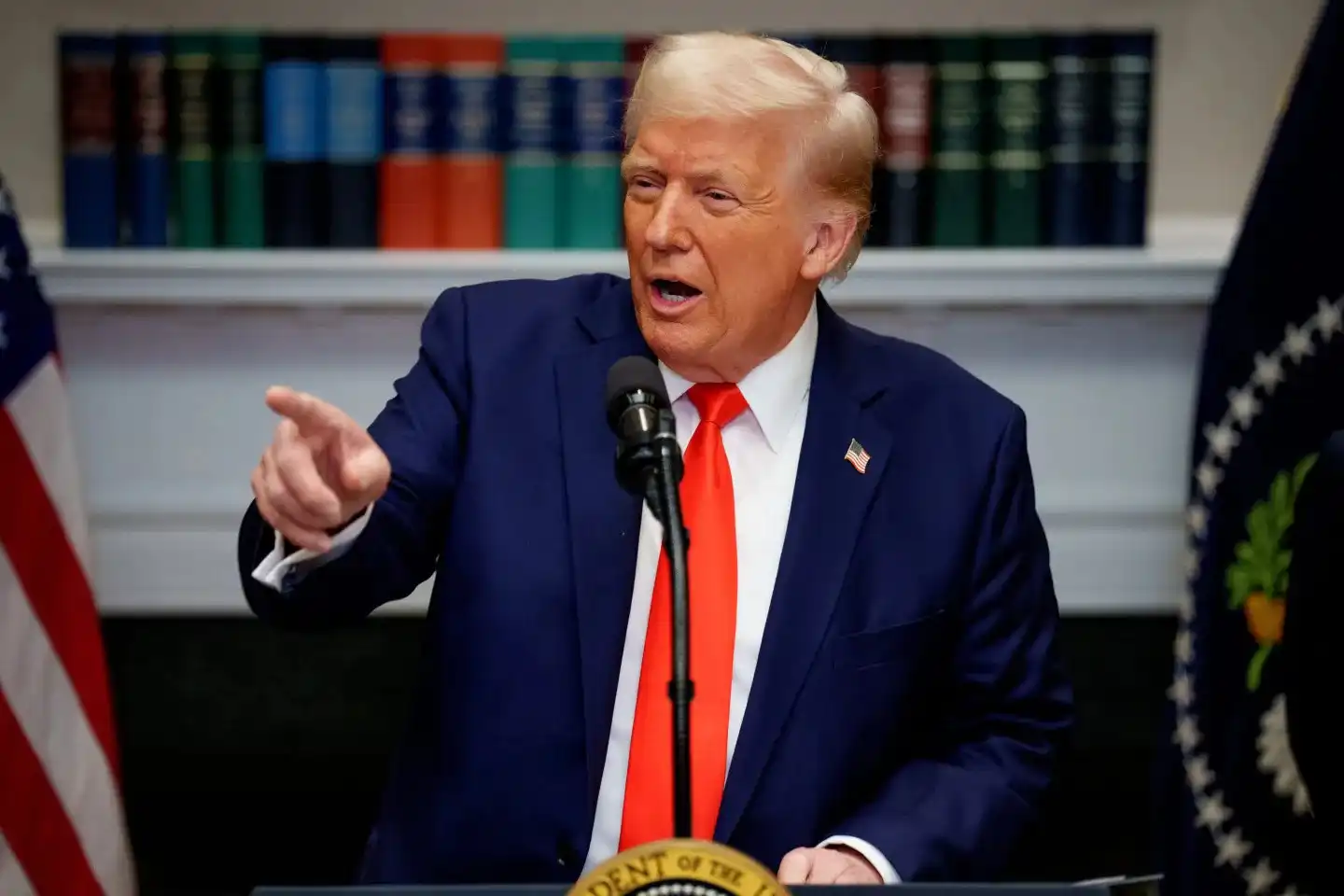
Since the start of Trump's second presidential term on January 20, the landscape of cryptocurrency regulation in the United States has seen a series of intense and climactic developments. In just eight weeks, from the SEC chairman's stepping down to Trump signing two executive orders in a row — announcing the development of a digital asset plan, declaring a Bitcoin strategic reserve, and hosting the first-ever White House summit on digital assets — the crypto market has continuously reacted. With various policy changes causing fluctuations, the entire industry has been both excited and on edge.
This article will categorize and take stock of these significant cryptocurrency regulatory policy measures based on different policies, and interpret their profound impact on the crypto industry.
Trump Signs Executive Order on "Strengthening American Leadership in Digital Financial Technology"
On the third day of his presidency, January 23, the U.S. President Trump signed the executive order "Strengthening American Leadership in Digital Financial Technology," which proposed the establishment of the "President's Digital Asset Market Working Group" to explore federal regulatory measures for stablecoins and relevant schemes for national digital asset reserves, and explicitly prohibited the "creation, issuance, circulation, or use" of central bank digital currencies (CBDCs).
SEC Chairman Change, Major Regulatory Strategy Adjustments
In July of last year, at the Bitcoin 2024 conference held in Nashville, Trump delivered a speech, promising to remove the much-criticized SEC chairman Gary Gensler on his first day in office. On November 22, 2024, the SEC announced that Gary Gensler would step down on Trump's first day in office. On January 20 of this year, he officially stepped down. He was succeeded by Paul Atkins, CEO of Patomak Global Partners LLC and former SEC commissioner, whose nomination is currently awaiting congressional confirmation.
On January 22, the SEC immediately set up a special crypto task force, began adjusting its regulatory strategy, downsized the group responsible for cryptocurrency enforcement actions, and reassigned some lawyers. The SEC also launched a website for the crypto special task force, with task force leader Hester Peirce outlining ten priority tasks, focusing on the classification and regulation of crypto assets.
On January 24, the SEC announced the revocation of the criticized cryptocurrency accounting policy SAB 121 in its latest Staff Accounting Bulletin No. 122. SAB 121 (Staff Accounting Bulletin No. 121) required digital asset custodians to treat digital assets as liabilities and to report them on the balance sheet at fair value. The cryptocurrency industry was concerned that this might hinder banks from custodying digital assets, potentially excluding banks from the cryptocurrency market.
Additionally, on May 22 last year, the FIT21 bill passed in the House of Representatives, seen as a historic breakthrough for the U.S. cryptocurrency industry. The bill addressed the longstanding disagreement between the SEC and CFTC on cryptocurrency regulation and is currently advancing.
SEC Dismisses Cases Against Cryptocurrency Companies
On February 27, the SEC terminated its investigation into Gemini Trust without enforcement action. Prior to this, the SEC had withdrawn its lawsuit against Coinbase and terminated investigations into OpenSea, Robinhood, and Uniswap. In the seventh week of the Trump administration (March 3 - March 9), the SEC agreed to dismiss the lawsuit against Kraken, with no fines, no admission of wrongdoing, and no impact on Kraken's business model.
Redefining "Trading Platform" to Overturn IRS's DeFi Broker Rule
On March 11, news broke that the SEC is evaluating a proposal to redefine "trading platform," which could provide clearer guidance for the regulatory framework of U.S. cryptocurrency exchanges.
Meanwhile, the U.S. House of Representatives passed a resolution overturning the IRS's broker rule for decentralized finance (DeFi) platforms. The rule required crypto entities to collect specific taxpayer and transaction information, which DeFi platforms found challenging to comply with. Previously, the U.S. Senate had voted in favor of the resolution, but due to budget rules, it still needs to be voted on again before being presented to President Trump for signing.
Pardon of Silk Road Founder Ross Ulbricht
On January 22, Trump fulfilled another promise made at the Bitcoin 2024 conference by pardoning Silk Road founder Ross Ulbricht, who was serving a life sentence without parole. Ross Ulbricht later expressed his gratitude to Trump on Twitter, as Trump released him after 11 years in prison.
SEC, CFTC, Treasury, Commerce Departments Appoint Crypto-Friendly Officials
On January 20, following the presidential inauguration, the White House announced that the newly sworn-in President Trump had appointed Republican Mark Uyeda as the acting chairman of the U.S. Securities and Exchange Commission (SEC). Prior to this, Trump had announced the nomination of Paul Atkins as the SEC chairman.
In his second week in office, Trump's nominee for Treasury Secretary, Scott Bessent, was confirmed by the Senate. This financial heavyweight holds a positive view on cryptocurrency.
In the fourth week, Trump nominated Brian Quintenz, a former Commodity Futures Trading Commission (CFTC) commissioner and Kalshi executive in the prediction betting market, as the new chairman of the CFTC.
In the fifth week, billionaire Howard Lutnick was confirmed as the next Commerce Secretary, prompting the market to start paying attention to how he would impact the regulatory environment for the crypto industry.
In both the Senate and the House of Representatives, there are also officials friendly to crypto in key positions. On January 23, the Senate Banking Committee established a Digital Assets Committee, with Senator Cynthia Lummis as chair, to drive industry compliance. On March 3, House Republican leaders, along with Congressman Ritchie Torres, jointly established the "Congressional Crypto Caucus" to promote crypto-friendly legislation and form a voting bloc in the House in support of digital assets.
Official Announcement of Strategic Bitcoin Reserve and Digital Asset Reserve
In the sixth week in office (February 24 - March 2), Trump announced on social media the 5 major categories for the crypto strategic reserve, which will include BTC, ETH, XRP, SOL, and ADA. The inclusion of ADA sparked controversy, with some in the market humorously referring to it as an "ad spot." However, on March 7, AI and crypto tycoon David Sacks stated that ADA, SOL, and XRP were mentioned because they are the top five cryptocurrencies by market capitalization.
On the morning of March 7, Beijing time, Trump's promised strategic Bitcoin reserve arrived! David Sacks announced on the X platform that U.S. President Trump had officially signed an executive order to establish a strategic Bitcoin reserve and digital asset reserve. However, as both reserves are mainly supported by proceeds from "criminal or civil asset forfeiture," the token prices, including BTC, in the market initially reacted negatively but saw a slight recovery later.
In addition to the President's executive order, in terms of Congressional legislation, on March 12, U.S. Senator Cynthia Lummis reintroduced the Bitcoin bill in the 119th Congress, titled the Boosting Innovation, Technology, and Competitiveness through Optimized Investment Nationwide Act of 2025. This bill will allow the U.S. government to hold over 1 million bitcoins. The bill was initially proposed in July 2024, requiring the U.S. government to purchase 200,000 bitcoins annually over five years, funded by adjustments to existing funds from the Federal Reserve and the Treasury Department. With this revision, the U.S. government can hold additional bitcoins through legal means, including civil or criminal forfeiture, donation, or transfer to federal agencies.
White House Holds First-Ever Digital Asset Press Conference and White House Digital Asset Summit
In the third week of Trump's presidency (February 3 to February 9), David Sacks and several U.S. Congressional lawmakers held the first press conference on digital assets at Capitol Hill, outlining the latest plans for U.S. digital asset development by the White House and Congress. During the conference, Sacks expressed his eagerness to collaborate with congressional lawmakers and emphatically announced the intention to "usher in a golden age of digital assets."
On March 7, the U.S. held its first White House Digital Asset Summit, where President Trump delivered a brief speech. He stated, "Last year, I pledged to make America a global Bitcoin superpower and the world capital of crypto. We are taking historic action to fulfill this promise and propose that from today onwards, America will follow the rule every Bitcoin holder knows well—never sell your Bitcoin."
Trump mentioned the termination of the Biden administration's "Stranglehold Action 2.0" against the crypto industry. However, despite reports from the event indicating industry leaders' approval, the meeting did not lead to a price surge for assets like Bitcoin and Ethereum, with the cryptocurrency market experiencing a significant decline post-summit.
Market Sees a Wave of Cryptocurrency ETF Applications
As of March 12, tokens with ETF applications include at least DOGE, LTC, HEAR, SOL, XRP, SUI, AVAX, DOT, LINK, ADA, APT, AXL, and others. According to Bloomberg analysts James Seyffart and Eric Balchunas, there is a relatively high probability of approval for LTC, DOGE, SOL, and XRP spot ETFs. The market's expectations for the launch of ETFs for other mainstream crypto assets on the U.S. capital markets have significantly increased.
Due to significant personnel changes at the SEC, its policies are becoming more crypto-friendly. If the U.S. launches a Bitcoin ETF, it may directly trigger similar actions in other countries and regions around the world. Bloomberg analysts expect the SEC to make a decision on the proposed Bitcoin ETF in October this year.
Senate Holds Hearing on "Debanking," Sparks Wide Discussion
On the evening of February 5, the U.S. Senate Committee on Banking, Housing, and Urban Affairs held a hearing on "Investigating the Real Impacts of Debanking on America." The witnesses included Nathan McCauley, Co-Founder and CEO of Anchorage Digital; Stephen Gannon, Partner at Davis Wright Tremaine LLP; Mike Ring, President and CEO of Old Glory Bank; and Aaron Klein, Senior Fellow of Economic Studies at the Brookings Institution. The hearing explored the effects of bank account closures and financial service restrictions on businesses and individuals, as well as examined related policy responses.
On February 11, during a Senate Banking Committee hearing, Federal Reserve Chair Jerome Powell stated that given the criticism faced by the crypto industry being excluded from banking services, it is now time to "revisit" the issue of debanking. Senator Tim Scott, Chairman of the Senate Banking Committee and Republican Senator from South Carolina, asked Powell if he agreed to commit to working with legislators to end debanking, to which Powell agreed. It is expected that further discussions on "debanking" will unfold throughout this year.
U.S. States Show Strong Interest in Bitcoin Reserves
As of March 4, 24 states in the U.S. have introduced draft cryptocurrency reserve bills, with most states' bills still in the drafting or legislative review stages. Progress has been quicker in a few states such as Texas and Utah, while bills in 5 states (Pennsylvania, Montana, North Dakota, Wyoming, South Dakota) have been rejected. Reasons for rejection include concerns over risks and volatility associated with digital assets, taxpayer funding risks, the high energy consumption of crypto mining, and the potential for digital currency to be used for illicit activities.
Leading the charge, Texas's State Senate previously passed the SB 21 bill, which mandates the creation of a fund managed by the state government to hold Bitcoin and other cryptocurrencies. The Texas State Comptroller will oversee the reserve, which will hold at least $5 billion in cryptocurrency market value and be eligible for state budget allocations.
Legislation Around Stablecoin Regulation
On February 5, U.S. Senator Bill Hagerty introduced the Stablecoin Regulation Act (GENIUS Act), which brings stablecoins such as USDT and USDC into the Federal Reserve's regulatory framework, providing guidance for compliant operations. As of March 12, the U.S. Senate has updated the bill, with the revised version notably expanding the "Reciprocal Payments of Stablecoins in Overseas Jurisdictions" provision.
During a White House summit, Trump directed his policy enforcers to push for stablecoin legislation, aiming to have it completed before the August congressional recess. The initial goal was to submit the legislation within the first 100 days of his term, but the timeline has now been extended by 4 months.
Conclusion
Overall, since Trump took office 8 weeks ago, U.S. crypto regulation has seen a series of significant adjustments, from policy directions to key personnel changes, all pointing towards a more open regulatory environment. Can the U.S. truly become the world's cryptocurrency capital, as Trump stated? The uncertainty of policies persists, market reactions are cautious, and the future regulatory direction still requires continuous monitoring.
You may also like

In the name of charity, for the benefit of the family: How the Trump family turned charity into profit?

Will Gold Break $4,500 After Tonight's Fed Decision? What XAUT and PAXG Traders Need to Know

Cursor, why did you get on Musk's spaceship?

Morning Report | DeepSeek completes over $7 billion in financing, with a valuation exceeding $50 billion; Musk's personal wealth has surpassed the total market value of Bitcoin

SharpLink CEO: How to understand that Ethereum developers have just surpassed 1 million?

Morning Report | MiCA grace period expires on July 1; Kalshi's trading volume in the first week of the World Cup breaks $5.1 billion, setting a record

The foundation of SpaceX's trillion-dollar valuation: Who is dividing Musk's annual capital expenditure of tens of billions?

How to exit after asset tokenization?

The stablecoin positioning battle escalates: When compliance is just a ticket to entry, will USD1 become the biggest winner?

A16Z: The sun bears witness, SpaceX is worth 7.5 trillion
Mergers and acquisitions in the cryptocurrency market are exceptionally active

Concerns Behind the Binance Customer Service Controversy

SpaceX Stock Prediction After the IPO: Can SPCX Reach $200 Before QQQ Inclusion?

Congratulations to Carl Moon on His Historic Ferrari Challenge Le Mans Podium Triumph
Crypto influencer and racing enthusiast Carl Moon finished third in the Ferrari Challenge Le Mans Coppa Shell class, marking his best result of the year. As his racing partner and sponsor, WEEX celebrates this remarkable achievement and continues to lead crypto’s journey beyond boundaries, uniting the innovation of digital assets with the passion of motorsport.
Can the CLARITY Act Become Law by July 4? Everything You Need to Know About the Final Battle

France vs Senegal World Cup 2026: Mbappe’s New Era Begins Against a Historic Rival
What is the connection between Huang Zheng of Pinduoduo and blockchain?

Morning Report | Prediction market platforms like Kalshi and Polymarket jointly sue Kentucky over 14.25% trading tax; Bridgewater founder discusses decision-making in the AI era: principled thinking should run parallel to AI, human insight remains irre...
In the name of charity, for the benefit of the family: How the Trump family turned charity into profit?
Will Gold Break $4,500 After Tonight's Fed Decision? What XAUT and PAXG Traders Need to Know
Cursor, why did you get on Musk's spaceship?
Morning Report | DeepSeek completes over $7 billion in financing, with a valuation exceeding $50 billion; Musk's personal wealth has surpassed the total market value of Bitcoin
SharpLink CEO: How to understand that Ethereum developers have just surpassed 1 million?
Morning Report | MiCA grace period expires on July 1; Kalshi's trading volume in the first week of the World Cup breaks $5.1 billion, setting a record


