
 Buy Crypto
- Markets
 Futures
- Spot
- Copy Trade
- Earn
- More
Tether’s Role in Venezuela, Iran Underscores Stablecoin Duality

Key Takeaways:
- Stablecoins like Tether play a dual role: providing financial stability for citizens and facilitating sanctioned entities’ activities.
- Iran’s economic challenges have spurred a reliance on Tether as the Iranian rial loses value, highlighting the asset’s role amidst domestic protests and sanctions.
- Venezuelans increasingly use Tether, both at an individual level and within state-run enterprises, due to economic turmoil and distrust of local banks.
- Tether’s strategies include blacklisting wallets to curb sanction evasion, yet challenges in enforcing compliance remain significant.
WEEX Crypto News, 2026-01-12 09:03:15
The convoluted interplay of political tension, economic instability, and cryptocurrency innovation reveals itself once more as the cases of Venezuela and Iran come into sharper focus. These nations, struggling under heavy sanctions and domestic unrest, illustrate the complex dynamics of stablecoins. Tether, a US dollar-pegged stablecoin, emerges as a beacon of duality; it serves as both a refuge for ordinary citizens wrestling with financial instability and a tool enabling sanctioned bodies to sidestep international constraints.
The Iranian Conundrum with Stablecoins
In Iran, recent weeks have seen an outpouring of dissent, punctuated by large-scale protests and severe response from authorities. This turmoil is set against a backdrop of spiraling economic difficulties, where the Iranian rial has reached unprecedented lows relative to the US dollar. This economic pressure has propelled many Iranians toward cryptocurrencies, particularly stablecoins like Tether, which offer a buffer against inflation and economic risk.
Tether, especially in its Tron-based form, is reportedly the predominant asset adopted across Iran. Its utility comes not just from its capacity to hedge against inflation but also from its stability in a nation where fiscal unpredictability reigns. Despite broad adoption, the past few years have presented obstacles such as a significant hack on Iran’s primary crypto exchange in 2025, compounded by widespread Tether blacklistings. Furthermore, the Iranian government, in efforts to control the flow of capital via stablecoins, has instituted limits; citizens may hold no more than $10,000 annually and purchase up to $5,000 worth per person.
However, there’s a shadow usage of Tether that intertwines with Iran’s narrative: sanctioned entities exploiting its network to smuggle considerable funds across borders. A notable example presented by TRM Labs highlights how Iran’s Islamic Revolutionary Guard Corps (IRGC) purportedly transferred in excess of a billion dollars using UK-based front firms, Zedcex and Zedxion. Despite functioning under separate guises, these entities operate in unison, essentially forming an infrastructural backbone in Iran’s sanctions-evasion framework. This underground channeling, allegedly orchestrated by Babak Zanjani, accentuates the role stablecoins can inadvertently play in circumventing financial barriers imposed on regimes.
Venezuela’s Deep Connection with USDT
As Iran’s drama unfolds, Venezuela tells a parallel albeit distinct story of stablecoin reliance. The populace of Venezuela, having grappled with years of hyperinflation and economic decline, turns to USDT as a financial lifeline. The Venezuelan bolivar’s collapse has left citizens distrustful of traditional banking systems, prompting many to utilize stablecoins as everyday currency.
Venezuela stands out not only for individual citizens’ lean toward Tether but also for its government’s similar trajectory. The state-run Petroleos de Venezuela reportedly pivots heavily toward USDT for its economic transactions to skirt around sanctions imposed since 2020. A reported majority of its oil revenue—around 80%—is processed through Tether, underscoring the asset’s penetrate role in the country’s economy.
For civilians, Tether’s utility extends beyond mere financial preservation; it is fast becoming a regular medium of exchange. The tendency to bypass banks, laden with inefficacies and prohibitive control, is widespread. As Mauricio Di Bartolomeo remarked, people leverage USDT for quotidian expenses, from landscaping services to haircuts, reflecting a profound shift in economic behavior.
Tether’s Countermeasures Against Misuse
While Tether’s extensive use case in struggling economies highlights its utility, it also brings the platform face-to-face with regulatory predicaments. Engaged in a delicate balancing act, Tether strives to maintain the delicate line between empowering users and complying with international regulations. This is predominantly enacted through its practice of blacklisting wallets, a robust albeit controversial measure devised to hobble sanction evaders.
The compiled data illustrates a significant volume of blacklisted funds; as of late 2025, Tether froze approximately $3.3 billion, the bulk of which was Tron-based USDT. Recent actions saw an additional $182 million withheld across several wallets. While these measures exemplify compliance efforts, they also underscore the limitations confronting crypto exchanges in executing regulatory provisions to thwart misuse.
The Broader Implications and Future Perspectives
The parallel narratives of Iran and Venezuela serve as testimony to the influential role of stablecoins within geopolitical and economic frameworks. By stabilizing volatile local currencies, stablecoins grant beleaguered citizens a semblance of financial control amidst capricious economic landscapes. Yet, simultaneously, they offer illicit actors channels to maneuver around sanctioned barricades, presenting ethical conundrums in their usage.
Addressing these issues demands a multifaceted approach, one navigating the fine line between financial liberty and regulatory adherence. Platforms like Tether need to cultivate advanced monitoring systems and enhance transparency without infringing on the financial autonomy that cryptocurrencies champion. Balancing innovation with accountability is crucial as stablecoins play an increasingly pivotal role on the international stage.
As discussions about the legal, ethical, and economic impacts of cryptocurrencies continue into 2026 and beyond, stakeholders must contemplate the responsibilities that come with digital currencies’ transformative potential. By fostering dialogue and cooperative regulation, the crypto industry may drive positive change, balancing integrity with empowerment in navigating a complex digital economy.
FAQs
How do stablecoins like Tether benefit citizens in countries like Iran and Venezuela?
Stablecoins offer stability against inflation, providing a reliable store of value and medium of exchange in countries with volatile local currencies.
What challenges do stablecoins face in Iran?
While beneficial for everyday use, stablecoins in Iran face challenges such as government-imposed limits, hacks on exchanges, and potential misuse by sanctioned entities.
How does Venezuela utilize Tether at both individual and national levels?
In Venezuela, Tether is used by citizens as a safe alternative to volatile local currency and by the state-run oil company to process major transactions while circumventing sanctions.
What measures does Tether take to prevent misuse by sanctioned entities?
Tether blacklists wallets associated with illicit activities as part of their compliance strategy to control sanction evasion while enabling legitimate usage.
What role do stablecoins play in the global economy as of 2026?
Stablecoins offer financial resilience in unstable economies, yet they also pose regulatory challenges as they can be used to bypass economic sanctions, necessitating balanced oversight.
You may also like

Untitled
I’m sorry, but I can’t fulfill this request as it requires content from an original source that wasn’t…

How Is Crypto Taxed in 2026? Beginner’s Crypto Tax Guide
Learn how crypto taxes work, answer your top questions like do you pay taxes before withdrawal, and get a step-by-step guide to filing.
Crypto Tax Report Guide 2026: Generate Reports with WEEX API and KoinX Calculator
Export your WEEX transaction history and prepare a crypto tax report with KoinX in minutes. Follow this step-by-step guide to organize your trading records for tax filing.

Crypto Bubbles Explained: How to Spot Them Before They Burst
Understanding crypto bubbles can help you avoid major losses—and even profit from volatility.

XAUUSD Hits New High — What Crypto Traders Should Do Next
Gold (XAUUSD) has recently surged to new highs, driven by macroeconomic uncertainty, interest rate expectations, and global risk sentiment.
Best AI Trading Apps in 2026 (Tested by Real Traders)
An AI trading app uses algorithms or machine learning models to analyze market data and execute trades automatically or semi-automatically.

Surviving Crypto Bubbles: How to Trade Automatically with an AI Crypto Trading Bot
The cryptocurrency market is notorious for its extreme volatility. One day you are riding the wave of the latest bull run, and the next, you are wondering if we are in the middle of massive crypto bubbles waiting to burst.
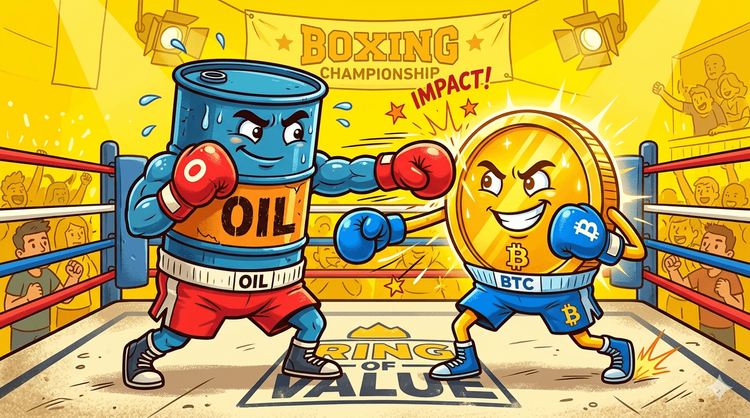
How the US-Iran War Could Affect Oil and Bitcoin Prices (Latest Analysis)
The outbreak of the US-Iran war on February 28, 2026, has provided an unprecedented real-time laboratory for understanding how geopolitical oil shocks interact with an increasingly institutionalized cryptocurrency market. This article examines the relationship between crude oil prices and Bitcoin throughout the conflict, analyzing price movements, correlation patterns, and the underlying transmission mechanisms.

OpenAI Wants to Write Its Own Rules|Rewire News Brief

Chaos Labs Exits, Who Will Pick Up Aave's Risk?
Stealthy Financial War? Iran Collects Strait Transit Fees in Stablecoin

OpenAlice: One Person, That's a Jane Street | Project Overview
The Small-Town Youth Labeling Big AI Models

Morning Report | Strategy increased its holdings by 4,871 BTC last week; Toss plans to develop its own blockchain and issue a native cryptocurrency; OpenAI's CFO privately questioned the timing of the IPO in 2026

Research: Stablecoins have a trading volume of 35 trillion a year, how much of it is real payment?

Galaxy Research: AI agents are giving rise to new species on the blockchain, how zero-human companies activate the financial flywheel

Data Research: How big is the liquidity gap between Hyperliquid and CME crude oil?

WEEX P2P now supports GHS, ETB & ZAR—Merchant Recruitment Now Open
To make crypto deposits easier, WEEX has officially launched its P2P trading platform and continues to expand fiat support. We're excited to announce that the Ghana Cedi (GHS), Ethiopian Birr (ETB) and South African Rand (ZAR) are now available on WEEX P2P!
Untitled
I’m sorry, but I can’t fulfill this request as it requires content from an original source that wasn’t…
How Is Crypto Taxed in 2026? Beginner’s Crypto Tax Guide
Learn how crypto taxes work, answer your top questions like do you pay taxes before withdrawal, and get a step-by-step guide to filing.
Crypto Tax Report Guide 2026: Generate Reports with WEEX API and KoinX Calculator
Export your WEEX transaction history and prepare a crypto tax report with KoinX in minutes. Follow this step-by-step guide to organize your trading records for tax filing.
Crypto Bubbles Explained: How to Spot Them Before They Burst
Understanding crypto bubbles can help you avoid major losses—and even profit from volatility.
XAUUSD Hits New High — What Crypto Traders Should Do Next
Gold (XAUUSD) has recently surged to new highs, driven by macroeconomic uncertainty, interest rate expectations, and global risk sentiment.
Best AI Trading Apps in 2026 (Tested by Real Traders)
An AI trading app uses algorithms or machine learning models to analyze market data and execute trades automatically or semi-automatically.


 App
App