
- Buy Crypto
- Markets
 Futures
- Spot
- Copy Trade
- Earn
- More
South Korean Academia Questions Restriction on CEX Major Shareholder Ownership: May Be Unconstitutional and Contrary to International Norms

In BlockBeats news on January 16, in response to the South Korean financial authorities' discussion on the idea of restricting the ownership stake of major shareholders of virtual asset exchanges to 15%-20%, several scholars expressed caution at the "Direction of Stablecoin Issuance and Exchange Infrastructure Institutionalization" seminar held on January 16. Professor Wen Zheyu of Sungkyunkwan University School of Business pointed out that forcibly reducing the ownership stake of major shareholders could raise concerns regarding property rights protection and entail risks of unconstitutionality. He also mentioned that compared to the equity structures of Binance and Coinbase, it is not uncommon for founders to maintain a higher ownership stake globally, and any related restrictive measures may contradict the international trend emphasizing responsible management.
Furthermore, Professor Kim Yoon-kyung of Incheon University believed that directly intervening in equity structures through percentage limits is too aggressive a measure and may weaken industry innovation and development momentum. Several participating experts suggested that regulators could guide equity dispersion and compliance development through measures such as strengthening qualifications for major shareholders and improving IPO-related systems, rather than opting for mandatory divestiture arrangements. (News1)
You may also like

Particle Founder: The entrepreneurial insights I have gained the most from in the past year

Huang Renxun's latest podcast transcript: The future of Nvidia, the development of embodied intelligence and agents, the explosion of inference demand, and the public relations crisis of artificial intelligence

OKX Ventures Research Report: AI Agent Economic Infrastructure Research Report (Part 1)

The migration of settlement rights: B18 and the institutional starting point of on-chain banks

From Tencent and Circle: Looking at the Simple and Difficult Questions of Investment

The second half of stablecoins no longer belongs to the crypto circle

Cursor "Shell" Kimi Controversy Reversed: From Copyright Infringement Allegations to Authorized Collaboration, China's Open Source Model Once Again Becomes a Global AI Foundation

The Real Reason Tokens Don't Sell: 90% of Crypto Projects Overlook Investor Relations

Is the income of pump.fun real, earning a million dollars a day despite the market downturn?

The real reason why tokens are not selling: 90% of crypto projects neglect investor relations

Who is the true winner of the "Tokenization" narrative?

Moss: The Era of AI-Traded by Anyone | Project Introduction

Chip Smuggling Case Exposes Regulatory Loophole | Rewire News Evening Update

How a Structured AI Crypto Trading Bot Won at the WEEX Hackathon
Ritmex demonstrates how disciplined risk control and structured signals can make an AI crypto trading bot more stable and reliable on WEEX, highlighting the importance of combining execution discipline with scalable AI trading systems.

Old Indicator Fails, Three Major New Signals Emerge: BTC True Bottom May Still Be Below $60K

Meeting OpenClaw Founder at a Hackathon: What Else Can Lobsters Do?
Huang Renxun's Latest Podcast Transcript: NVIDIA's Future, Embodied Intelligence and Agent Development, Soaring Demand for Inferencing, and AI's PR Crisis
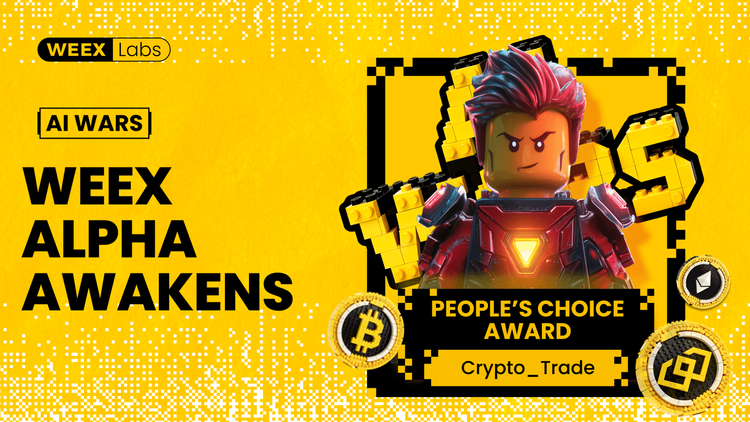
How a Structured AI Crypto Trading Bot Won at the WEEX Hackathon
Crypto_Trade shows how structured inputs and controlled adaptability can build a more stable and reliable AI crypto trading bot within the WEEX AI Trading Hackathon, highlighting a practical path toward scalable AI trading systems.


 App
App