
Japanese Web3 Market Insights: Government Policies, Corporate Trends, and 2025 Outlook




Original Article Title: "2024 Japan Web3 Market: Government Policies and Major Enterprises' Trends - Outlook for 2025"
Original Source: Pacific Meta
Introduction
Currently, Japan is attempting to pioneer a new chapter on the Web3 stage. As a country at the forefront of cryptocurrency regulation, Japan's efforts are not limited to refining laws and regulations but also act as a bridge connecting new technologies with society, attracting widespread attention domestically and internationally. This trend is further accelerating, and Japan's environment around Web3 is rapidly evolving.
Against the backdrop of global exploration of Web3 possibilities, what direction is Japan moving in? What specific regulations have been put in place? What challenges are enterprises facing? And what are the needs of individual users and investors? To answer these questions, this article will analyze the latest developments in Japanese Web3 in 2024 from the perspectives of "Society and Politics," "Enterprises," and "Individual Users."
This article is authored by the Web3 accelerator Pacific Meta. Pacific Meta is a professional company driving Web3 innovation by providing services such as fundraising, marketing, and business development support.
1. Trends in Society and Politics
1-1. New Government under Shigeru Ishiba

Image Source: The Nikkei
In September 2024, Shigeru Ishiba was elected as the new president of the Liberal Democratic Party in the party's leadership election. Due to Japan's system, the leader of the ruling party typically becomes the prime minister. Therefore, Mr. Ishiba, as the current president of the ruling party, will become Japan's new leader and be responsible for forming a new government. Under the previous leadership of Fumio Kishida, Japan has been actively promoting Web3 development, and people are looking forward to this trend accelerating further under Ishiba's leadership.

Image Source: State Strategy Discussed by "Web3 Minister" Akihira Taira as a Highlight of Cabinet Reshuffle
Of particular note is the presence of Akihira Taira, head of the Liberal Democratic Party's Web3 Project Team (Web3PT). As a key figure in driving Web3 development during the Kishida administration, Mr. Taira has been appointed as the Minister of the Digital Agency in the new administration. His assumption of this key role is expected to further enhance his influence and decision-making power in policy matters.
In Japan, Web3 technology is seen as a key driver of new economic growth, so people have been eagerly awaiting the improvement of relevant regulations and legal systems. With the establishment of the Kishida administration, it is expected that the momentum of policy promotion will be further strengthened. In particular, in terms of clarifying the legal framework in the Web3 field and enhancing international competitiveness, accelerated development is expected.
1-2. Changes in Regulation and Taxation
Corporate Entity: End-of-Year Market Value Assessment Tax No Longer Applicable
As part of the significant tax system reform for the 2024 fiscal year, corporate-held crypto assets are excluded from the scope of the "end-of-year market value assessment tax." Previously, domestic corporations faced the tax risk of unrealized gains solely due to holding crypto assets, leading many companies to establish overseas entities to conduct business. This policy adjustment has created an environment for domestic Japanese companies where they no longer need to worry about unrealized gains taxation and can focus on their business activities.
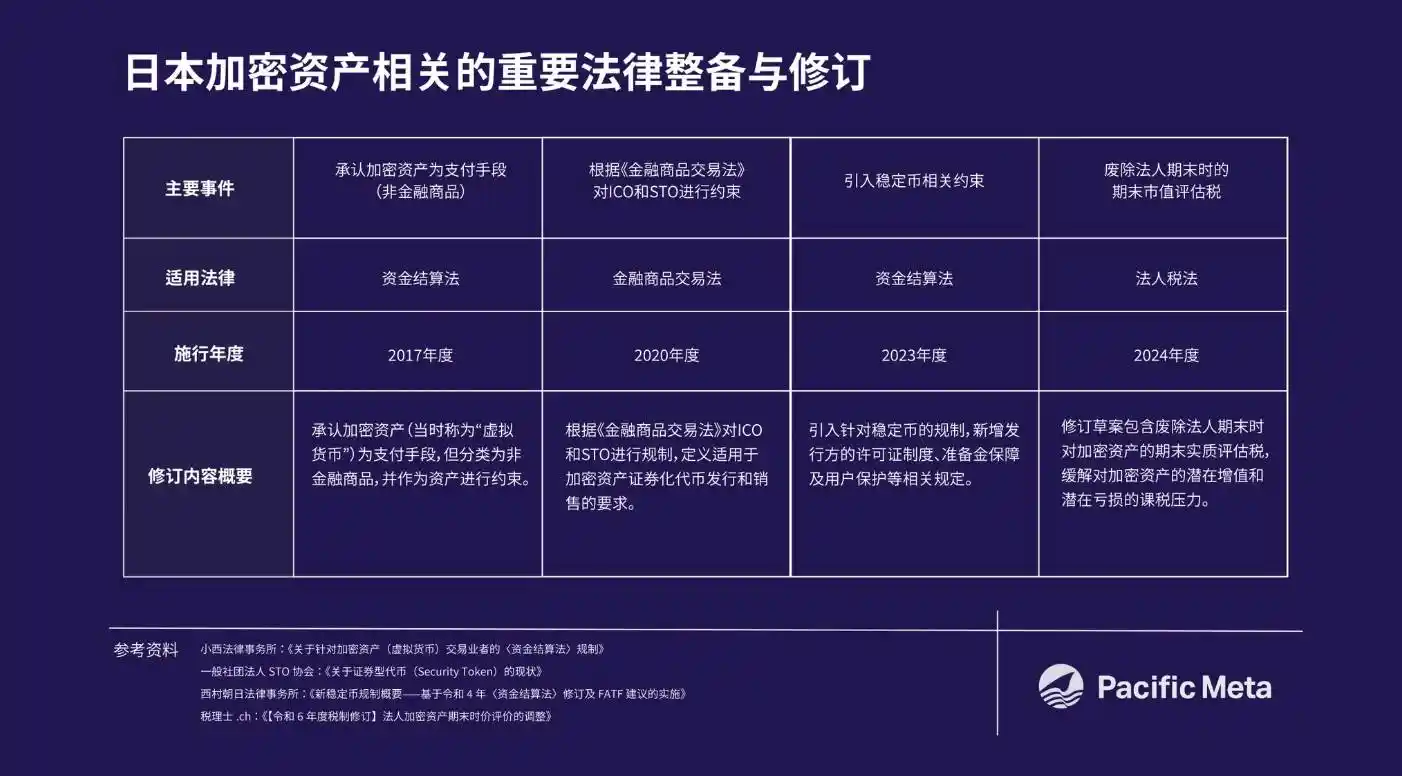
Japan's efforts to enhance regulation regarding crypto assets began with the amendment of the "Payment Services Act" in 2017. Through this law, crypto assets like Bitcoin were recognized as a payment method and positioned as digital assets distinct from legal tender. Subsequently, in 2020, ICOs (Initial Coin Offerings) and STOs (Security Token Offerings) were included in the regulatory framework of the "Financial Instruments and Exchange Act," establishing a foundation with the aim of protecting investors. Additionally, in 2023, Japan introduced regulations concerning stablecoins (crypto assets pegged to the value of legal tender), steadily advancing the legal system in the Web3 field.
However, in terms of taxation, there has been a lack of significant progress for many years. Specifically, the taxation of corporate-held crypto assets has long been viewed as a key issue affecting the development of Japan's Web3 industry. Under the current system, unrealized gains of crypto assets held by companies at year-end are taxed under the "end-of-year market value assessment tax" system. This system disregards the risk of crypto asset price fluctuations and has created financial burdens for many companies. As a result, many enterprises wishing to operate in Japan have chosen to avoid holding crypto assets domestically and instead establish legal entities overseas to conduct their business.
This tax system reform is expected to promote an increase in domestic token issuance and fundraising in Japan. Especially for startups and new businesses considering entering the market, Japan will become a more attractive market.
Taxation Issues for Individual Investors and Future Prospects
On the other hand, there are still many issues regarding the taxation of individual investors. Currently, gains from personal crypto asset trading are classified as "miscellaneous income" and taxed under the comprehensive tax system, with the highest tax rate reaching 55%. The heavy tax burden and complex reporting procedures have become significant obstacles for many individual investors.
As the leader of the Web3 project team of the ruling party, the Liberal Democratic Party, Representative Hirano pointed out at the "WebX2024" conference in August 2024 the current tax system's adverse impact on individual investors. He emphasized that the tax treatment of individual investors' crypto asset gains should be changed to a separate declaration taxation similar to financial income at 20%. If this reform is implemented, it will not only relieve the burden on individual investors but also help stimulate the domestic market.
As the discussion on tax reform progresses, the government and the Financial Services Agency's movements are being closely watched. According to various reports, the relevant discussions are steadily advancing. If the tax system reform for individual investors is finally implemented, it is expected to broaden the domestic retail investor base and drive overall growth in the crypto asset market.
Shift in the Financial Services Agency's Regulatory Stance
Image Source: ShutterStock
Previously, the Financial Services Agency had enforced strict regulations on crypto assets citing investor protection. However, in 2024, there was a shift in its regulatory stance. The Financial Services Agency is studying the inclusion of crypto assets under the "Financial Instruments and Exchange Act." This move indicates that crypto assets may be redefined legally as "financial instruments." If this classification is achieved, it may bring about the following key changes:
· Acceleration of Tax Reform
Considering crypto assets as financial instruments may drive further tax system improvements, thereby reducing the tax burden on individual investors and companies.
· Discussion on Bitcoin ETF Introduction
The reclassification will pave the way for financial products involving crypto assets, making the introduction of a Bitcoin ETF more feasible. This will promote the integration of the traditional financial market with the crypto asset market, attracting more individual and institutional investors.
Additionally, the Financial Services Agency is also exploring relaxing regulations on in-game token usage to provide a more favorable environment for game companies to flexibly utilize tokens. These policy changes may drive growth in crypto asset-related businesses, boosting the Japanese Web3 industry's greater advantage in international competition.
1-3. Business Opportunity Expansion under the New Legal System
Allowance of Limited Liability Company DAO Establishment
On April 22, 2024, Japan officially allowed the establishment of Limited Liability Company (LLC) structured DAOs (Decentralized Autonomous Organizations). This legal amendment granted DAOs formal legal entity status in Japan, enabling them to operate as contracting parties and own assets such as real estate. This proposal originated from the Liberal Democratic Party's "Web3 Whitepaper 2023" released in 2023, and it was rapidly realized, drawing broad attention from the domestic and international blockchain industry.
During the establishment of a Limited Liability Company DAO, several legal challenges were faced, with the two most significant issues being "handling of employee rights tokens" and "obligation to disclose employee information." Regarding the "handling of employee rights tokens," this regulatory reform recognizes a portion of the DAO's issued tokens as "non-profit distribution tokens" or "tokens held by executing employees" and treats them as the second category of securities under the Financial Instruments and Exchange Act. Regarding the "obligation to disclose employee information," the new system allows the DAO not to disclose employee information.
The establishment of a Limited Liability Company DAO has opened up a wide range of applications, including local revitalization projects and community-led projects in the sports and entertainment sectors.
Legal Amendment Allowing LPS to Invest in Cryptographic Assets Receives Cabinet Approval
In February 2024, the Japanese Ministry of Economy, Trade, and Industry passed a legal amendment allowing Limited Partnership (LPS) to hold cryptographic assets. This amendment enables LPS, which traditionally primarily invested in stocks, bonds, and other traditional financial products, to invest in and hold cryptographic assets.
Prior to this, Japanese LPS could not contribute to cryptographic assets, leading to domestic Web3 projects relying on overseas venture capital (VC) for fundraising. This legal amendment is expected to promote source diversification of funds and activate the domestic market.
The amendment is currently under parliamentary review, and if it passes smoothly, it is expected that from 2025, domestic venture capital will officially start investing in tokens.
1-4. Practices of Local Public Entities in Web3 Applications: Initiatives in Tokyo and Osaka
In Japan, utilizing Web3 technology to promote local revitalization is actively being explored. Many cities have implemented unique initiatives at the local level. Here is a brief introduction to some of the practices in Tokyo and Osaka as of 2024.
Tokyo - Emerging Examples
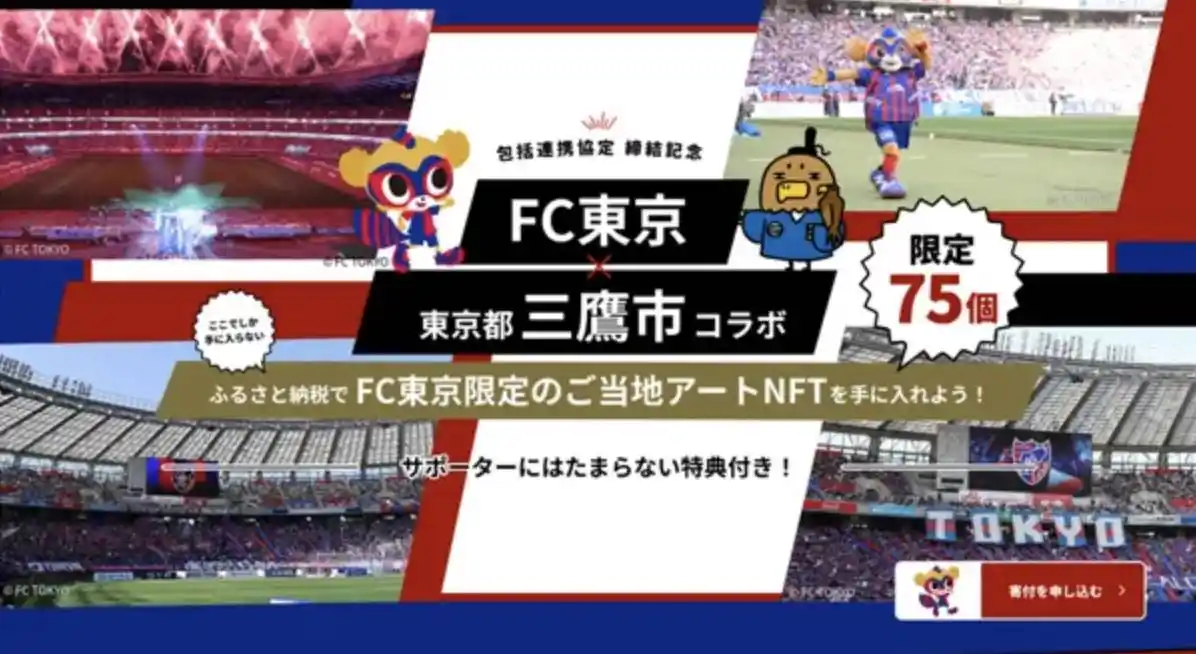
Image Source: FC Tokyo Official Website
Tokyo is advancing local regional revitalization using Web3 technology.
In the "Hometown Tax Return Gift NFT Project" in collaboration with FC Tokyo in Mitaka City, by offering limited edition NFT digital art in collaboration with FC Tokyo as a hometown tax return gift, a new form of donation has been innovated. Sports fans and local residents can support Mitaka City while also enjoying the fun of NFTs.
On the other hand, the "Aoshima DAO Project" is dedicated to DAO-ifying Aoshima, an outlying island of Tokyo. It emphasizes residents' opinions and participation, aiming to operate regional affairs in a community-driven manner and explore the future of resource utilization and sustainable development.
Furthermore, in Odomari City, to protect tourism resources, a token-based crowdfunding approach has been adopted. By issuing tokens to raise funds, the funds are used for the opening of traditional Japanese restaurants and inns. In this way, people interested in regional revitalization can participate through financial support.
These practical examples clearly demonstrate that Web3 has brought new value to local communities.
Osaka - World Expo Boosting Digital Social Development
Osaka Prefecture, which will host the World Expo in 2025, is promoting the innovative application of Web3 technology with the "EXPO 2025 Digital Wallet" at its core. This digital wallet can be used for cashless payments, NFT acquisition, and point rewards, aiming to provide a diverse experience for the World Expo venue and related facilities, achieving a cashless World Expo in Osaka.
Based on this platform, a digital stamp NFT event around dining establishments near the Expo venue was launched in April 2024. Users can collect digital stamps from visited dining establishments and enjoy the fun of stamp collecting.
In addition, the Osaka City Museum Consortium also plans to launch a digital stamp NFT activity based on NFTs starting in November 2024 to enhance the museum visiting experience using digital technology in preparation for the World Expo.
Simultaneously, Habikino City in Osaka Prefecture will be the first in the Kinki region to introduce the sale of "Digital Resident Card NFT" in October 2024. Purchasers can enjoy free services and discount benefits at BBQ restaurants and experiential facilities in the city.
Seizing the opportunity of the World Expo, Osaka Prefecture is actively leveraging Web3 technology to achieve further development in regional revitalization and the digital society.
2. Corporate News
2-1. Financial Industry Updates
Sony Bank: Initiating Various Web3 Technology Application Initiatives
In 2024, Sony Bank announced a series of Web3 technology-based initiatives, outlining its policy to promote the integration of finance and entertainment. In April, Sony Bank launched digital securities development based on entertainment IP (Intellectual Property). Through this plan, content such as music, movies, and games can be issued as asset-backed digital securities, providing users with new financial product choices. In addition, Sony Bank has also started a pilot project for issuing stablecoins based on fiat currency, developing blockchain wallet technology to expand the application scenarios of the Web3 economy.
In July of the same year, Sony Bank released the application "Sony Bank CONNECT" for Web3 entertainment. This application is linked to the NFT marketplace "SNFT" operated by the Sony Group, allowing users to view and manage their NFT collections. The app provides a feature to display NFTs on the main screen and supports showcasing NFTs in the 3D gallery "Rooms," further enhancing the entertainment experience.
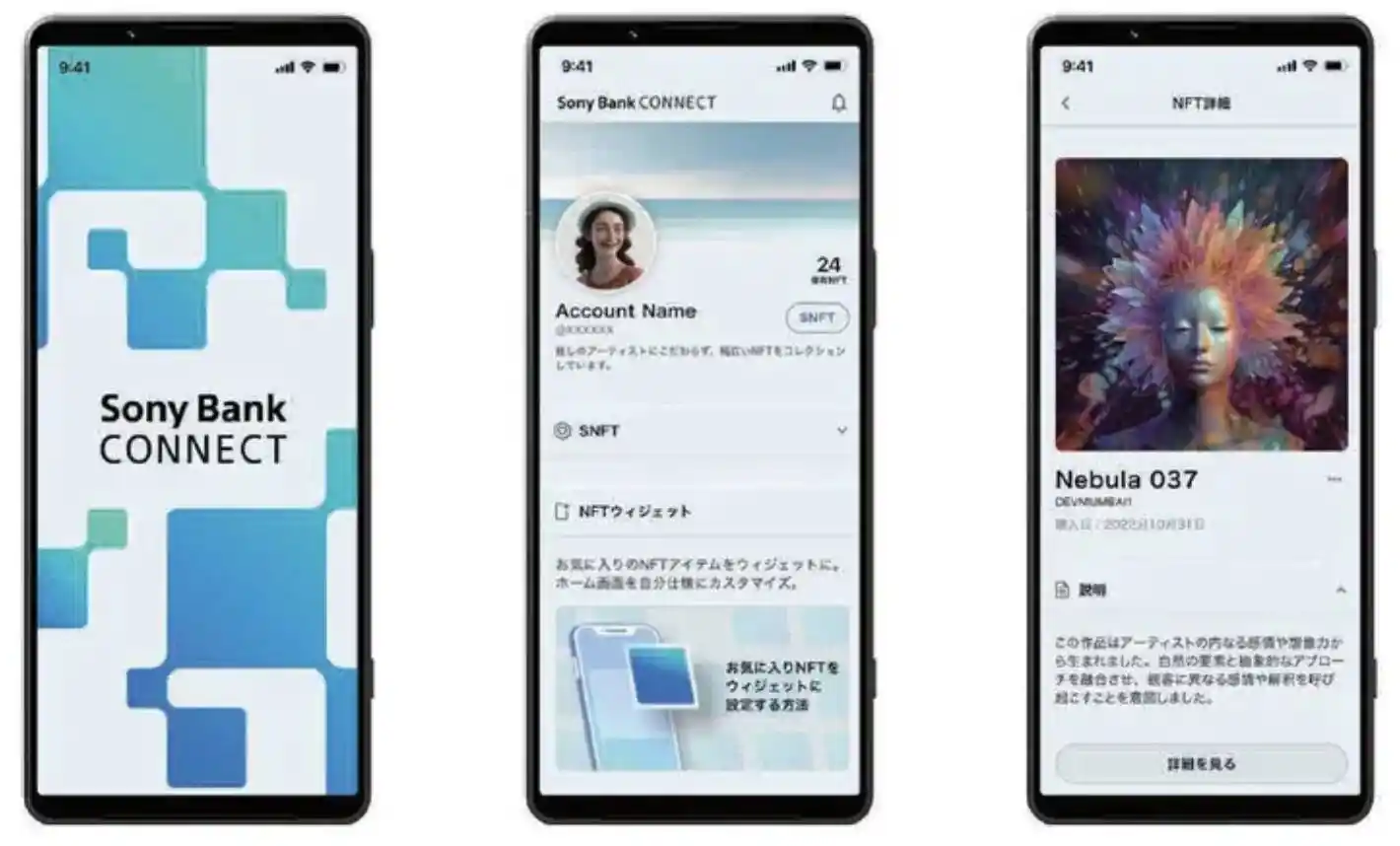
Image Source: New service name Sony Bank CONNECT decided to release a web3 entertainment app in the summer of 2024
These initiatives fully leverage Sony Group's strengths in the entertainment industry while exploring the potential of Web3. Sony Bank, through Web3 technology, aims to go beyond traditional financial services, creating an integrated "Finance x Entertainment" complex industry for individual users, demonstrating a new service and value vision.
2-2. Dynamics in the Gaming Industry
Sony: Officially Entering Web3, Drawing Domestic and International Attention
The overall focus of the Japanese Web3 industry is Sony Group's joint venture company with Startale, "Sony Block Solutions Labs," which launched the Layer 2 blockchain "Soneium." Founded in September 2023, this company combined Sony and Startale's technical capabilities to jointly develop a public blockchain aimed at providing a convenient platform that integrates Web2 and Web3 to drive blockchain mass adoption.
Soneium not only focuses on providing Web3 solutions but also strengthens integration with Sony's existing businesses and support for creators, aiming to build a mechanism core to rights protection and benefit sharing. This release has driven the active development of related projects. In August 2024, YGG Japan announced the launch of the game-specific Layer 3 chain "YAIBA" connected to Soneium to support the environment needed for Web3 game development.
Square Enix: Partnering with SuiPlay
At the Korea Blockchain Week held in September 2024, Sui development company Mysten Labs surprised attendees by announcing its portable Web3 gaming platform "SuiPlay" had entered into a partnership with the Japanese gaming giant Square Enix. SuiPlay utilizes sleek and highly scalable blockchain technology to provide a platform that seamlessly integrates traditional game development with Web3. While the specific details of the partnership have not been disclosed, this move showcases the potential of Web3 in the traditional gaming market, attracting attention from the entire industry.
double jump.tokyo: New "Romance of the Three Kingdoms" Series Developed Utilizing SEGA IP
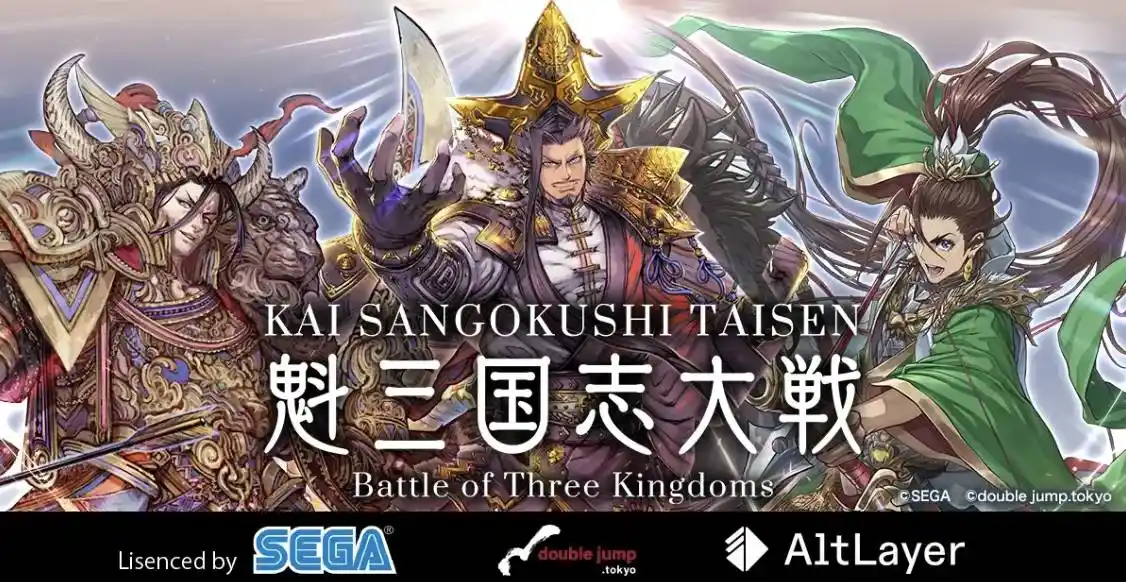
Image Source: double jump.tokyo adopts a new blockchain game based on SEGA's "Romance of the Three Kingdoms" IP utilizing AltLayer's L2 blockchain "SG Verse"
At the Tokyo Game Show 2024, double jump.tokyo announced that they are actively developing a new blockchain game titled "Kai: Romance of the Three Kingdoms - Battle of Three Kingdoms" based on SEGA's licensed IP. This game, built on NFT technology, aims to deliver a fresh gaming experience to players.
2-3. Real Estate Industry Trends
NOT A HOTEL: Raises ¥5.5 Billion to Expand Business Footprint

Image Source: X
In the real estate industry, the innovative NFT-focused company "NOT A HOTEL" has garnered widespread attention. The company's core business model revolves around shared villas, where users can purchase the entire property or buy on a shared ownership basis for either 10 days or 30 days per year.
In 2024, NOT A HOTEL successfully raised approximately ¥5.5 billion and plans to expand new locations domestically and internationally, especially in tourist destinations and resort areas to attract foreign investors and visitors.
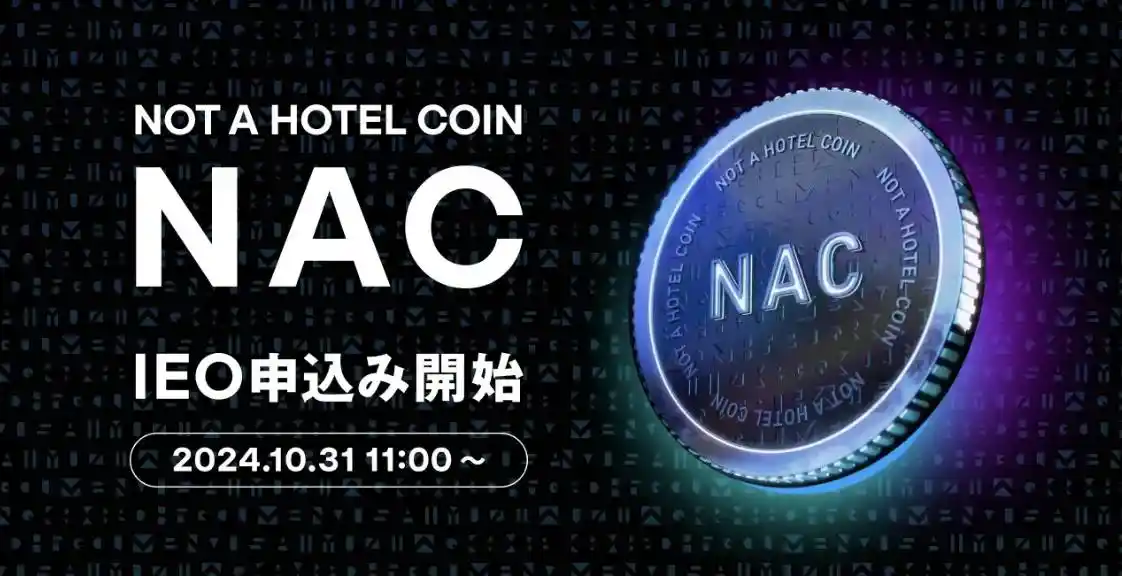
Image Source: NOT A HOTEL COIN, Japan's first IEO* with Real World Assets (RWA), open for purchase applications starting October 31st. Whitepaper and new website also launched simultaneously today
Additionally, in October of the same year, the company launched its native token "NAC" through an IEO. NAC holders can use the token for accommodation booking and rental, and earn accommodation rights as rewards through the token. Furthermore, by participating in the "NOT A HOTEL DAO," users can also take part in site selection and operational policy decisions. NAC is seen as a key pillar supporting a user-participatory ecosystem.
2-4. Dynamics of the Transportation Industry
Toyota Blockchain Lab: Exploring the Tokenization of Car Usage Rights through "Smart Accounts"
In 2024, the Toyota Blockchain Lab (TBL) unveiled a concept: tokenizing rights associated with cars and managing them through "smart accounts" to connect various car services.
These smart accounts differ from traditional accounts as they utilize an Ethereum-based ERC-4337 "Mobile-Oriented Account (MOA)." The MOA abstracts the account from the authentication process, separating it from key management, so even if a user inadvertently loses their private key, the account itself remains intact, providing a more secure and flexible account management approach.
Users can perform operations such as unlocking via a smartphone application. Through this method, users can freely allocate different operation permissions. For example, they can grant full operational access, or set permissions only for unlocking and locking the trunk, with an attached expiration date. Moreover, this digitized car-usage rights management approach is expected to facilitate the realization of services like car-sharing.
In April 2023, Toyota released the "Toyota Mobility Concept." The final stage of this concept, "Mobility 3.0," aims to integrate mobile travel with the societal system. The smart account concept is also considered part of this plan, emphasizing public blockchains as a potential key option to realize the Toyota Mobility Concept.
KINTO: Issuing NFT Certification to Safe Driving Drivers
KINTO, in collaboration with Toyota, initiated a pilot test. The main content of the pilot test involves collecting vehicle driving data for analysis, identifying safe-driving drivers, and issuing non-transferable NFTs known as "Soul-Bound Tokens (SBT)" to those certified as safe drivers. This is the transportation industry's first attempt to leverage blockchain technology to permanently record certification of safe driving. In the future, there are plans to build a mechanism for more cost-effective related transportation services based on these certifications. This initiative is expected to promote safe driving and drive the development of the transportation and travel society.
2-5. Power Industry Trends
Tokyo Electric Power Grid: Launches Mobile Game App Trial for Power Infrastructure Photography
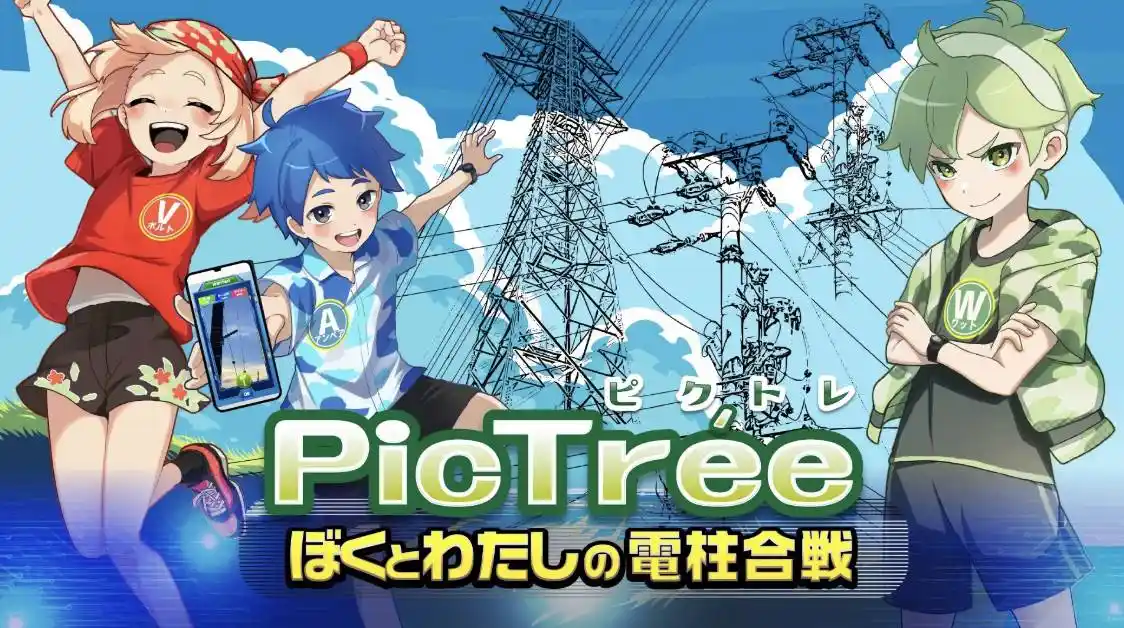
Image Source: PicTrée X Official Account
The Tokyo Electric Power Grid, in collaboration with Greenway Grid Global and Digital Entertainment Asset, has launched a game app trial called "PicTrée." Through this app, users can take photos of electric poles and power infrastructure and engage in battles. This not only provides entertainment to users but also aims to improve regional infrastructure maintenance and early detection of equipment abnormalities through the game, creating value for society.
2-6. Environmental Industry Trends
Klima DAO Japan: Initiates Carbon Credit Trading for ReFi Project in Japan
Image Source: Establishment of KlimaDAO's Japan Entity "KlimaDAO JAPAN": Transforming Climate Change Measures with Web3 Blockchain
In 2024, Klima DAO established its Japan entity, "KlimaDAO Japan," and has been developing a market platform for the tokenization of public carbon credit units known as "J-Credit." In April, a platform suitable for Japanese citizens and corporations was launched, creating new opportunities for greenhouse gas emissions reduction.
On November 19, the company initiated a trial of the "KlimaDAO JAPAN MARKET," tokenizing J-Credit using the Polygon blockchain to enhance transaction liquidity and transparency. Several companies, including the Sumitomo Financial Group and Optage, participated in this trial, which is expected to be opened to the public in spring 2025. These initiatives aim to address issues in the Japanese carbon credit market, contribute to climate change mitigation, and have garnered widespread attention.
2-7. Communication Industry Trends
NTT Docomo: Launches Web3-Compatible Wallet
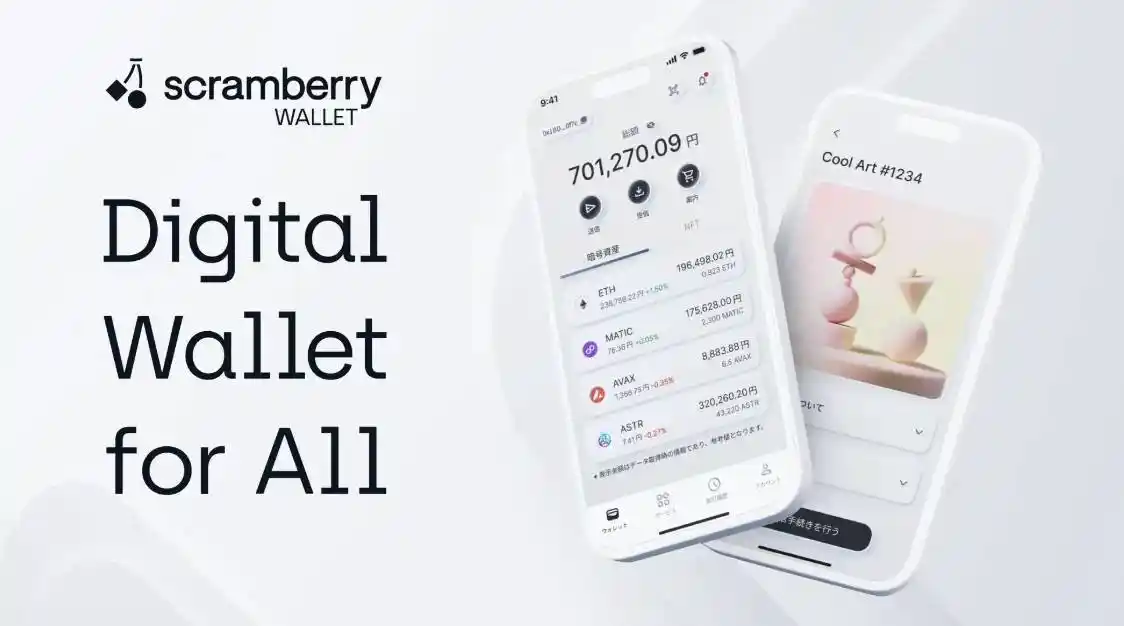
Image Source: Minna no Digital Wallet scramberry WALLET Launch
NTT Docomo, through its Web3 subsidiary established by 2022, "NTT Digital," has launched the Web3-compatible wallet "scramberry WALLET." Users can easily register with just their phone number, and the wallet data is stored in the cloud with a backup function for easy recovery. Its security features include the ability to filter small amounts of encrypted assets and NFTs, significantly enhancing security.
KDDI: Partnership with Animoca Brands

Image Source: Animoca Brands Japan and KDDI Commence Business Collaboration in the Web3 Field
KDDI has partnered with Animoca Brands' Japanese subsidiary (Animoca Brands Japan) to sell NFTs of the blockchain game "PHANTOM GALAXIES" on KDDI's NFT marketplace platform, "αU market," in March 2024. This collaboration strengthens the connection between the telecommunications industry and Web3, creating a new business model using NFTs.
2-8. Food Industry Trends
Suntory: Combining NFT with Beer
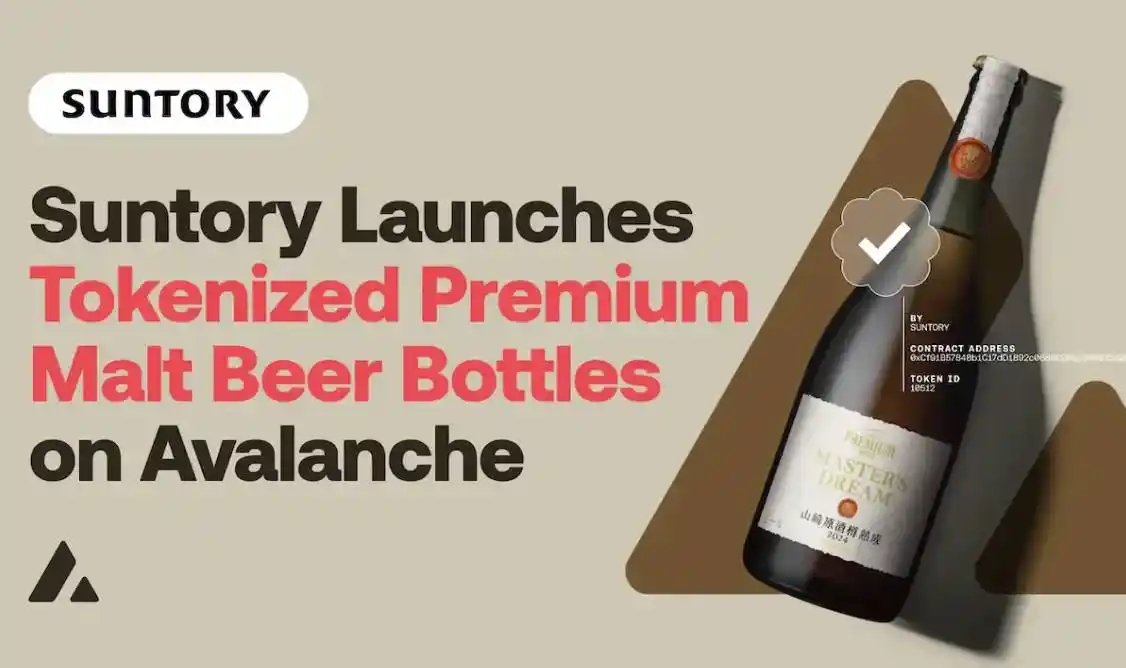
Image Source: Suntory Releases Beer with NFT ── Adopts Avalanche Blockchain
Suntory has utilized Avalanche technology to launch the beer "THE PREMIUM MALT'S Masters Dream
Calbee Food Company: Introducing the "Potato Fry Brothers" and "Shrimp Fry (Kappa Ebisen)" to a Popular Web3 Game!

Image Source: First Attempt by a Domestic Food Manufacturer
Calbee Food Company has announced its first collaboration with a Web3 game as a domestic food manufacturer. NFT items themed around the company's popular products "JagaRico" and "Kappa Ebisen" will be gradually introduced in three Web3 games: "CryptoSpells," "JobTribes," and "HEAL-III." Through this initiative, a new form of fan interaction that merges virtual and real worlds is proposed. Additionally, leveraging game interoperability, activities to enhance interaction and cooperation will be carried out at the "WEB3 GAME FES."
2-9. Watch and Apparel Industry Update
Casio Computer: Launches "VIRTUAL G-SHOCK" and Collaborates with "STEPN GO"
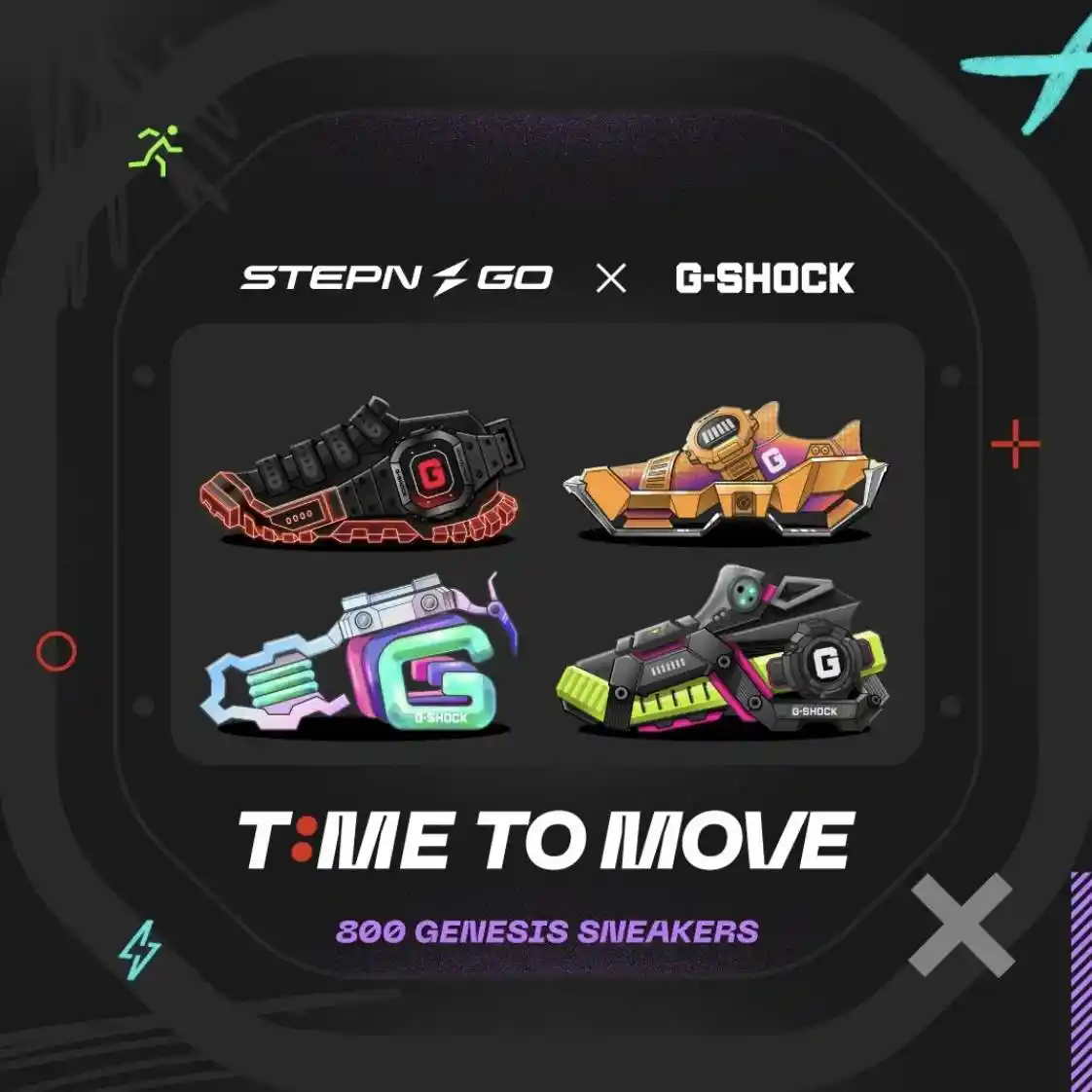
Image Source: X
Casio is actively promoting its market to Web3 users through the virtual space communication project "VIRTUAL G-SHOCK." This project has partnered with the Web3 lifestyle app "STEPN GO," strengthening its connection with younger users centered around the Z generation. This move showcases the potential of Web3 in the watch and apparel industry and serves as a model for digital-era brand strategies.
3. Individual Users and Retail Investors Update
3-1. Trends in Domestic Exchange Account Openings
According to on-chain data estimates, the number of account openings at Japanese domestic cryptocurrency exchanges continued to show a growth trend in 2024.
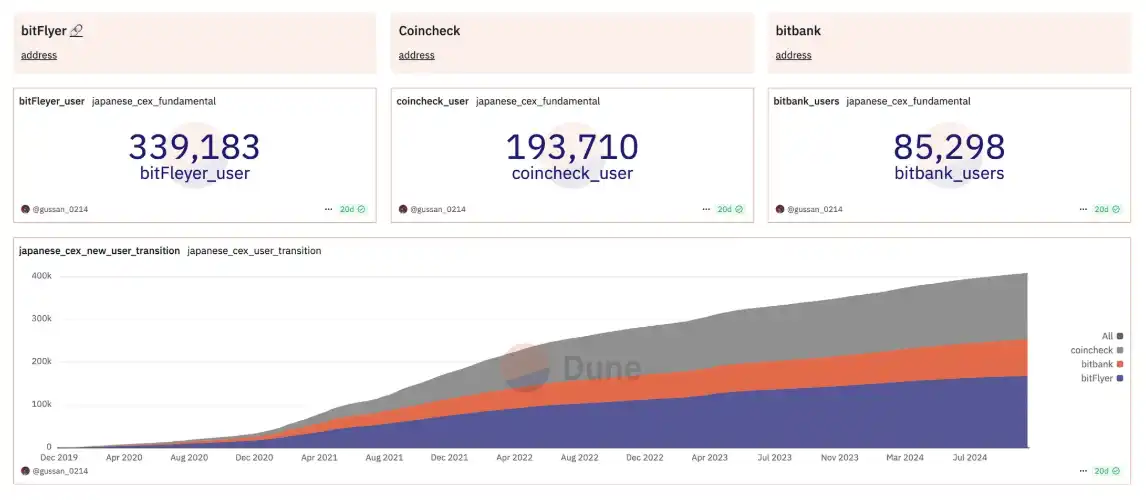
Image: Dune
Using the Dune Analytics dashboard, the unique wallet count of external wallet addresses received by major exchanges (Coincheck, bitbank, bitFlyer) was calculated. On-chain data shows that in January 2024, these three exchanges collectively had 356,917 unique wallets, which increased to 408,039 by November 2024.
Based on this data analysis, if the unique wallet count of external wallet addresses is considered to be 20% of the total account count, and assuming these three exchanges hold a 60% market share, it can be estimated that the total number of domestic exchange accounts in November 2024 will be approximately 3.4 million.
Likewise, if we calculate the account total for January 2024, it is around 2.97 million. Therefore, the projected number of new accounts in 2024 is expected to reach 426,000. Although there are still two months left in 2024 at the time of estimation, the growth rate is consistent with previous years, indicating a steady increase in the number of domestic exchange accounts. It is expected that the number of individual investors holding crypto assets will continue to grow in the future.
3-2. Highlighted Japanese Web3 Projects in 2024
SNPIT
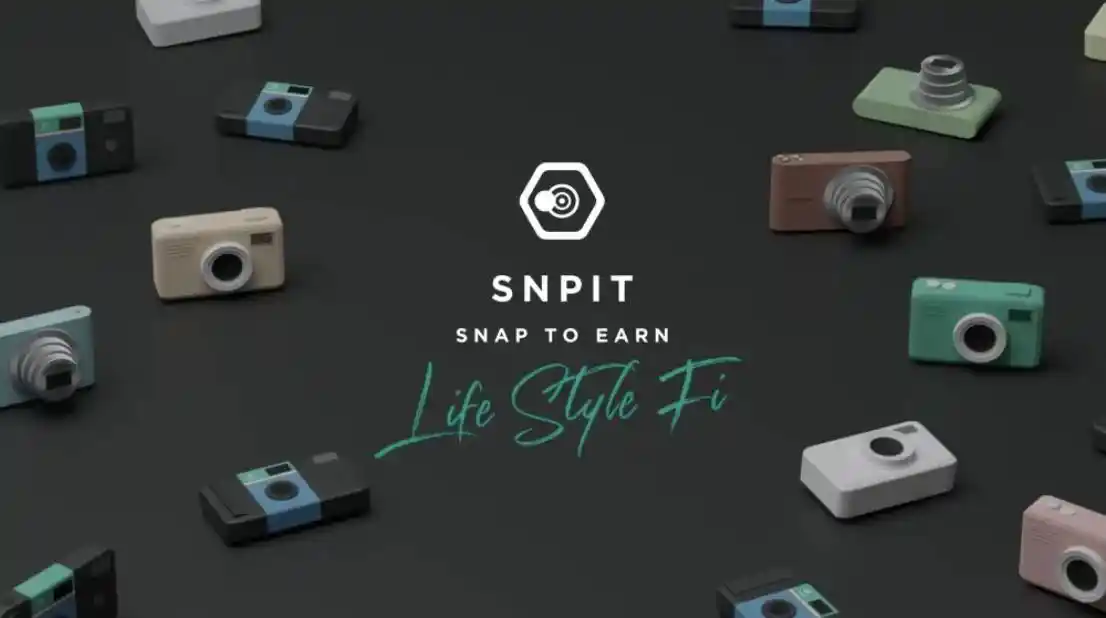
Image Source: What is the charm of the blockchain game "SNPIT" that can be started for free and can earn money just by taking pictures? Many families enjoy it.
In 2024, the photography-themed unique GameFi model "SNPIT" has attracted widespread attention. Players hold camera NFTs within the application, take photos with their smartphones, and earn token rewards through voting. This mechanism cleverly combines social network (SNS) elements, successfully fostering community interaction. At the same time, by using NFTs to provide shooting props, it has attracted both creators and collectors, forming a well-received economic model. "SNPIT" as a representative XX of "mobile app × Web3 game" showcases new possibilities.
CoinMusume (幣娘)

Image Source: Blockchain game "CoinMusume" announces release on November 22 and holds a release celebration gacha event! The development roadmap after the game release has been revealed!
"CoinMusume" is a blockchain game that personifies cryptocurrencies into idol characters and was released in December 2024. Players can engage in non-real-time battles through characters, predict cryptocurrency market trends based on their scores, and earn tokens based on the outcomes. Before the game's release, the project actively engaged in marketing activities, collaborating with various Web3 projects such as the game guild enterprise "IGG," the platform providing a virtual world "Yay!," and the Japanese yen stablecoin provider "JPYC," garnering widespread attention.
Briliantcryto
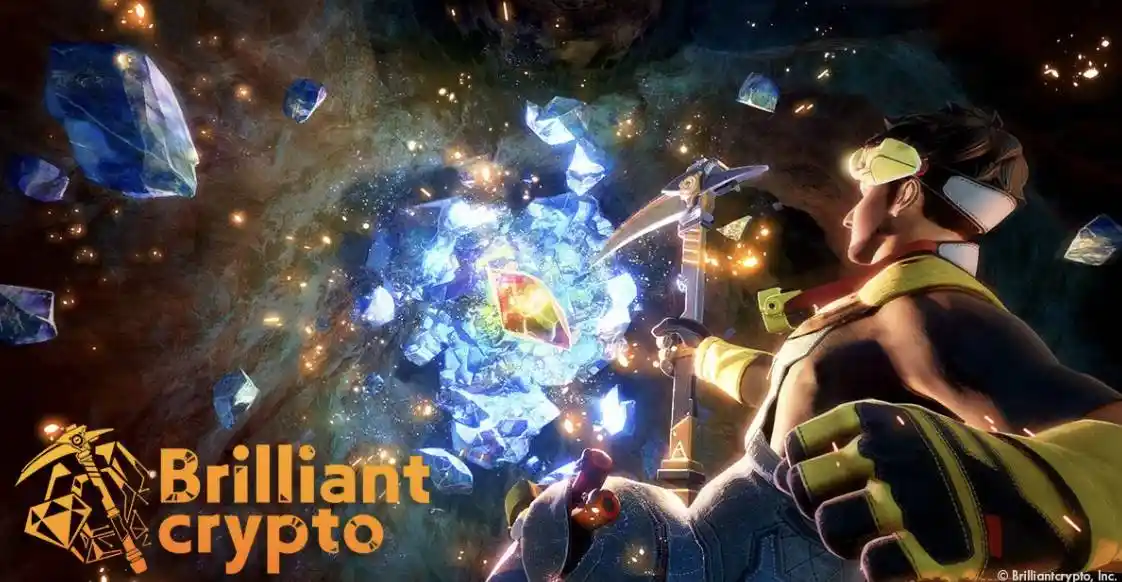
Image Source: Briliantcryto Official
In 2024, Japan launched the GameFi project "Briliantcrypto," which gained attention for its gem and jewel mining theme. Players mine the BRIL token and use it to purchase items like pickaxes or gems as NFTs to enhance in-game efficiency and enjoy the upgrade experience. The project conducted an IEO on the major Japanese cryptocurrency exchange Coincheck, sparking discussions among retail investors and becoming a hot topic among GameFi enthusiasts. "Briliantcrypto" stands as one of the representative works in the 2024 Japanese GameFi space.
Yay!

Image Source: Yay!, Overview of Web3 Features and Airdrop Site Open from August 28, Staking to Start
The social app "Yay!" accelerated its expansion into the Web3 space in 2024, attracting significant attention. This platform with over 9 million users provides a community space for sharing hobbies and interests. Particularly, the "Yay! Staking Event" launched in August became a crucial step in strengthening the Web3 ecosystem. Users can stake Ethereum to receive the NFT "Yay! Pal" for in-game use and earn the utility token "EMPL." This mechanism has enticed Web2 users to participate, driving the expected mass adoption. Additionally, decision-making through the governance token "YAY" and collaboration with the liquidity staking protocol "StakeStone" have offered diverse rewards, making the new tokenomics model a hot topic.
FiNANCiE

Image Source: Birth of the 'Horie Token'.
FiNANCiE is a platform that allows anyone to issue unique tokens or collectible cards. In January, the well-known Japanese internet celebrity Ikehaya issued their character IP token on the FiNANCiE platform, attracting a large number of domestic internet celebrities to issue their own corporate or community tokens. Notably in 2024, business domain celebrities such as Takafumi Horie and entrepreneurs involved in the YouTube program "Reiwa no Tora" issued their tokens on FiNANCiE, becoming a major highlight.
3-3. Mainstream Media Used for Personal User Information Acquisition
By 2024, the main media used by individual users in Japan to acquire information about cryptocurrency assets exhibit the following characteristics: X (formerly Twitter) with high real-time relevance has become a primary platform for many users to obtain news and market dynamics. While YouTube remains a popular media outlet, the decrease in cryptocurrency-related channels has resulted in a lower quantity and quality of information.
Furthermore, an increasing number of investment enthusiasts are utilizing Discord and Telegram as platforms for discussing in-depth topics and exchanging professional information.
In terms of professional media, CoinPost, CoinDesk Japan, and Cointelegraph Japan are widely popular for providing highly credible information on industry trends, technical insights, and regulatory updates. These media outlets have become the primary sources of information for everyone from beginners to advanced investors, serving as vital resources in the cryptocurrency market.
3-4. Prominent Cryptocurrency Influencers in Japan
ADMEN

X has 53,000 followers. Serves as the Chief Marketing Officer (CMO) of Japan's prominent crypto community "boarding bridge." Also the CMO (Chief Memecoin Officer) of Japan's renowned media CRYPTO TIMES, possessing top-tier expertise in the MEME coin information domain.
Noroi-chan

X has 20,000 followers. Shares anecdotes of Web3 games through platforms such as X and YouTube. Also founded a company, GAMIES Inc., that supports Web3 game marketing.
MA-LUCIAN

X has 88,000 followers. Shares a wide range of information related to cryptocurrency from gaming to DeFi. Co-founder of Japan's well-known crypto community "OtakuLabs."
taka__crypto

X has 20,000 followers. Operating AirdropList, a network media providing curated cryptocurrency (crypto asset) airdrop information. They conduct daily research on global DeFi projects and provide detailed explanations in a simple and understandable way for beginners.
Bankera Dao

X has 30,000 followers. Through X and their media operation, they publish selected cryptocurrency airdrop information and the latest news.
Ratte

X has over 300,000 followers. They are the founder of Japan's largest Web3 influencer community, ISC. Having previously served as a producer of Web2 mobile games in a large Japanese corporation and achieving the 3rd position in Japan's sales ranking, they apply their Web2 expertise to Web3 marketing, attracting much attention.
Summary: Challenges and Potential of Japan's Web3 Industry
Looking back at Japan's Web3 industry in 2024, there are both bright spots in development and numerous challenges. While the improvement of the regulatory system and the emergence of new projects are encouraging, the high entry barriers for individual investors and the lack of globally renowned Web3 projects remain pressing issues.
In particular, the lack of vitality in the cryptocurrency market and the harsh tax system are seen as core factors inhibiting market growth. Compared to South Korea, which stimulates retail market activity through tax incentives, Japan's lag in tax reform has led to a significant missed opportunity. Tax reform is a key area for enhancing global competitiveness and requires prompt action.
Furthermore, there is still a lack of deep understanding among businesses regarding the commercialization of blockchain applications. While this field is seen as full of innovative potential, many companies are unsure how to translate it into business value. This has led some companies to approach entry into the Web3 space with caution.
Inadequate technological competitiveness is also a major challenge. Japan still lacks Web3 projects with international influence on a global scale. To secure a position in the international market, the industry needs to collaboratively promote developer training and support.
Nevertheless, the author still sees Japan as full of possibilities. With the improvement of the regulatory system, advancing regional revitalization projects and corporate challenges, the 2025 Osaka World Expo will be an excellent opportunity to showcase these achievements to the world and a good time for the overall expansion of Japan's Web3 market.
You may also like

Morning Report | OpenAI has submitted an S-1 registration statement draft to the U.S. SEC; Morpho completes $175 million financing

Morning Report | BitMine increased its holdings by 126,971 ETH last week; trader Eugene announced his exit from the crypto market

Wang Chuan: How can one not feel anxious after the neighbor Old Wang made thirty times profit by investing in storage stocks? (Seven) - A quarter-century cycle

Cryptocurrency CEXs are flocking to sell US stocks, and traditional brokerages are facing an "uninvited guest."

$75 billion in foreign capital has fled, and South Korean retail investors have absorbed it all using leverage

Japan’s Three Megabanks Plan Joint Stablecoin Issuance in Fiscal 2026
MUFG, SMBC, and Mizuho reportedly plan to jointly issue fiat-pegged stablecoins in fiscal 2026, signaling Japan’s growing push into bank-led digital payment infrastructure.

Humanity Discloses H Token Dual-Chain Attack Details, With Losses on Ethereum and BSC Exceeding $36 Million
Humanity said the H token attack across Ethereum and BSC caused more than $36 million in losses after leaked ProxyAdmin keys enabled malicious contract upgrades and token minting.
White House Discusses CLARITY Act With Law Enforcement Ahead of Senate Vote
The White House discussed the CLARITY Act with law enforcement ahead of a Senate vote, focusing on illicit finance risks and developer protections.

Bitcoin Trading Guide 2026: Strategies for Experienced Traders

What Is XAUT and PAXG? Why Tokenized Gold Is Booming in 2026

Will the SpaceX IPO Hurt Bitcoin? Here's What Traders Are Watching

Foreign selling in the South Korean stock market accelerates, with cumulative net sales reportedly reaching $75 billion this year
On June 9, The Kobeissi Letter, citing Goldman Sachs data, reported that global investors are selling South Korean stocks at an unusually rapid pace. In the latest trading session, foreign investors sold about $801 million worth of Kospi constituent stocks again; total foreign outflows last week reached about $10 billion, and the market has been in net foreign selling on nearly every trading day over the past month. According to the data cited in the report, foreign investors have sold about $75 billion worth of South Korean stocks so far this year. Meanwhile, South Korean retail and institutional investors together recorded roughly $69 billion in net buying over the same period, suggesting that the market’s main buying support has come from domestic capital rather than returning overseas funds. The information currently disclosed still mainly comes from The Kobeissi Letter’s retelling and Goldman Sachs data summaries, while public details on the statistical period and the specific definition of “selling” remain relatively limited.

Fortune Warns of Strategy’s Financing Structure Risks as Bitcoin Premium Narrows
Fortune warned that Strategy’s Bitcoin treasury model faces growing financing risks as MSTR’s net asset premium narrows and preferred stock dividend pressure increases.

Ferrari Challenge Le Mans: Carl Moon to Dominate in WEEX Livery

Sahara AI Responds to SAHARA’s Sharp Drop: No Contract or Product Security Issues Found, Internal Investigation Underway
Sahara AI responded to SAHARA’s 60% price drop, saying no token contract or product security issues have been found and an internal investigation is underway.

WEEX Deposit/Withdrawal Dynamic Island: Your Asset Status, Always in Sight
Scaling Crypto Derivatives: The Digital Asset Infrastructure Behind High-Volume Trading
In the fast-moving digital asset ecosystem, derivatives platforms face an extreme architectural test. High-leverage futures markets demand more than just standard security—they require absolute operational precision, zero-latency matching engines, and ironclad structural scalability, all while navigating intense market volatility.
As global platforms scale to meet these demands, the industry is shifting away from rigid, monolithic setups toward a more agile, "decoupled" infrastructure philosophy.
The Blueprint for High-Volume Copy TradingFor elite global exchanges like WEEX (founded in 2018), this architectural choice becomes critical when scaling high-volume retail features like social copy trading. When thousands of users automatically mirror the real-time strategies of elite traders simultaneously, it triggers sudden, monumental spikes in concurrent transactional volume.
To prevent execution latency or settlement bottlenecks during these peak volatility events, a platform's primary engine must remain entirely dedicated to risk management, copy-trade synchronization, and order matching.
The Architectural Rule: New-generation platforms must separate front-end user execution engines from heavy backend infrastructural overhead to eliminate operational friction.
By separating these layers, platforms can maintain complete sovereignty over their trading environments and user experiences while strategically aligning with institutional-grade infrastructure ecosystems. This strategic framework allows modern exchanges to leverage advanced Digital Asset Custody infrastructure such as Cobo’s behind the scenes, ensuring that backend wallet management scales elastically alongside trading spikes.
Capitalizing on Market Momentum and 400× LeverageIn a derivatives arena where platforms offer up to 400× leverage on perpetual contracts, capital efficiency and market agility are core business metrics. To capture market momentum, an exchange needs the ability to rapidly expand its asset offerings, supporting everything from legacy crypto assets to sudden, trending altcoins across a massive library of trading pairs.
Adopting a flexible, scalable Wallet-as-a-Service (WaaS) solution such as Cobo’s could completely rewrite the development timeline for high-growth exchanges. Instead of spending months of engineering capital building out custom backend wallet architectures for every new blockchain network, platforms can deploy localized infrastructure in days.
This agility allows platforms to instantly scale their listings to over a thousand trading pairs without compromising security or delaying time-to-market. It mirrors the exact operational advantages seen during high-velocity market events, similar to how advanced wallet infrastructure empowers platforms during sudden asset surges; allowing exchanges to pass that speed and liquidity directly to their global user base.
A Mature Foundation for GrowthThe synergy between trusted infrastructure ecosystems and global trading platforms represents the natural evolution of a maturing crypto market. As WEEX continues to scale its global spot and derivatives offerings for over 6 million users, adopting robust backend paradigms proves that platforms no longer have to compromise between cutting-edge trading velocity and uncompromised structural security.

Get Paid to Onboard? Try WEEX’s New Homepage with Rewards for Registration, Deposit & Trade
Morning Report | OpenAI has submitted an S-1 registration statement draft to the U.S. SEC; Morpho completes $175 million financing
Morning Report | BitMine increased its holdings by 126,971 ETH last week; trader Eugene announced his exit from the crypto market
Wang Chuan: How can one not feel anxious after the neighbor Old Wang made thirty times profit by investing in storage stocks? (Seven) - A quarter-century cycle
Cryptocurrency CEXs are flocking to sell US stocks, and traditional brokerages are facing an "uninvited guest."
$75 billion in foreign capital has fled, and South Korean retail investors have absorbed it all using leverage
Japan’s Three Megabanks Plan Joint Stablecoin Issuance in Fiscal 2026
MUFG, SMBC, and Mizuho reportedly plan to jointly issue fiat-pegged stablecoins in fiscal 2026, signaling Japan’s growing push into bank-led digital payment infrastructure.


