
How did the Web3 Nintendo TreasureDAO end up failing?



On January 6, 2022, TreasureDAO's official Twitter account made a grand declaration, "The Nintendo of Web3, will be a DAO."

On April 3, 2025, TreasureDAO released a nearly 15-minute video titled "TreasureDAO's Next Chapter," announcing the full termination of the game publishing stack and game distribution in favor of transitioning to AI.
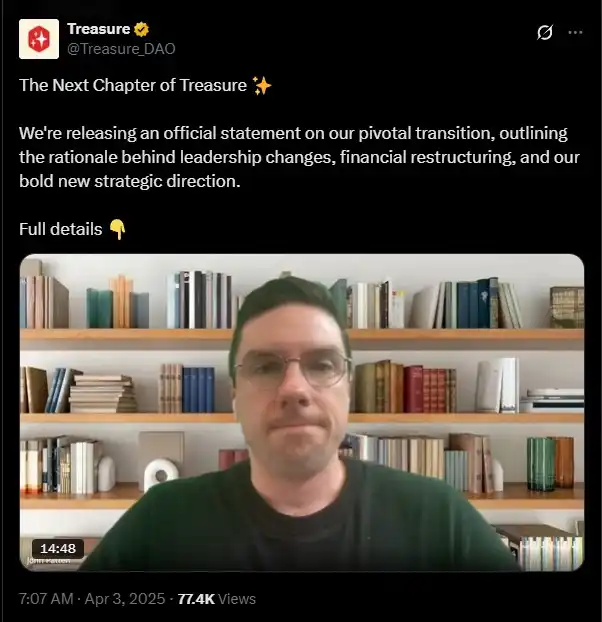
After waiting for 3 years, they never truly achieved their own "Nintendo". How did TreasureDAO, once thriving, end up in such desolation?
Origin
Treasure was founded in September 2021 by John Patten (@smoldev__) and yyyy (@0xyyyy). It initially appeared as a derivative of the Loot project. Loot NFTs were generated with randomly named weapon equipment, such as the "Dragon's Crown" and "Silver Ring" shown in the image below.
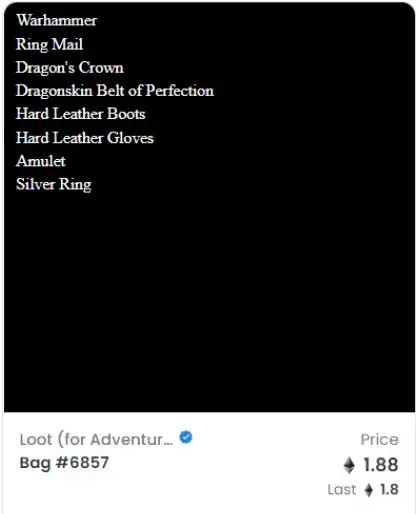
The once unintelligible Loot NFTs made people wonder, "Is this English word made of gold?"
Inspired by Loot, John Patten and yyyy believed that since randomly generating NFTs with weapon equipment names was a brilliant idea, wouldn't it be interesting to randomly generate NFTs with names of common RPG game treasures like "Diamond" and "Jade"? Hence, the following "Treasure Bag" was created.

Soon, they established a staking website where users could stake NFTs including $AGLD, Loot, Treasure, and other projects to receive $MAGIC tokens and Legion NFTs from the Bridgeworld game.
According to a tweet by @arius_xyz published on September 8, 2021, staking a "Treasure Bag" NFT would allow you to receive 3600 $MAGIC within 30 days. The highest historical price of $MAGIC was $6, meaning that staking a "Treasure Bag" NFT at that time for 30 days would turn into $21,600 six months later.
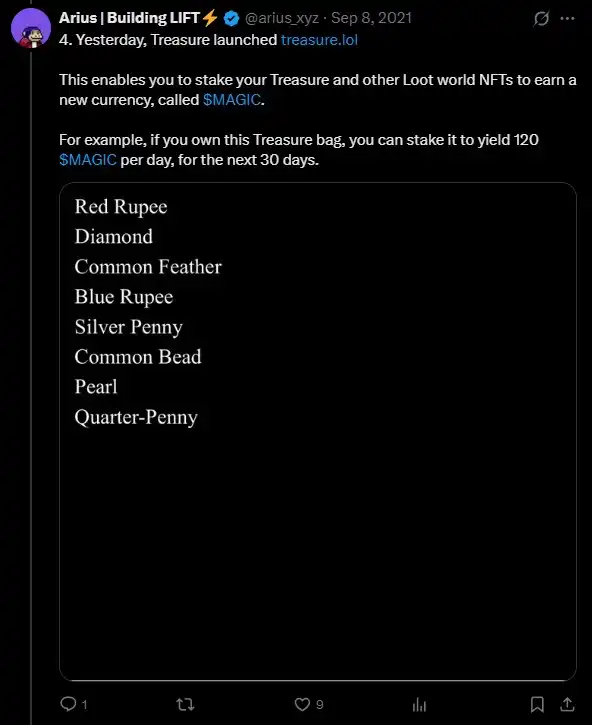
Aligned with Loot's vision at the time, Treasure aimed to build a bottom-up on-chain gaming world. As each of the 8 assets in each "Treasure Bag" was further broken down into NFTs, the number of staking transactions surged, and the congested Ethereum mainnet made the gas fees for these operations unbearable. Considering the poor player experience and the anticipated high volume of transactions once the game was released, Treasure made the decision to migrate to Arbitrum. TreasureDAO was also formally established to drive this grand vision.
At that time, there was no NFT marketplace supporting Arbitrum, as Arbitrum itself was also nascent. Consequently, TreasureDAO's NFT marketplace was also launched. This NFT marketplace later evolved into Trove, and for a considerable period, it stood as the undisputed representative of Arbitrum NFTs.
Brilliance
Back then, the Treasure team's understanding of leveraging NFTs and gamification to create the latest DeFi narrative was cutting-edge. Even now, if you revisit TreasureDAO's Medium, I bet you will marvel at how well they can tell a story. "Liquidity is weather, liquidity is time, liquidity is a measure of spatial scope" — this metaphor will forever remain on my CoinDesk President Mount Rushmore of Quotes.
They not only talk the talk but also walk the walk. The speed at which TreasureDAO was progressing at the time was not only remarkable within the Loot ecosystem but also across the entire crypto space. Within just one month of the project launch, they had completed asset breakdowns, asset animation production, cross-chain asset operations, and notably announced the integration of a new game called "Life." This was the first community-led project within the Treasure ecosystem but not developed by the team. The gaming concept at the time led me to unhesitatingly join the Chinese whitepaper translation work organized by @GavinGPT, who even personally funded rewards for all translators.
Throughout evolution, individuals exhibit new traits and undergo age-related changes. They go to school, fall in love, pursue careers, experience many uniquely personal successes and disappointments, and eventually die.
Life is a long, experiential board game. It was meant to be an emotional experience. NFTs breed like people, not like hamsters. Their lifespans are limited but extraordinary, just like our own.
Co-founder John Patten said when he wanted to create an NFT project called Smol Brains, many people didn't understand and thought it would dilute the value of $MAGIC. However, Smol Brains later became the flagship NFT series on Arbitrum. It was the most successful narrative GameFi series at the time. What struck me the most was when the storyline progressed to the point where the island where the Smol Brains lived was about to sink, the Smol Brains holders had to decide whether to board a rocket to the moon for survival. To build a rocket, Smol Brains had to achieve a certain IQ value through staking. At that time, Smol Brains were already priced out of my range, but I watched closely every day—what would happen to the Smol Brains with insufficient IQ? Would they be destroyed?
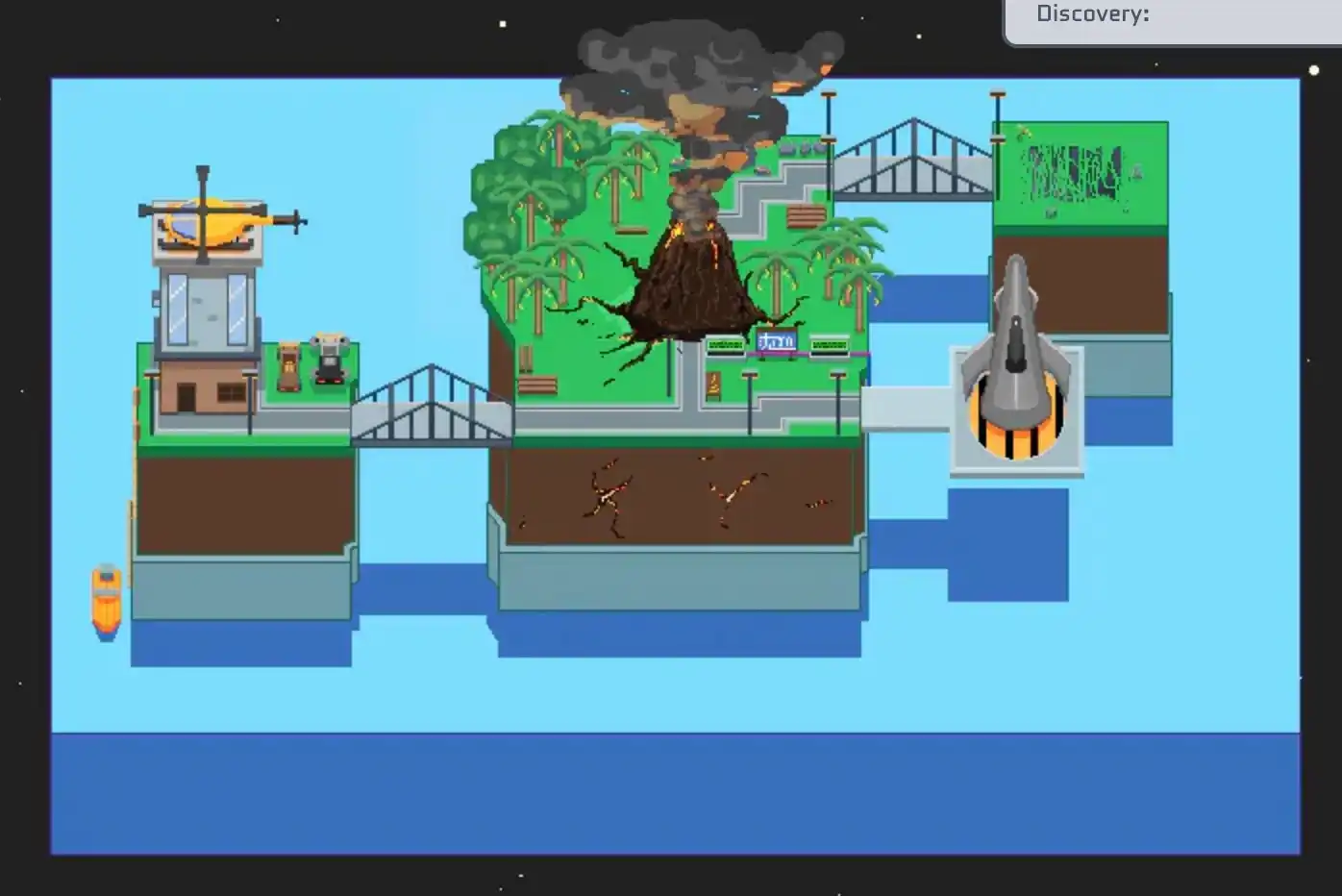
Smol Brain was a Free Mint project. At its price peak, holding a Smol Brains from start to finish could earn you $100,000 when converted to $MAGIC. On the other hand, the flagship project of the TreasureDAO ecosystem, Bridgeworld's Legion NFT, had a floor price of 20 ETH at its peak, during the era when ETH had proud diamond hands.
Prior to Treasure, Arbitrum's daily NFT trading volume was less than 1 ETH. Since the launch of the NFT marketplace on November 13, 2021, in just 7 months, it has achieved a trading volume of over $285 million. At the beginning of 2022, Treasure's marketplace was the second-highest-grossing NFT marketplace globally, with just the Bridgeworld and Smol Brains series accounting for 10% of the total OpenSea trading volume.
By the end of February 2022, $MAGIC's price reached a historical high of $6.
Twilight
All good things must come to an end. After reaching a peak of $6, the price of $MAGIC has been on a steady decline. By May 2022, $MAGIC's price had dropped below $1, reaching a low of under $0.3. Although there was a rebound to around $2 in early 2023, $MAGIC has never returned to even half of its previous all-time high since the peak.
Nevertheless, games within the ecosystem have been steadily advancing, with an increasing number of games choosing to join the TreasureDAO ecosystem. The most famous among them is "The Beacon," which surged in popularity towards the end of 2022, marking what I see as the final glory of TreasureDAO.
Due to the long development time and high difficulty of game development, a significant portion of games within the ecosystem ended up abandoned, such as the previously mentioned "Life," and "Battlefly," which was once an NFT selling for a four-digit USD price.
Apart from the market attention sparked by this significant shift in development direction, the last time TreasureDAO was in the spotlight was when Shaw's AI concept gained fame. Shaw was originally a developer within the TreasureDAO ecosystem, responsible for the AI game project "Smol World" under Smol Brains. The vision of Smol World was for each Smol Brains to act as an AI Agent in an on-chain game, where they could steal each other's assets through PvP, all while integrating the game itself with the Eliza framework. Back then, buoyed by this positive development, Smol Brains surged fourfold in value.
Questioning
Such a major strategic development shift announced abruptly in such a weak market environment naturally raised numerous questions.
Chinese community influencer BlueFox, who was once a supporter of TreasureDAO, commented on John Patten's tweet, asking, "Why now? Why not earlier?"
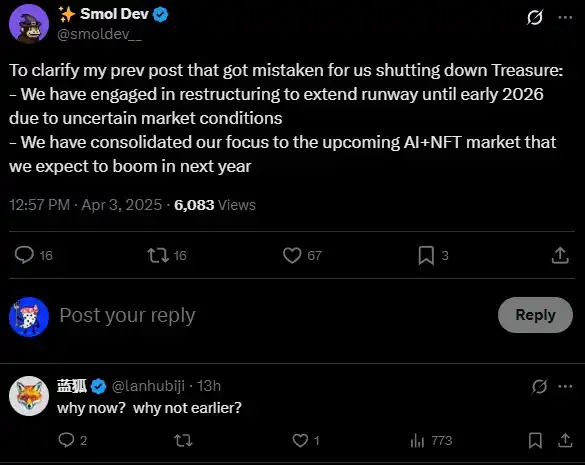
This is also my question. When the AI concept was at its peak hype last year, TreasureDAO did receive market attention. Why did they not pivot at that time and instead wait until now?
In a video, John Patten mentioned, "This transformation is not by choice but out of necessity for survival. Even with financial health, this is the most sensible choice." According to his disclosure, considering expenditure based on the USDC rate and the stablecoins held, the remaining operational funds of TreasureDAO can only sustain operations until July 2025.
Currently, the TreasureDAO treasury holds $2.4 million in stablecoins to support infrastructure and Bridgeworld game development. Additionally, Flowdesk (TreasureDAO's liquidity provider) holds around $1.49 million in assets, with $0.786 million of assets idle and available for withdrawal. If the DAO agrees to a proposal to withdraw this portion of the funds, the stablecoin assets will increase to $3.2 million.
The treasury also holds 22.3 million MAGIC tokens, currently valued at around $2.3 million. Grants distributed to ecosystem game projects are priced in USD but actually paid out in $MAGIC, calculated based on the average price at the time of distribution. With the devaluation of $MAGIC, the actual amount of $MAGIC required has significantly increased, greatly reducing TreasureDAO's ability to fulfill.
Well, for this nail-biting situation, it seems it can also be explained by "decision-making errors and failure to pivot in time." However, the financial expenditure of TreasureDAO has also left some players puzzled—after all, isn't the developed game a AAA title? Is it really necessary to burn through so much money?
Still based on John Patten's disclosure, TreasureDAO's annual personnel expenses are around $6.1 million, with annual operating costs of around $3 million, and the team size once approached 40 people. When I asked ChatGPT to help me find a traditional game company with annual operating costs of around $10 million, the answer ChatGPT provided was an American game company, Telltale Games, which had once produced "The Walking Dead" and had an employee count of about 90 people.
Arbitrum official Nina Rong also commented on TreasureDAO's financial difficulties:
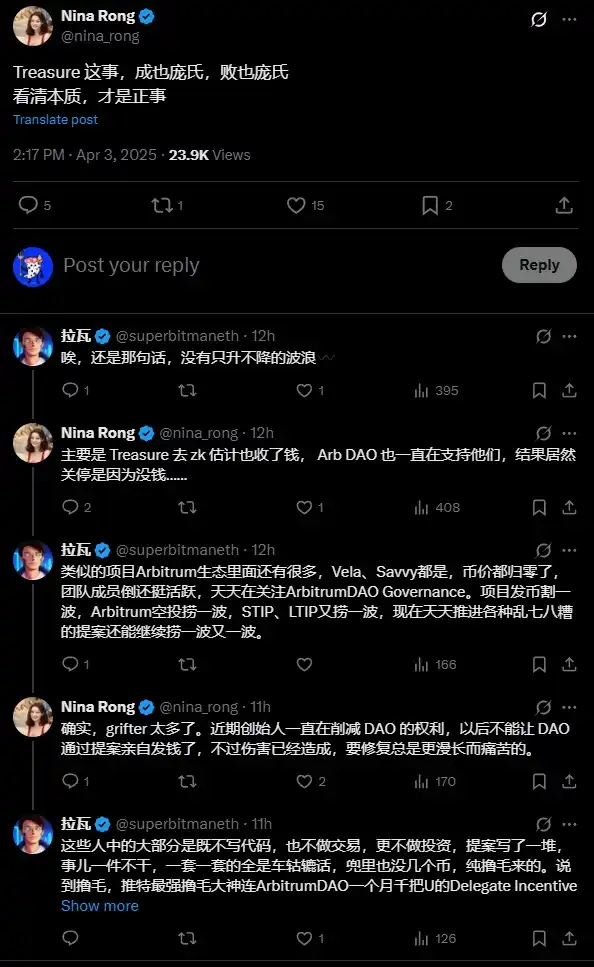
Has TreasureDAO moved funds to zkSync? Yes, they have, but they are also burning through them. A grant from Zk Foundation totaling about $1.1 million, half of which has been committed to the game project and will unlock over two years. The fixed annual operating cost of running the Treasure Chain is $0.45 million (priced in USDC), and even with the planned unlocks, Treasure Chain would still lose $0.175 million annually.
Conclusion
The dilemma faced by TreasureDAO may be the same dilemma faced by all projects in the crypto space. It's difficult to blame them for expanding outward when they had surplus at home, but they tightened their belts way too late. This unexpected announcement caused a drop in $MAGIC's price, undoubtedly making a bad situation worse.
Currently, TreasureDAO has laid off 15 employees, completely terminated its game publishing stack and game distribution, communicated with game partners to cancel remaining grants, reduced its annual spending from $7.5 million to $3.8 million, and plans to further reduce it to $3 million in the next few months.
However, John Patten also emphasized that if $MAGIC experiences a significant devaluation after the announcement and fails to recover, TreasureDAO will struggle to survive until 2026.
He proposed that TreasureDAO undergo strategic contraction, focusing on four areas: the NFT market, Bridgeworld, Smol World, and AI Agent. Multiple governance proposals are also forthcoming, including allocating a liquidation fee, withdrawing idle assets from the liquidity provider Flowdesk, confirming new product directions, and shutting down Treasure Chain.
TreasureDAO will still create games, but the vision of being the "Web3 Nintendo" has been completely erased. Facing survival, they are no longer able to pursue their former ideals.
This ideal was not only theirs, but once belonged to the entire Web3 community. Whether as project leaders like them or as Web3 users like us, perhaps we have never lost our ideals, but maybe we all feel the melancholy of shattered ideals.
An era has come to an end.
You may also like

Rented Belief: How Much of the Bitcoin ETF Fund Flow is Real Money

The two giants are racing in "credit": loan balances of 9.9 billion vs 14.6 billion USD, Brazil has become the main battlefield

A company that was on the verge of bankruptcy has just surpassed Bitcoin in market value

B.AI partners with MiniMax to launch a limited-time free experience of M3, enabling zero-threshold implementation of Agentic productivity through full-stack infrastructure

The second half of the computing power battle: Intel CEO Pat Gelsinger reveals how AI is reshaping the global semiconductor supply chain

WEEX Live mode: Monitor 20 trading pairs at once and trade like a pro

Morning Report | Secret Network loses $4.67 million due to cross-chain vulnerability; Michael Saylor releases Bitcoin Tracker information again, may disclose increased holdings data next week

Kalshi's biggest competitor is not Polymarket
WEEX Makes Affiliate Access Easier on the Web and in the App
Customize Your Spot Trading Page: Drag Modules and Move the Order Panel Where You Want It

Perp DEX: The Next Generation Exchange "War"

10 Counterintuitive Insights on Latin American Payments

The AI gamble of mining companies: Valuations enter a phase of differentiation, and it's hard to turn the tide
A letter from Alliance to entrepreneurs: Written on the occasion of Cursor selling for 60 billion dollars
Stablecoins Finally Find Real Returns: On-Chain Reinsurance Re Explained | Interview with Re Founder Karan Saroya

The impossible triangle is simply a pseudo problem

Will MicroStrategy fall into a death spiral? What will the macro trend be in the second half of the year?

Blockchain Capital Partner: The Core Secret of Arbitrage
Rented Belief: How Much of the Bitcoin ETF Fund Flow is Real Money
The two giants are racing in "credit": loan balances of 9.9 billion vs 14.6 billion USD, Brazil has become the main battlefield
A company that was on the verge of bankruptcy has just surpassed Bitcoin in market value
B.AI partners with MiniMax to launch a limited-time free experience of M3, enabling zero-threshold implementation of Agentic productivity through full-stack infrastructure
The second half of the computing power battle: Intel CEO Pat Gelsinger reveals how AI is reshaping the global semiconductor supply chain
WEEX Live mode: Monitor 20 trading pairs at once and trade like a pro


