
- Buy Crypto
- Markets
 Futures
- Spot
- Copy Trade
- Earn
- More
Global tokenized real estate eyes $4T valuation: Deloitte
By: bitcoin ethereum news|2025/05/08 11:30:02
0
Share
Homepage > News > Business > Global tokenized real estate eyes $4T valuation: Deloitte A new Deloitte report has tipped the global tokenized real estate market to reach a valuation of $4 trillion by 2035, driven by a raft of factors. According to the report, the sector is working toward mainstream acceptance from its previous designation as a niche vertical. From its present levels of under $300 billion, the Deloitte report is forecasting a compound annual growth rate (CAGR) of 27% that will result in a $4 trillion market capitalization. The projected several factors, including the upsides for the broader real estate sector, will power industry growth. Deloitte’s analysts say the tokenized real estate market will receive new players triggered by operational efficiencies, fast settlement times, and the possibilities for blockchain-based financing options. “Real estate asset tokenization can allow institutional investors to create custom portfolios with tokens that match their investment thesis,” read the report. Furthermore, Deloitte is pointing to the broader perks of tokenization, noting it offers real estate players automation functionalities. Blockchain’s transparency and immutability, in addition to the broad functionalities of smart contracts, will trigger increased adoption levels for tokenized real estate. By classification, Deloitte predicts tokenized debt securities to be the biggest growth vertical with a total valuation of $2.39 billion in 2035. On the other hand, private real estate funds will hold a market capitalization of nearly $1 trillion in the same time frame, while the underdeveloped land segment will reach $501 billion in 2035. “Tokenization can allow for capital generation across the capital stack including debt, equity, and hybrid funding on a single platform,” read the report. The report highlights two plausible ways for real estate to be tokenized on blockchains. The first involves tokenizing an existing fund or tapping a DeFi lending protocol to issue debt tokens on loans. The second involves issuing funds on-chain via real estate trust deeds, an option recording growing adoption rates. A surge in real estate tokenization adoption metrics Alongside the broader acceptance of tokenization, real estate tokenization has recently seen impressive adoption. In Nigeria, the Lagos State government is turning to real estate tokenization to boost revenue while opening the market for retail investors to own a stake in properties via fractional ownership. Japanese firms have previously explored real estate tokenization use cases, following Israel’s lead in the ecosystem. However, pioneers are wary of the regulatory uncertainty and custody risks associated with the blockchain-based offering. Citigroup taps stablecoin market capitalization to reach $3.7 trillion Meanwhile, a new Citigroup report predicts that the global stablecoin market capitalization will hit highs of $3.7 trillion by the end of the decade. Analysts at Citi (NASDAQ: C) are projecting a CAGR of 119% per year for the global stablecoin market capitalization. Currently, the industry’s valuation is around $230 billion, led by industry behemoths like Tether’s USDT and Circle’s USDC. The projected $3.7 trillion valuation is Citigroup’s bull case scenario, with analysts providing two more conservative estimates. According to Citigroup base case scenario will see stablecoins rise to reach a valuation of $1.6 trillion in 2030, racking up a double-digit CAGR. Despite two projections above the trillion-dollar mark, Citigroup says the worst case for stablecoin supply by 2030 will be a market capitalization of around $500 billion. The report notes that U.S. dollar-denominated stablecoins will be the industry leader in 2025 with 90% of the market share, while non-U.S. dollar stablecoins will jostle for a 10% share. Several reasons are in play for the USD’s projected stablecoin dominance, including its first mover advantage and incoming regulatory clarity. The U.S. is exploring stablecoin regulation in the coming months, which Citigroup says will trigger a demand for new players. As new stablecoin issuers wade into the space in the U.S., the report predicts that issuers will be the biggest holders of U.S. treasuries by the end of the decade. However, the push toward a triple-digit CAGR for stablecoins will not be easy for the industry. Citigroup name-checks the challenges of unclear regulation, low adoption levels in advanced economies, and a raft of integration issues. Analysts at Citigroup are hopeful that the capabilities of speed and round-the-clock availability will trigger adoption numbers. Other macroeconomic applications for financial inclusion and hedging against inflation are tipped to move the needle for stablecoin application. A ChatGPT moment for blockchain technology Citigroup’s report goes on to tap blockchain to have a ChatGPT year in 2025. The report predicts blockchain adoption to record adoption levels akin to the number reached by the generative artificial intelligence (AI) chatbot in late 2022. Blockchain is already recording high adoption levels with governments hinging their national digitization drives on Web3 technologies. China, Vietnam, and Belgium are exploring blockchain-based solutions to improve their digital economies, keeping pace with North America and the rest of Europe. Watch: Blockchain & AI unlock possibilities title=”YouTube video player” frameborder=”0′′ allow=”accelerometer; autoplay; clipboard-write; encrypted-media; gyroscope; picture-in-picture; web-share” referrerpolicy=”strict-origin-when-cross-origin” allowfullscreen> Source: https://coingeek.com/global-tokenized-real-estate-eyes-4t-valuation-deloitte/
You may also like

The second half of stablecoins no longer belongs to the crypto circle
What Coinbase doesn't want, Mastercard is eager to buy.

Cursor "Shell" Kimi Controversy Reversed: From Copyright Infringement Allegations to Authorized Collaboration, China's Open Source Model Once Again Becomes a Global AI Foundation
Cursor was accused of being based on Kimi K2.5, which sparked controversy, and was later confirmed to be compliant through Fireworks AI due diligence.

The Real Reason Tokens Don't Sell: 90% of Crypto Projects Overlook Investor Relations
Provide an Investor Relations Best Practices Guide for Crypto Projects.

Is the income of pump.fun real, earning a million dollars a day despite the market downturn?
If it can really earn this much, what is the reason for the low price of $PUMP?

The real reason why tokens are not selling: 90% of crypto projects neglect investor relations
Investor Relations Practice Guide for Cryptocurrency Projects.

Who is the true winner of the "Tokenization" narrative?
Virtually everyone benefits, but the reason for the benefit, the timing, and the underlying logic are completely different.

Moss: The Era of AI-Traded by Anyone | Project Introduction
AI Trading Agent is rapidly growing its infrastructure.

Chip Smuggling Case Exposes Regulatory Loophole | Rewire News Evening Update
AI chips have become a strategic asset more sensitive than missiles

How a Structured AI Crypto Trading Bot Won at the WEEX Hackathon
Ritmex demonstrates how disciplined risk control and structured signals can make an AI crypto trading bot more stable and reliable on WEEX, highlighting the importance of combining execution discipline with scalable AI trading systems.

Old Indicator Fails, Three Major New Signals Emerge: BTC True Bottom May Still Be Below $60K
When the grocery shopping auntie on the subway, or Tony the hairdresser, start asking you about BTC, crypto, and cryptocurrency investments, selling immediately will be the only best option.

Meeting OpenClaw Founder at a Hackathon: What Else Can Lobsters Do?
Imperial College London MetaGame: AI Agent × Web3 Landing Three Major Directions.
Huang Renxun's Latest Podcast Transcript: NVIDIA's Future, Embodied Intelligence and Agent Development, Soaring Demand for Inferencing, and AI's PR Crisis
The future of competition is not only about whose model is bigger, whose computing power is stronger, but also about who understands the industry better, who can more deeply integrate AI into real processes, and who can organize these capabilities into a set of executable, scalable systems
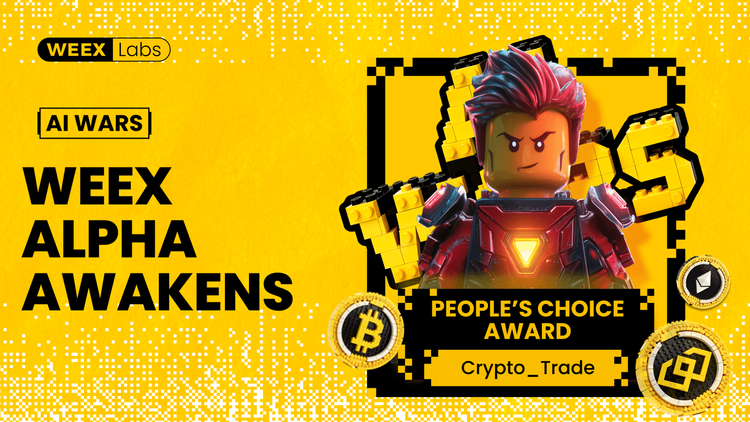
How a Structured AI Crypto Trading Bot Won at the WEEX Hackathon
Crypto_Trade shows how structured inputs and controlled adaptability can build a more stable and reliable AI crypto trading bot within the WEEX AI Trading Hackathon, highlighting a practical path toward scalable AI trading systems.

AI Starts to Devour the Manufacturing Industry | Rewire News Morning Edition
When Bezos starts using AI to buy factories instead of building data centers, it shows that he believes the next wave of AI's value is not inside the box.
When Scaling Meets Speed, Ethereum Foundation Introduces "Hardness" to Safeguard the Base Layer
Hardness is a protocol-level commitment to Ethereum core properties, including censorship resistance, privacy, security, and permissionlessness.
Google, Circle, Stripe Flock Together to Let AI Spend Money: Payment Giants' Joys and Worries in 2026 Q1
The real enemy is no longer each other, but zero cost itself

$100 Billion Factory Purchase: Bezos and Middle Eastern Capital Shift AI Money from Cloud to Shop Floor
Bezos doesn't invest in a new model; he invests in a supply chain.

Xiaomi and MiniMax both unleash their ultimate moves, signaling the start of the Agent Pricing War.
No brand, no marketing, let developers vote with their feet in 8 days
The second half of stablecoins no longer belongs to the crypto circle
What Coinbase doesn't want, Mastercard is eager to buy.
Cursor "Shell" Kimi Controversy Reversed: From Copyright Infringement Allegations to Authorized Collaboration, China's Open Source Model Once Again Becomes a Global AI Foundation
Cursor was accused of being based on Kimi K2.5, which sparked controversy, and was later confirmed to be compliant through Fireworks AI due diligence.
The Real Reason Tokens Don't Sell: 90% of Crypto Projects Overlook Investor Relations
Provide an Investor Relations Best Practices Guide for Crypto Projects.
Is the income of pump.fun real, earning a million dollars a day despite the market downturn?
If it can really earn this much, what is the reason for the low price of $PUMP?
The real reason why tokens are not selling: 90% of crypto projects neglect investor relations
Investor Relations Practice Guide for Cryptocurrency Projects.
Who is the true winner of the "Tokenization" narrative?
Virtually everyone benefits, but the reason for the benefit, the timing, and the underlying logic are completely different.


 App
App