From Clashes to Appreciation: A Glimpse into the Love-Hate Relationship of AI Agent Developers

By: blockbeats|2025/01/07 17:15:03
0
Share
copy
Original Article Title: "The AI Agent Knows No Bounds, But Developers Are Filled with Love and Hate"
Original Article Author: Wenser, Odaily Planet Daily

As the new year begins, the two flagship projects in the AI Agent race, ai16z and swarms, have both reached new all-time highs in market value.

While this should have been a reason for celebration, ai16z founder Shaw delivered a harsh blow to swarms, publicly criticizing swarms' developer Kye Gomez, stating that he "does not understand how to write code and has a history of fraud," directly attacking his "character." Kye, who had previously gained attention for dropping out of high school at 19 and was praised as a "teenage genius."

This debate also led to both projects experiencing a short-term decline of over 20%. However, within a day, they regained lost ground, with swarms even reaching a new high of $0.6.

This incident has once again brought to light the complex relationships and love-hate dynamics among the developers behind AI Agents. In this article, Odaily Planet Daily will briefly outline the recent representative relationships among the developers behind AI Agents, shedding light on Devs' impact on AI Agent and related meme coin price trends.

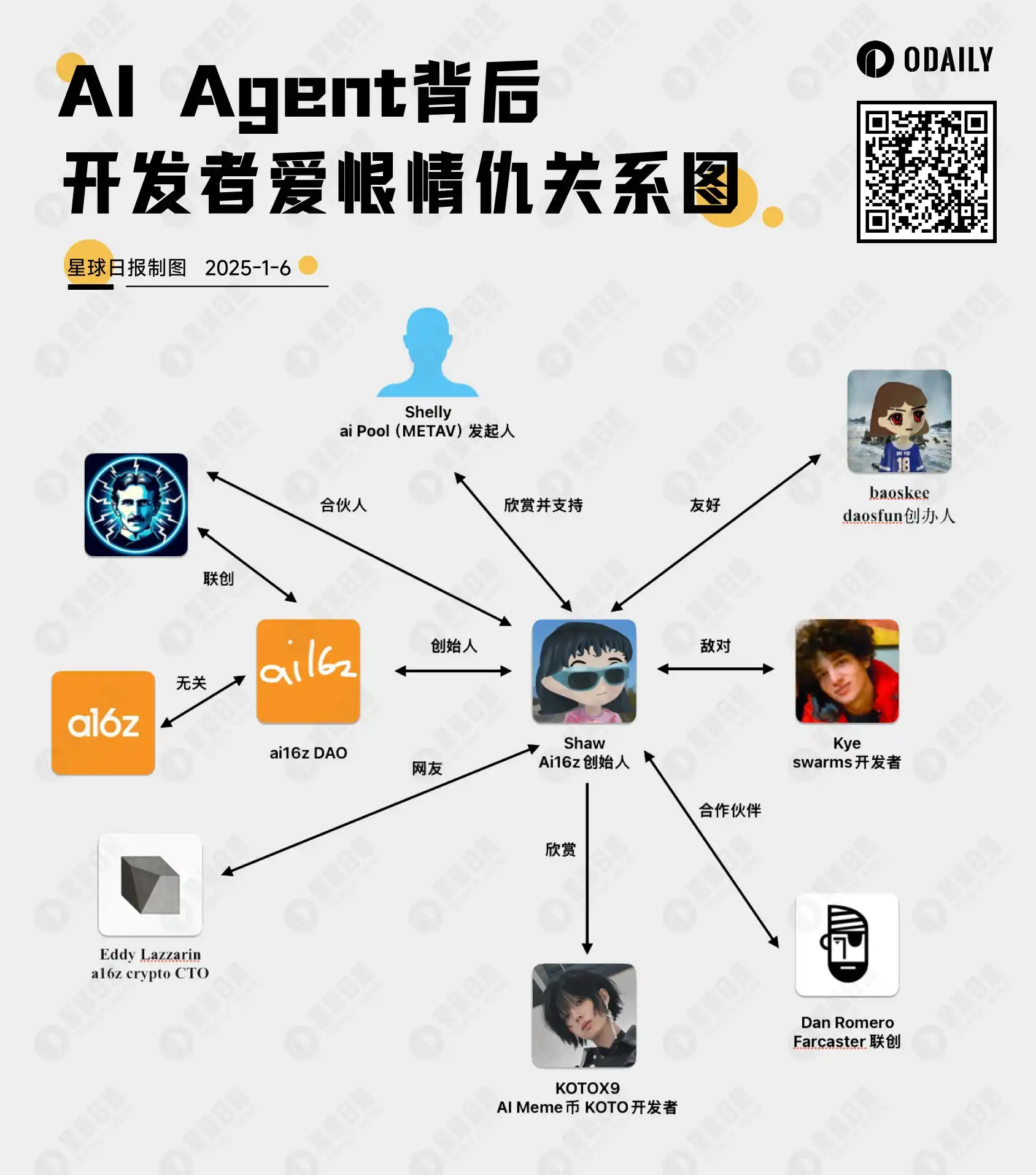
Central Node of the Relationship Graph: ai16z Founder Shaw

According to Coingecko data, as of the time of writing, ai16z is currently priced at $2.17, with a 7-day increase of 70% and a market value of $2.4 billion, ranking third in the AI Agent sector, following the Base ecosystem's AI Agent token leader VIRTUAL and the traditional AI concept token FET.

Such outstanding performance has naturally brought a vast amount of attention to its developer Shaw. Especially with Shaw recently participating in numerous offline roadshows, engaging closely with community members from different regions, his public statements are seen as "a key signal in the AI Agent field." Shaw's previous strong promotion of the Space online conference for AI Agent development education was also regarded as a "preaching move towards the deep integration of AI and Crypto."

Frequent proactive statements have garnered Shaw many supporters but have also become a catalyst for conflicts with developers from other projects.

From Clashes to Appreciation: A Glimpse into the Love-Hate Relationship of AI Agent Developers

Relationship Map of AI Agent Devs

Shaw VS Kye: Unfiltered Mutual Dislike

Shaw had previously criticized swarms developer Kye as well. On December 21, 2024, he posted, "I really don't like publicly pointing out others' issues. Doing so poses a huge risk to our project, makes many people nervous, and I don't want to undermine hard-working developers. But some people will steal others' work and try to take credit for it."

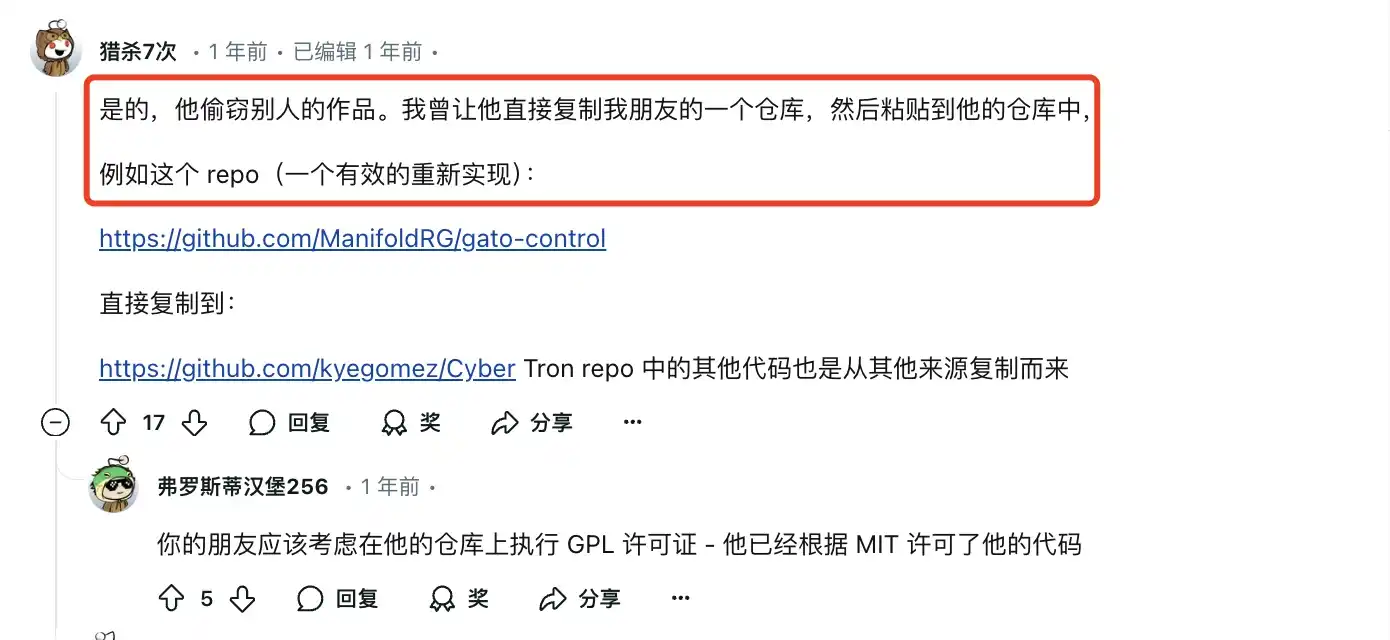
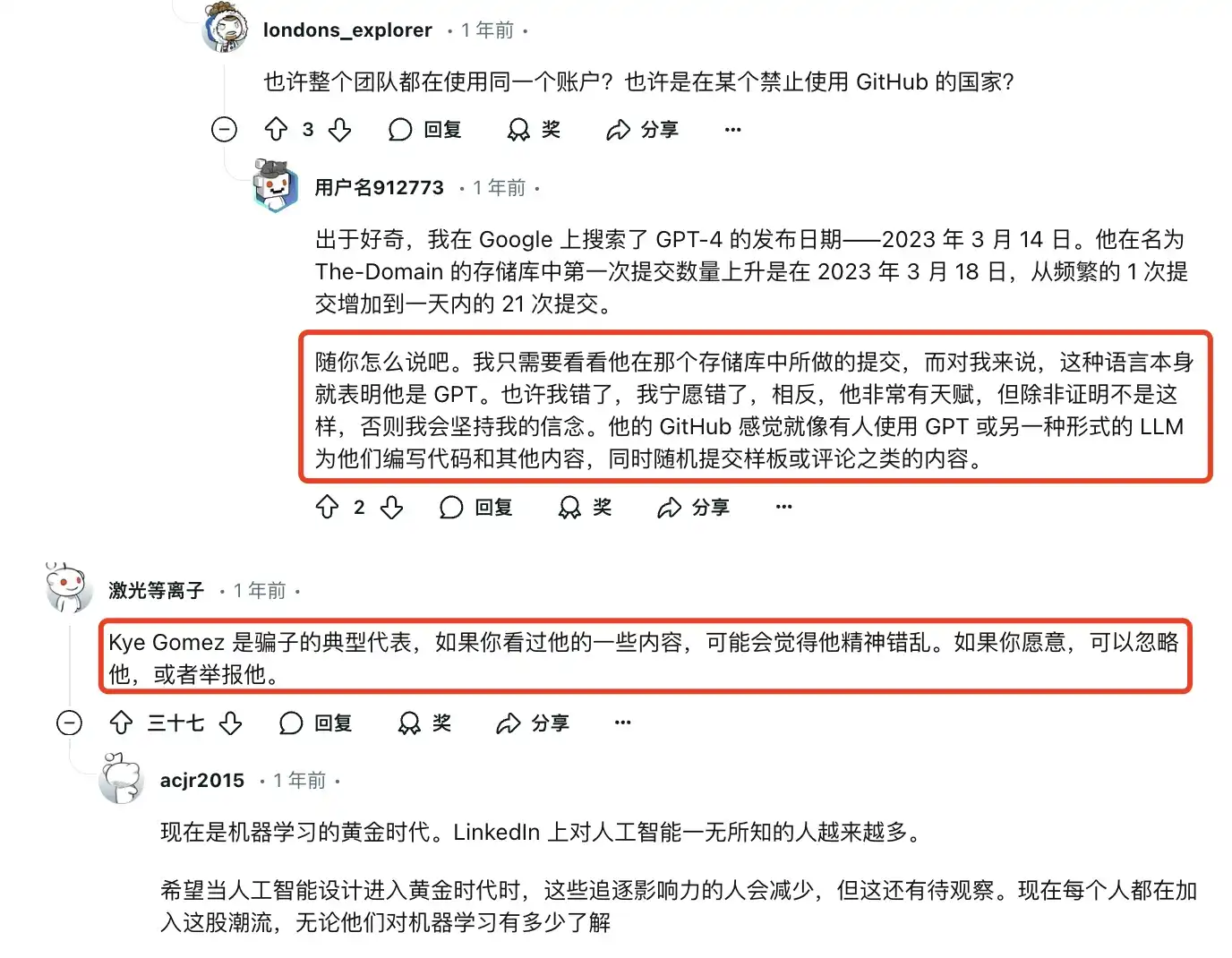
Shaw shared a post from August 2023 on the Reddit machine learning forum, which pointed out a possible trace of someone else's work being stolen in a Github repo, owned by Swarms developer Kye. Some commenters also noted that Kye had directly copied code from a certain codebase. "Based on his code commit frequency and content, Kye most likely generated the code through ChatGPT."
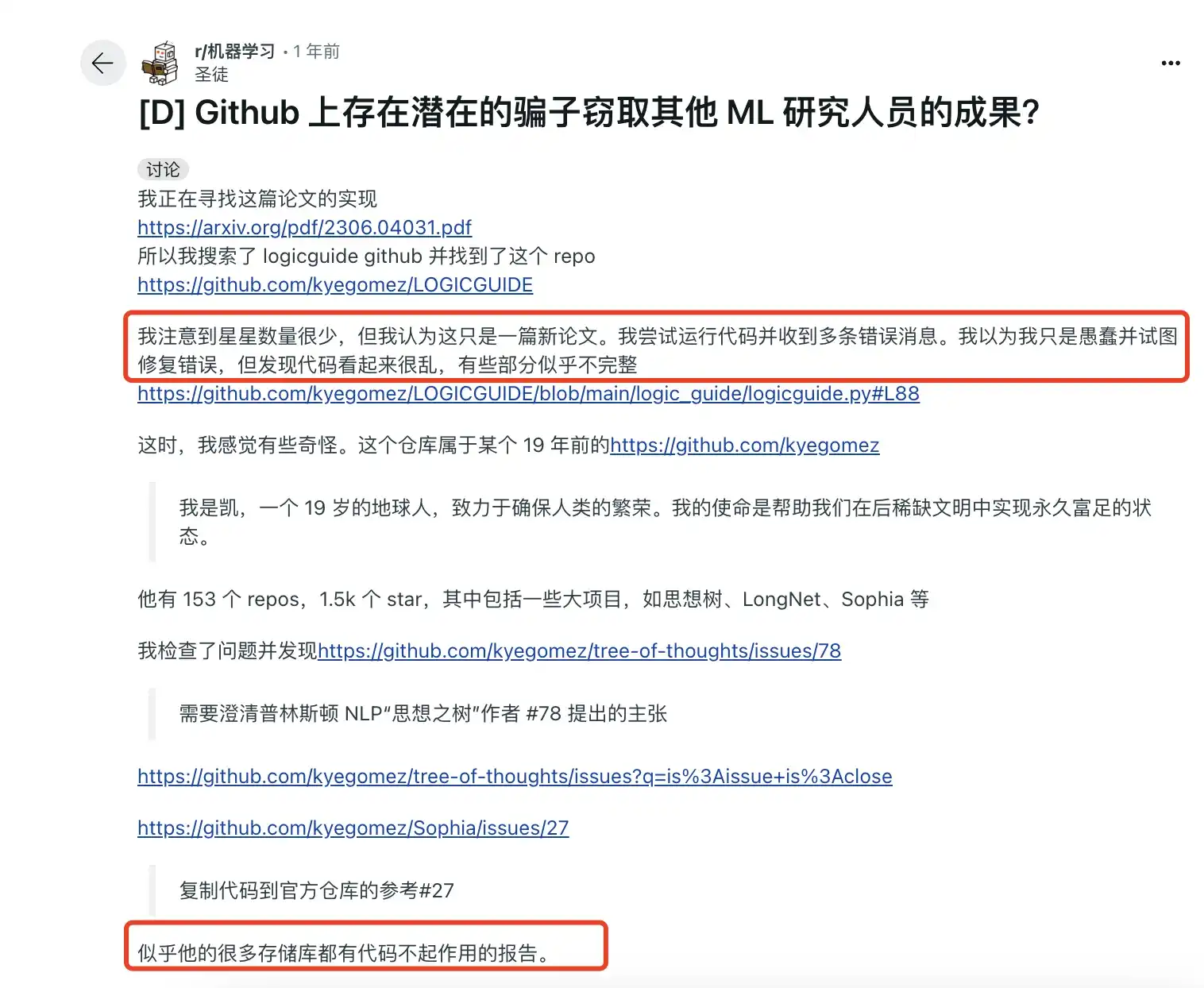
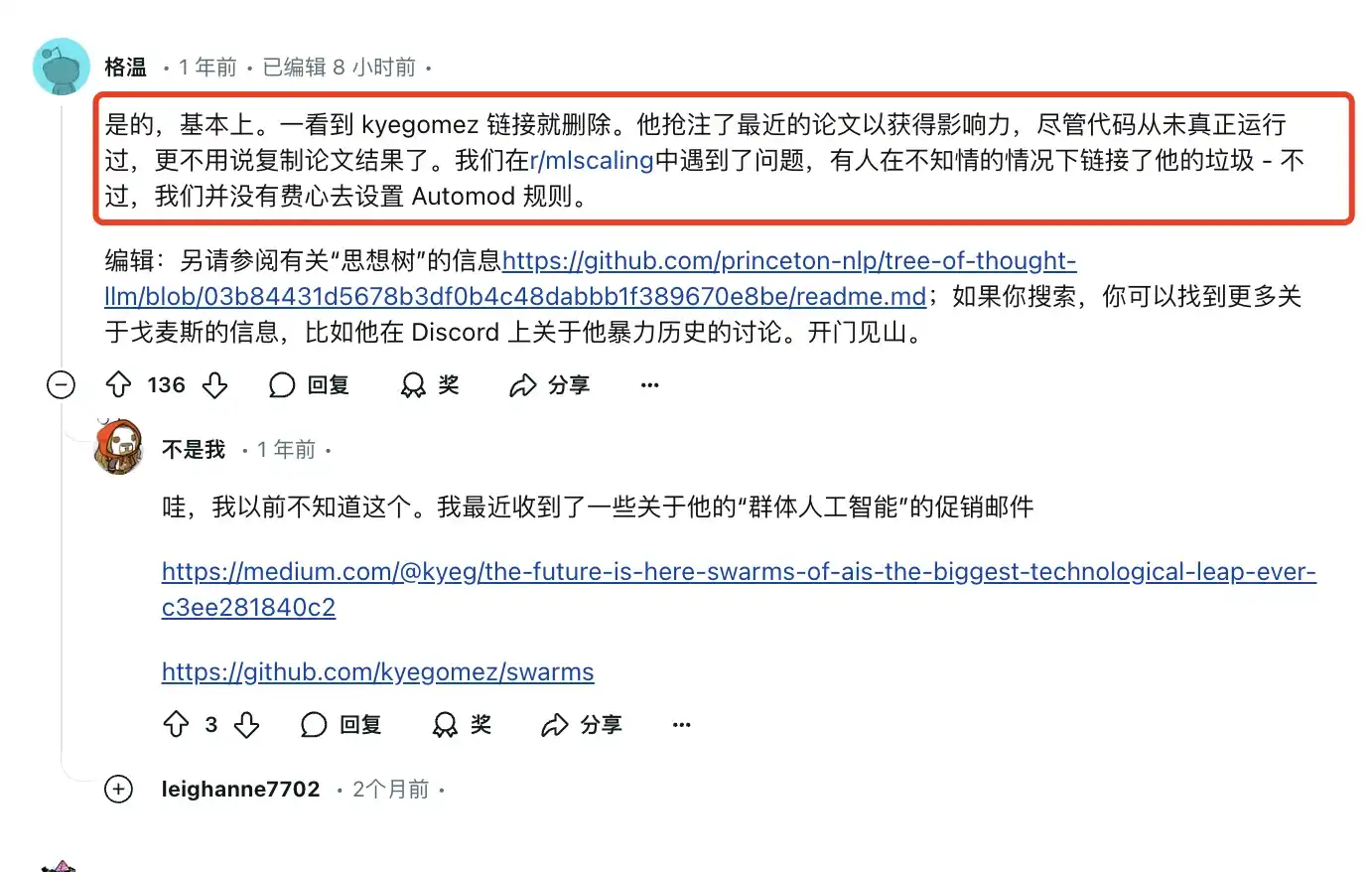
Reddit Post and Comments Exposing

However, this recent criticism from Shaw towards Kye is more intense than ever before.

After Shaw's critical tweet was published, the official X platform account of the swarms project as an AI Agent replied, "Can you point out where the code has issues so that we can address and fix it?"

Shaw, unrelenting, directly replied, saying, "You are a thief and a fraudster, with evidence from people at Princeton University and individuals like Gwern, a senior member of OpenAI." The link and screenshot provided were evidence that Kye's previous code was identified as being generated by ChatGPT.
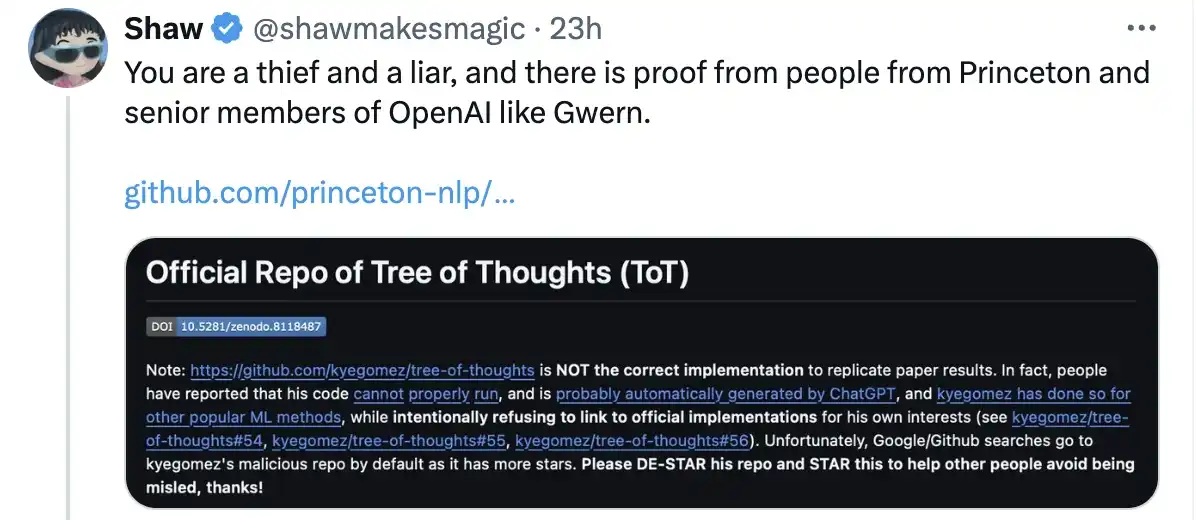
Quotes and Evidence from Shaw's Direct Interaction

Faced with Shaw's criticism, swarms developer Kye made a 180-degree turn from his previous confrontational stance and chose a more friendly response. "If you have any questions about swarms, please submit feedback, and we will promptly address the issue. We are committed to providing a seamless AI Agent building experience for everyone."

On December 22nd last year, when Shaw first criticized Kye, the latter's reaction was very intense. Kye believed that Shaw's token sale had undermined the project, causing many investors to lose money. He emphasized that he continued to hold swarms and MCS without selling, positioning himself as the true believer in realizing the functionality and practicality of the AI Agent. After Shaw blocked his account, Kye both mocked through posts and engaged in "personal attacks," suggesting that Shaw, Eliza, and ai16z, among other individuals and projects, were all scams.

Shaw & a16z Crypto CTO: "DM'd Internet Friend"

As the initiator of the ai16z DAO organization fund, Shaw's interactions with a16z have been limited, with direct contact only with the a16z Crypto CTO. Previously, Shaw had also posted clarifying that ai16z had no relation to a16z and emphasized that buying tokens related to these concepts was very foolish. However, he added in the comments section, "I am also one of the fools," further confusing unsuspecting users about the relationship and causing them to purchase tokens related to ai16z.

In November last year, a16z Crypto CTO Eddy Lazzarin had posted on X revealing the ongoing dialogue between the venture capital firm and the ai16z DAO. Previously, one of the founders of ai16z, Shaw, had posted on X seeking to contact a16z, to which Lazzarin replied, "Check your DMs." At that time, the news had a significant impact on ai16z, with a 24-hour surge of nearly 44%, pushing its market cap above $480 million.

Shaw & Baoskee: A Friendly Symbiotic Relationship Between Platform and Project

As a "decentralized VC investment platform," one of daos.fun's great achievements is the ai16z, a community-owned fund. Hence, the relationship between Shaw and ai16z's launch platform daos.fun founder Baoskee can be described as very friendly.

Previously, Baoskee had given a positive response regarding the "ai16z token permissions," directly showing support for ai16z and Shaw himself: "The ai16z token is indeed mintable, and minting rights will be controlled by DAO token holders (with veto protection) ... We will conduct a thorough audit of this matter."

At some level, the two can be seen as a symbiotic relationship, like a grasshopper on the same rope.

Shaw & Lucid: Co-founding Partners of ai16z

On the other hand, ai16z DAO's partner Lucid is Shaw's "right-hand man," who co-founded ai16z and also initiated the creation of the Base ecosystem AI Agent BeffAI.

Previously, Shaw posted looking for developers interested in Eliza Runescape plugin and proxy development, and Lucid was the contact person for that project at the time.

Shaw & Skely: Supporters and Initiators of the ai Pool Project

Skely, the founder of the AI Agent project ai Pool (METAV), which raised over 30,000 SOL in a few hours, is an example developer whom Shaw admires.

When Skely's X platform account was maliciously reported and banned, Shaw, as the co-founder of ai16z, immediately retweeted a community member's message in support. Later, Shaw posted stating that the aiPool token had been released, Skely was still working to recover the X account, showing outspoken support for the former.

Shaw & KOTO 9 X: Unilateral Appreciation

Previously, KOTOX 9, who issued the AI Meme coin KOTO, was suspected to be the target of Shaw's initial criticism (actually referring to swarms developer Kye), but Shaw later clarified in response, saying, "It's not him, KOTO 9 X is a very good developer." In his words, there is no shortage of appreciation.

Shaw & Dan Romero: Advocate for Farcaster Ecosystem Development

Last December, Shaw posted, "Farcaster is the future of programmable applications. Eliza has now integrated Farcaster. He also donated $420 worth of degenai tokens individually to every developer who embedded an AI Agent into the Farcaster ecosystem within the Eliza framework at the time."

This move naturally received strong support from Farcaster ecosystem co-creator Dan Romero, who replied in the comments section, saying, "LFG".

From this perspective, the two parties are to some extent akin to partners.

In addition, Shaw has also actively promoted close collaborations with projects such as ai16z, Eliza, the decentralized computing power network Aethir, the decentralized AI operating system 0G, and the well-known DEX platform Orca.

Other Developers in Smolworld: Shaw's Teammates

In a tweet at the end of last year, when asked in surprise if he was no longer involved in Smolworld-related work and was instead focusing on Eliza and ai16z, Shaw also responded, saying, "Still managing the team, but day-to-day development work is mainly handled by lordasado, Koshi, and Alextitonis."

Summary: The AI Agent is Borderless, but Developers Have Boundaries

As the old saying goes: "Science has no borders, but scientists have different nationalities." Similarly, the project accounts built on the X platform, the smart contracts deployed on-chain, and the corresponding AI Agents have no boundaries, but the developers behind countless AI Agents may have different boundaries and complex relationships.

Although the AI Agent in the crypto field still has a long way to go compared to mainstream products, the AI Agent and developers are striving in their own way to drive the continuous development of projects, products, and the race. As developer Kye from the swarms said, "Battle is a mutually destructive zero-sum game; only through joint efforts can net gains be created."

Original Article Link

You may also like

Token Cannot Compound, Where Is the Real Investment Opportunity?

The next chapter in the crypto industry will undoubtedly be written by Crypto-empowered Stocks.

February 6th Market Key Intelligence, How Much Did You Miss?

1. On-chain Flows: $508.2M USD inflow to Ethereum today; $390.8M USD outflow from Arbitrum 2. Biggest Gainers/Losers: $HBTC, $AIO 3. Top News: Current Bitcoin weekly RSI oversold signal comparable to June 2022

China's Central Bank and Eight Other Departments' Latest Regulatory Focus: Key Attention to RWA Tokenized Asset Risk


Foreword: Today, the People's Bank of China's website published the "Notice of the People's Bank of China, National Development and Reform Commission, Ministry of Industry and Information Technology, Ministry of Public Security, State Administration for Market Regulation, China Banking and Insurance Regulatory Commission, China Securities Regulatory Commission, State Administration of Foreign Exchange on Further Preventing and Dealing with Risks Related to Virtual Currency and Others (Yinfa [2026] No. 42)", the latest regulatory requirements from the eight departments including the central bank, which are basically consistent with the regulatory requirements of recent years. The main focus of the regulation is on speculative activities such as virtual currency trading, exchanges, ICOs, overseas platform services, and this time, regulatory oversight of RWA has been added, explicitly prohibiting RWA tokenization, stablecoins (especially those pegged to the RMB). The following is the full text:


To the people's governments of all provinces, autonomous regions, and municipalities directly under the Central Government, the Xinjiang Production and Construction Corps:


  Recently, there have been speculative activities related to virtual currency and Real-World Assets (RWA) tokenization, disrupting the economic and financial order and jeopardizing the property security of the people. In order to further prevent and address the risks related to virtual currency and Real-World Assets tokenization, effectively safeguard national security and social stability, in accordance with the "Law of the People's Republic of China on the People's Bank of China," "Law of the People's Republic of China on Commercial Banks," "Securities Law of the People's Republic of China," "Law of the People's Republic of China on Securities Investment Funds," "Law of the People's Republic of China on Futures and Derivatives," "Cybersecurity Law of the People's Republic of China," "Regulations of the People's Republic of China on the Administration of Renminbi," "Regulations on Prevention and Disposal of Illegal Fundraising," "Regulations of the People's Republic of China on Foreign Exchange Administration," "Telecommunications Regulations of the People's Republic of China," and other provisions, after reaching consensus with the Cyberspace Administration of China, the Supreme People's Court, and the Supreme People's Procuratorate, and with the approval of the State Council, the relevant matters are notified as follows:


  I. Clarify the essential attributes of virtual currency, Real-World Assets tokenization, and related business activities


  (I) Virtual currency does not possess the legal status equivalent to fiat currency. Virtual currencies such as Bitcoin, Ether, Tether, etc., have the main characteristics of being issued by non-monetary authorities, using encryption technology and distributed ledger or similar technology, existing in digital form, etc. They do not have legal tender status, should not and cannot be circulated and used as currency in the market.


  The business activities related to virtual currency are classified as illegal financial activities. The exchange of fiat currency and virtual currency within the territory, exchange of virtual currencies, acting as a central counterparty in buying and selling virtual currencies, providing information intermediary and pricing services for virtual currency transactions, token issuance financing, and trading of virtual currency-related financial products, etc., fall under illegal financial activities, such as suspected illegal issuance of token vouchers, unauthorized public issuance of securities, illegal operation of securities and futures business, illegal fundraising, etc., are strictly prohibited across the board and resolutely banned in accordance with the law. Overseas entities and individuals are not allowed to provide virtual currency-related services to domestic entities in any form.


  A stablecoin pegged to a fiat currency indirectly fulfills some functions of the fiat currency in circulation. Without the consent of relevant authorities in accordance with the law and regulations, any domestic or foreign entity or individual is not allowed to issue a RMB-pegged stablecoin overseas.


(II)Tokenization of Real-World Assets refers to the use of encryption technology and distributed ledger or similar technologies to transform ownership rights, income rights, etc., of assets into tokens (tokens) or other interests or bond certificates with token (token) characteristics, and carry out issuance and trading activities.


  Engaging in the tokenization of real-world assets domestically, as well as providing related intermediary, information technology services, etc., which are suspected of illegal issuance of token vouchers, unauthorized public offering of securities, illegal operation of securities and futures business, illegal fundraising, and other illegal financial activities, shall be prohibited; except for relevant business activities carried out with the approval of the competent authorities in accordance with the law and regulations and relying on specific financial infrastructures. Overseas entities and individuals are not allowed to illegally provide services related to the tokenization of real-world assets to domestic entities in any form.


  II. Sound Work Mechanism


  (III) Inter-agency Coordination. The People's Bank of China, together with the National Development and Reform Commission, the Ministry of Industry and Information Technology, the Ministry of Public Security, the State Administration for Market Regulation, the China Banking and Insurance Regulatory Commission, the China Securities Regulatory Commission, the State Administration of Foreign Exchange, and other departments, will improve the work mechanism, strengthen coordination with the Cyberspace Administration of China, the Supreme People's Court, and the Supreme People's Procuratorate, coordinate efforts, and overall guide regions to carry out risk prevention and disposal of virtual currency-related illegal financial activities.


  The China Securities Regulatory Commission, together with the National Development and Reform Commission, the Ministry of Industry and Information Technology, the Ministry of Public Security, the People's Bank of China, the State Administration for Market Regulation, the China Banking and Insurance Regulatory Commission, the State Administration of Foreign Exchange, and other departments, will improve the work mechanism, strengthen coordination with the Cyberspace Administration of China, the Supreme People's Court, and the Supreme People's Procuratorate, coordinate efforts, and overall guide regions to carry out risk prevention and disposal of illegal financial activities related to the tokenization of real-world assets.


  (IV) Strengthening Local Implementation. The people's governments at the provincial level are overall responsible for the prevention and disposal of risks related to virtual currencies and the tokenization of real-world assets in their respective administrative regions. The specific leading department is the local financial regulatory department, with participation from branches and dispatched institutions of the State Council's financial regulatory department, telecommunications regulators, public security, market supervision, and other departments, in coordination with cyberspace departments, courts, and procuratorates, to improve the normalization of the work mechanism, effectively connect with the relevant work mechanisms of central departments, form a cooperative and coordinated working pattern between central and local governments, effectively prevent and properly handle risks related to virtual currencies and the tokenization of real-world assets, and maintain economic and financial order and social stability.


  III. Strengthened Risk Monitoring, Prevention, and Disposal


  (5) Enhanced Risk Monitoring. The People's Bank of China, China Securities Regulatory Commission, National Development and Reform Commission, Ministry of Industry and Information Technology, Ministry of Public Security, State Administration of Foreign Exchange, Cyberspace Administration of China, and other departments continue to improve monitoring techniques and system support, enhance cross-departmental data analysis and sharing, establish sound information sharing and cross-validation mechanisms, promptly grasp the risk situation of activities related to virtual currency and real-world asset tokenization. Local governments at all levels give full play to the role of local monitoring and early warning mechanisms. Local financial regulatory authorities, together with branches and agencies of the State Council's financial regulatory authorities, as well as departments of cyberspace and public security, ensure effective connection between online monitoring, offline investigation, and fund tracking, efficiently and accurately identify activities related to virtual currency and real-world asset tokenization, promptly share risk information, improve early warning information dissemination, verification, and rapid response mechanisms.


  (6) Strengthened Oversight of Financial Institutions, Intermediaries, and Technology Service Providers. Financial institutions (including non-bank payment institutions) are prohibited from providing account opening, fund transfer, and clearing services for virtual currency-related business activities, issuing and selling financial products related to virtual currency, including virtual currency and related financial products in the scope of collateral, conducting insurance business related to virtual currency, or including virtual currency in the scope of insurance liability. Financial institutions (including non-bank payment institutions) are prohibited from providing custody, clearing, and settlement services for unauthorized real-world asset tokenization-related business and related financial products. Relevant intermediary institutions and information technology service providers are prohibited from providing intermediary, technical, or other services for unauthorized real-world asset tokenization-related businesses and related financial products.


  (7) Enhanced Management of Internet Information Content and Access. Internet enterprises are prohibited from providing online business venues, commercial displays, marketing, advertising, or paid traffic diversion services for virtual currency and real-world asset tokenization-related business activities. Upon discovering clues of illegal activities, they should promptly report to relevant departments and provide technical support and assistance for related investigations and inquiries. Based on the clues transferred by the financial regulatory authorities, the cyberspace administration, telecommunications authorities, and public security departments should promptly close and deal with websites, mobile applications (including mini-programs), and public accounts engaged in virtual currency and real-world asset tokenization-related business activities in accordance with the law.


  (8) Strengthened Entity Registration and Advertisement Management. Market supervision departments strengthen entity registration and management, and enterprise and individual business registrations must not contain terms such as "virtual currency," "virtual asset," "cryptocurrency," "crypto asset," "stablecoin," "real-world asset tokenization," or "RWA" in their names or business scopes. Market supervision departments, together with financial regulatory authorities, legally enhance the supervision of advertisements related to virtual currency and real-world asset tokenization, promptly investigating and handling relevant illegal advertisements.


  (IX) Continued Rectification of Virtual Currency Mining Activities. The National Development and Reform Commission, together with relevant departments, strictly controls virtual currency mining activities, continuously promotes the rectification of virtual currency mining activities. The people's governments of various provinces take overall responsibility for the rectification of "mining" within their respective administrative regions. In accordance with the requirements of the National Development and Reform Commission and other departments in the "Notice on the Rectification of Virtual Currency Mining Activities" (NDRC Energy-saving Building [2021] No. 1283) and the provisions of the "Guidance Catalog for Industrial Structure Adjustment (2024 Edition)," a comprehensive review, investigation, and closure of existing virtual currency mining projects are conducted, new mining projects are strictly prohibited, and mining machine production enterprises are strictly prohibited from providing mining machine sales and other services within the country.


  (X) Severe Crackdown on Related Illegal Financial Activities. Upon discovering clues to illegal financial activities related to virtual currency and the tokenization of real-world assets, local financial regulatory authorities, branches of the State Council's financial regulatory authorities, and other relevant departments promptly investigate, determine, and properly handle the issues in accordance with the law, and seriously hold the relevant entities and individuals legally responsible. Those suspected of crimes are transferred to the judicial authorities for processing according to the law.


 (XI) Severe Crackdown on Related Illegal and Criminal Activities. The Ministry of Public Security, the People's Bank of China, the State Administration for Market Regulation, the China Banking and Insurance Regulatory Commission, the China Securities Regulatory Commission, as well as judicial and procuratorial organs, in accordance with their respective responsibilities, rigorously crack down on illegal and criminal activities related to virtual currency, the tokenization of real-world assets, such as fraud, money laundering, illegal business operations, pyramid schemes, illegal fundraising, and other illegal and criminal activities carried out under the guise of virtual currency, the tokenization of real-world assets, etc.


  (XII) Strengthen Industry Self-discipline. Relevant industry associations should enhance membership management and policy advocacy, based on their own responsibilities, advocate and urge member units to resist illegal financial activities related to virtual currency and the tokenization of real-world assets. Member units that violate regulatory policies and industry self-discipline rules are to be disciplined in accordance with relevant self-regulatory management regulations. By leveraging various industry infrastructure, conduct risk monitoring related to virtual currency, the tokenization of real-world assets, and promptly transfer issue clues to relevant departments.


  IV. Strict Supervision of Domestic Entities Engaging in Overseas Business Activities


(XIII) Without the approval of relevant departments in accordance with the law and regulations, domestic entities and foreign entities controlled by them may not issue virtual currency overseas.


  (XIV) Domestic entities engaging directly or indirectly in overseas external debt-based tokenization of real-world assets, or conducting asset securitization activities abroad based on domestic ownership rights, income rights, etc. (hereinafter referred to as domestic equity), should be strictly regulated in accordance with the principles of "same business, same risk, same rules." The National Development and Reform Commission, the China Securities Regulatory Commission, the State Administration of Foreign Exchange, and other relevant departments regulate it according to their respective responsibilities. For other forms of overseas real-world asset tokenization activities based on domestic equity by domestic entities, the China Securities Regulatory Commission, together with relevant departments, supervise according to their division of responsibilities. Without the consent and filing of relevant departments, no unit or individual may engage in the above-mentioned business.


  (15) Overseas subsidiaries and branches of domestic financial institutions providing Real World Asset Tokenization-related services overseas shall do so legally and prudently. They shall have professional personnel and systems in place to effectively mitigate business risks, strictly implement customer onboarding, suitability management, anti-money laundering requirements, and incorporate them into the domestic financial institutions' compliance and risk management system. Intermediaries and information technology service providers offering Real World Asset Tokenization services abroad based on domestic equity or conducting Real World Asset Tokenization business in the form of overseas debt for domestic entities directly or indirectly venturing abroad must strictly comply with relevant laws and regulations. They should establish and improve relevant compliance and internal control systems in accordance with relevant normative requirements, strengthen business and risk control, and report the business developments to the relevant regulatory authorities for approval or filing.


  V. Strengthen Organizational Implementation


  (16) Strengthen organizational leadership and overall coordination. All departments and regions should attach great importance to the prevention of risks related to virtual currencies and Real World Asset Tokenization, strengthen organizational leadership, clarify work responsibilities, form a long-term effective working mechanism with centralized coordination, local implementation, and shared responsibilities, maintain high pressure, dynamically monitor risks, effectively prevent and mitigate risks in an orderly and efficient manner, legally protect the property security of the people, and make every effort to maintain economic and financial order and social stability.


  (17) Widely carry out publicity and education. All departments, regions, and industry associations should make full use of various media and other communication channels to disseminate information through legal and policy interpretation, analysis of typical cases, and education on investment risks, etc. They should promote the illegality and harm of virtual currencies and Real World Asset Tokenization-related businesses and their manifestations, fully alert to potential risks and hidden dangers, and enhance public awareness and identification capabilities for risk prevention.


  VI. Legal Responsibility


  (18) Engaging in illegal financial activities related to virtual currencies and Real World Asset Tokenization in violation of this notice, as well as providing services for virtual currencies and Real World Asset Tokenization-related businesses, shall be punished in accordance with relevant regulations. If it constitutes a crime, criminal liability shall be pursued according to the law. For domestic entities and individuals who knowingly or should have known that overseas entities illegally provided virtual currency or Real World Asset Tokenization-related services to domestic entities and still assisted them, relevant responsibilities shall be pursued according to the law. If it constitutes a crime, criminal liability shall be pursued according to the law.


  (19) If any unit or individual invests in virtual currencies, Real World Asset Tokens, and related financial products against public order and good customs, the relevant civil legal actions shall be invalid, and any resulting losses shall be borne by them. If there are suspicions of disrupting financial order and jeopardizing financial security, the relevant departments shall deal with them according to the law.


  This notice shall enter into force upon the date of its issuance. The People's Bank of China and ten other departments' "Notice on Further Preventing and Dealing with the Risks of Virtual Currency Trading Speculation" (Yinfa [2021] No. 237) is hereby repealed.


Former Partner's Perspective on Multicoin: Kyle's Exit, But the Game He Left Behind Just Getting Started

Kyle knew his game, so he decided to focus on playing the game he was good at and interested in.

Why Bitcoin Is Falling Now: The Real Reasons Behind BTC's Crash & WEEX's Smart Profit Playbook

Bitcoin's ongoing crash explained: Discover the 5 hidden triggers behind BTC's plunge & how WEEX's Auto Earn and Trade to Earn strategies help traders profit from crypto market volatility.

Wall Street's Hottest Trades See Exodus

This time there is no single triggering factor, but rather market anxiety about asset valuation, with many already skeptical of these valuations being too high, leading to investors choosing to retreat almost simultaneously.

Popular coins

Latest Crypto News

Read more