
- Buy Crypto
- Markets
 Futures
- Spot
- Copy Trade
- Earn
- More
Ethereum Pectra Upgrade Adds Smart Accounts, Boosts L2 Speed
By: cryptotale org|2025/05/08 14:00:10
0
Share
Smart accounts now let users pay fees with tokens and act like simple smart contracts.The staking limit lets one validator hold more ETH, which cuts account management effort.Ethereum can now handle more off-chain data, which lowers costs and speeds up apps.Marking an innovative progress, Ethereum launched its latest network upgrade, Pectra, at epoch 364032, introducing powerful new features aimed at speed, adaptability, and ease of use. Pectra includes three major Ethereum Improvement Proposals: EIP-7702, EIP-7251, and EIP-7691. The proposed changes enhance account capabilities simultaneously with validator staking limit expansions and Layer-2 scalability improvements. These developments represent an essential advancement toward making ETH better.Pectra is live on Ethereum mainnet!– Smart account wallet UX features now active– L2 scaling data storage blobs increased by 2x– Validator UX improvements liveCommunity members will continue to monitor for any issues over the next 24 hours.— Ethereum.org (@ethereum) May 7, 2025Smart Accounts and Flexible Gas PaymentsEIP-7702 allows externally owned accounts to operate like smart contracts, enabling what Ethereum co-founder Vitalik Buterin calls “smart accounts.” This lets users authorize logic-based actions from their wallet, similar to what smart contracts already do. More importantly, users are no longer required to hold ETH to pay gas fees.They can now transact using other ERC-20 tokens. As Sergej Kunz, co-founder of 1inch, explained, the change allows “gasless” transactions and helps developers create apps that behave more like traditional web applications. Besides reducing friction, it improves the experience for both developers and end users. Apps can now sponsor fees or batch transactions more easily.Raised Staking Cap for ValidatorsEIP-7251 significantly raises the staking limit for Ethereum validators, increasing the cap from 32 ETH to 2,048 ETH per validator. Previously, large stakeholders needed to manage hundreds of validators to participate fully. Now, institutional players and wealthy individuals can consolidate stakes, reducing operational burden.Those who can stake can optimize their reward compounding through this system while running a simpler infrastructure designed for large-scale consensus participation. The result supports better economic decentralization without any trade-offs to security.Related: Ethereum’s Pectra Upgrade Hits Holesky Snag, Mainnet DelayedLayer-2 Scaling and Data EfficiencyThrough EIP-7691, Ethereum established a better Layer-2 network integration by enabling block data blobs to carry more information. The implementation of EIP-7691 enhances Arbitrum and Optimism performance through improved batch processing, which results in enhanced off-chain transaction handling and simplified on-chain summary updates. The system delivers accelerated performance alongside reduced fee costs. PeerDAS (peer data availability sampling) implements cost-effective verification mechanisms for Layer-2 rollups, which enhances scalability across the board.The integration of EVM Object Format within Pectra improves interoperable connectivity between chains at Layer-1 and Layer-2. The advanced account abstraction component of EIP-3074 enables batch actions together with sponsored fees and programmable security models. The implemented enhancements create a framework that strengthens Ethereum’s structure while enabling large-scale decentralized computing mechanisms.The post Ethereum Pectra Upgrade Adds Smart Accounts, Boosts L2 Speed appeared first on Cryptotale.
You may also like

Particle Founder: The entrepreneurial insights I have gained the most from in the past year
Stop lean startup, stop lightning entrepreneurship, and think carefully about what your product aspirations are.

Huang Renxun's latest podcast transcript: The future of Nvidia, the development of embodied intelligence and agents, the explosion of inference demand, and the public relations crisis of artificial intelligence
The competition in the future is not just about whose model is larger or whose computing power is stronger, but also about who understands the industry better, who can embed AI more deeply into real processes, and who can organize these capabilities into a runnable and scalable system.

OKX Ventures Research Report: AI Agent Economic Infrastructure Research Report (Part 1)
The existing infrastructure is hostile to the Agent economy. Agents can think and act independently at the "capability level," but at the "economic level," they are still locked into infrastructure designed for humans.

The migration of settlement rights: B18 and the institutional starting point of on-chain banks
In the traditional system, banks decide the settlement; in the on-chain system, code begins to take over this responsibility.

From Tencent and Circle: Looking at the Simple and Difficult Questions of Investment
The AI narrative continues to ferment, but the recent performance of related stocks varies, with some in the midst of summer and others as if in winter.

The second half of stablecoins no longer belongs to the crypto circle
What Coinbase doesn't want, Mastercard is eager to buy.

Cursor "Shell" Kimi Controversy Reversed: From Copyright Infringement Allegations to Authorized Collaboration, China's Open Source Model Once Again Becomes a Global AI Foundation
Cursor was accused of being based on Kimi K2.5, which sparked controversy, and was later confirmed to be compliant through Fireworks AI due diligence.

The Real Reason Tokens Don't Sell: 90% of Crypto Projects Overlook Investor Relations
Provide an Investor Relations Best Practices Guide for Crypto Projects.

Is the income of pump.fun real, earning a million dollars a day despite the market downturn?
If it can really earn this much, what is the reason for the low price of $PUMP?

The real reason why tokens are not selling: 90% of crypto projects neglect investor relations
Investor Relations Practice Guide for Cryptocurrency Projects.

Who is the true winner of the "Tokenization" narrative?
Virtually everyone benefits, but the reason for the benefit, the timing, and the underlying logic are completely different.

Moss: The Era of AI-Traded by Anyone | Project Introduction
AI Trading Agent is rapidly growing its infrastructure.

Chip Smuggling Case Exposes Regulatory Loophole | Rewire News Evening Update
AI chips have become a strategic asset more sensitive than missiles

How a Structured AI Crypto Trading Bot Won at the WEEX Hackathon
Ritmex demonstrates how disciplined risk control and structured signals can make an AI crypto trading bot more stable and reliable on WEEX, highlighting the importance of combining execution discipline with scalable AI trading systems.

Old Indicator Fails, Three Major New Signals Emerge: BTC True Bottom May Still Be Below $60K
When the grocery shopping auntie on the subway, or Tony the hairdresser, start asking you about BTC, crypto, and cryptocurrency investments, selling immediately will be the only best option.

Meeting OpenClaw Founder at a Hackathon: What Else Can Lobsters Do?
Imperial College London MetaGame: AI Agent × Web3 Landing Three Major Directions.
Huang Renxun's Latest Podcast Transcript: NVIDIA's Future, Embodied Intelligence and Agent Development, Soaring Demand for Inferencing, and AI's PR Crisis
The future of competition is not only about whose model is bigger, whose computing power is stronger, but also about who understands the industry better, who can more deeply integrate AI into real processes, and who can organize these capabilities into a set of executable, scalable systems
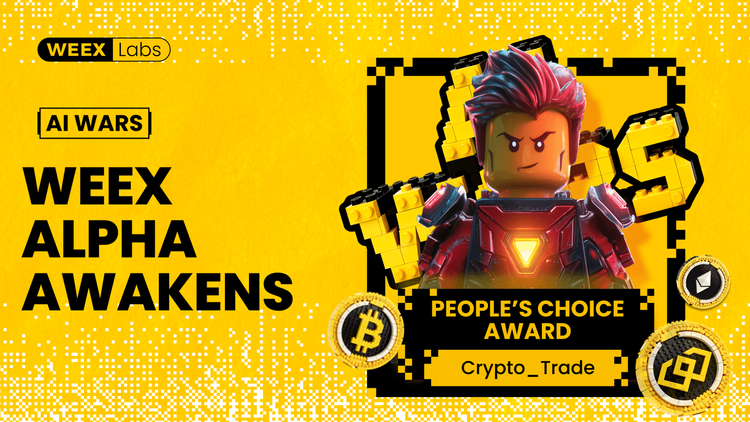
How a Structured AI Crypto Trading Bot Won at the WEEX Hackathon
Crypto_Trade shows how structured inputs and controlled adaptability can build a more stable and reliable AI crypto trading bot within the WEEX AI Trading Hackathon, highlighting a practical path toward scalable AI trading systems.
Particle Founder: The entrepreneurial insights I have gained the most from in the past year
Stop lean startup, stop lightning entrepreneurship, and think carefully about what your product aspirations are.
Huang Renxun's latest podcast transcript: The future of Nvidia, the development of embodied intelligence and agents, the explosion of inference demand, and the public relations crisis of artificial intelligence
The competition in the future is not just about whose model is larger or whose computing power is stronger, but also about who understands the industry better, who can embed AI more deeply into real processes, and who can organize these capabilities into a runnable and scalable system.
OKX Ventures Research Report: AI Agent Economic Infrastructure Research Report (Part 1)
The existing infrastructure is hostile to the Agent economy. Agents can think and act independently at the "capability level," but at the "economic level," they are still locked into infrastructure designed for humans.
The migration of settlement rights: B18 and the institutional starting point of on-chain banks
In the traditional system, banks decide the settlement; in the on-chain system, code begins to take over this responsibility.
From Tencent and Circle: Looking at the Simple and Difficult Questions of Investment
The AI narrative continues to ferment, but the recent performance of related stocks varies, with some in the midst of summer and others as if in winter.
The second half of stablecoins no longer belongs to the crypto circle
What Coinbase doesn't want, Mastercard is eager to buy.


 App
App