
Cryptocurrency + Internet Finance, Disrupting the World like the Gutenberg Printing Press






Original Article Title: Internet Finance
Original Article Authors: TheiaResearch, Crypto Kol
Original Article Translation: zhouzhou, BlockBeats
Editor's Note: This article analogizes the Internet finance system to the impact of the Gutenberg printing press, believing that Internet finance will significantly reduce the cost of financial transactions, break the monopoly of traditional finance, promote global capital free flow, and drive economic growth. Through permissionless cloud servers and smart contracts, Internet finance can optimize capital allocation, risk management, and financial innovation.
Below is the original content (reorganized for easier comprehension):
Our fund's philosophy is entirely based on the Internet finance system, which is the cornerstone that we are willing to live and die for. We often strive to explain to friends and investors the prospects and significance of the Internet finance system.
This is a challenging task because the existing financial system is mostly abstract to consumers—especially those in developed countries who are satisfied with the existing financial infrastructure—and what we are trying to build is still in a conceptual and profound future stage.
This article summarizes some of our classic viewpoints, aiming to help you explain the Internet finance system to friends, family, and clients.
We are collectively building the Internet Finance System (IFS)—a cloud-based, better financial system that can support global assets and provide financial services to 8 billion people. We believe that the Internet finance system is a paradigm shift in global financial activities, similar to the paradigm shift brought about by Gutenberg's printing press in the field of knowledge production and dissemination.
Unified Servers and Smart Contract Code
We discuss together the two fundamental differences between the existing financial system and the Internet finance system, which is the most technical part of the article.
You might think that the financial system is already operating on the internet because you can access bank or brokerage services online, but the internet is simply an interface through which you place orders, just like ordering from a pizza delivery store. The pizza is not made on the internet, and neither is your financial transaction.
The existing financial system operates through a series of isolated servers. There are over 90,000 financial institutions globally, most of which use internal servers that are not accessible from the outside. Your bank loan is just one entry in these servers. Any asset you have in the global financial system—whether owned or owed—is one entry in these isolated servers.
If you own property in the United States, you may be aware that your ownership is registered on federal, state, and local servers, and only a few authorized administrators can send transactions to these servers. This is what we call the "permissioned siloed server" problem.
Financial institutions use standards like SWIFT and ACH for transfers and data sharing. However, these standards require multiple steps and manual oversight due to differences between underlying databases. When communicating between cross-border financial institutions, you need to rely on local government entities like central banks and international organizations like the International Monetary Fund. This process is costly, cumbersome, and slow, filled with a large amount of paperwork and high-salary employees. This is the high transaction cost problem associated with permissioned siloed servers.
From building financial systems on permissioned servers, two more issues arise. The first issue is: creating a financial services company is hard—really hard. You need to find a "gatekeeper" who allows you to post transactions to the permissioned siloed server network we call the global financial system.
You also need to pay them handsomely. This is the problem of high barriers to entry for financial startups. Another related issue is that financial institutions have privileged access to entire regions. For example, three banks control over 50% of the market share in the Colombian market, and you need to work with them to lend to Colombian businesses.
Most emerging market economies have similar market structures. Each country has local financial institutions as "gatekeepers" for entering the domestic market opportunity and uses this privileged position to extract rent. This is what we call the "local banking oligopoly" problem.
It is worth noting that so far, we have explained the "permissioned siloed server" problem and how it leads to heavy transaction costs, high barriers to entry for financial startups, and the issue of local banking oligopoly.
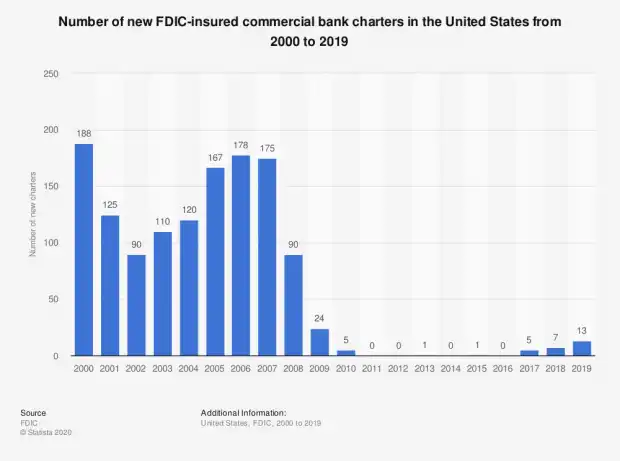
In a permissioned server system, establishing a financial startup faces high barriers to entry.
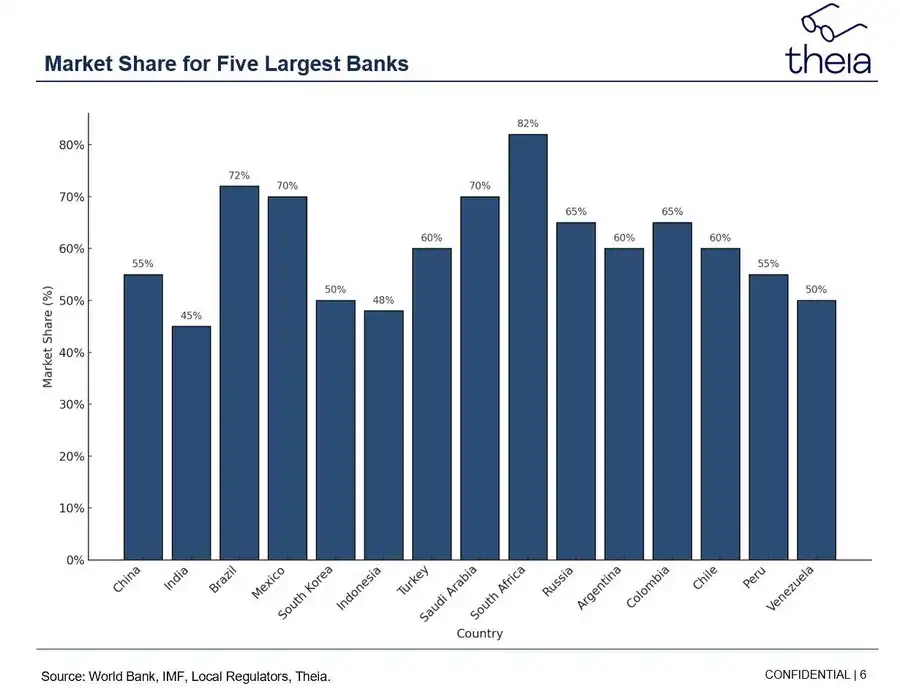
Most countries have some financial institutions acting as "gatekeepers" for local opportunities.
Let's now explore one of the core advantages of Internet finance: code that can make commitments. This is the foundation of smart contracts. Chris Dixon likens smart contract code to a vending machine where you put in a dollar and get a bottle of Coke. Smart contracts allow you to write code that responds in a predetermined way to inputs. For example, when a smart contract receives a dollar, it can release a bottle of Coke.
Alternatively, when it receives full principal and interest payment, it can release the collateral. The smart contract code can automatically distribute dividends to shareholders, rebalance investment portfolios, and manage capital structure tables based on preset logic.
The beauty of smart contract code is that it allows you to automate most financial activities and expands the design space for financial products you can create. Take a custodial protocol, for example. When you purchase a house, the escrow agent holds the funds and property deed until both parties fulfill their commitments before releasing the assets (e.g., the seller cannot take the funds and not fulfill the agreement).
Smart contract code means you no longer need a custodial agent—just a custodial contract that checks the two assets and releases them when the appropriate conditions are met. You can automate various types of transactions—for example, executing penalties according to a payment schedule and releasing collateral in a loan market, paying compensation in life insurance upon receiving a certified death certificate, or automatically receiving streaming payments whenever a song plays on Spotify in a copyright contract. The design space is vast.
Existing financial systems cannot use smart contract code; they rely on a network composed of isolated, permission-controlled servers. In contrast, the Internet financial system is built on a permissionless, unified server using smart contract code. So, what does this mean?
The Internet Financial System is a Step Forward for Our Civilization
1. Internet Finance allows capital to move freely across borders.
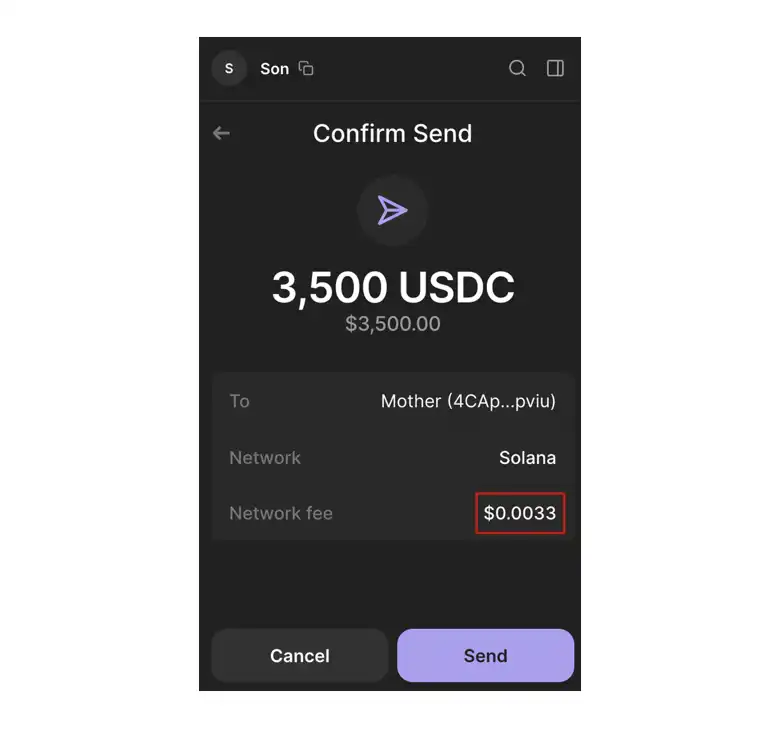
The Internet financial system is globalized because it is directly built on the open Internet. Physical distance becomes irrelevant. You can cross global remittances for less than one cent immediately. Dubai funds can invest in Colombia auto loans. Indonesian hotel operators can raise funds from global capital markets without paying high interest rates to the local banking system.
Most people have seen remittance statistics—people remit over $900 billion to each other annually, paying an average of 7% in fees. The remittance industry is taxed globally at $60 billion. Around $670 billion (about 75%) of remittances flow to low- and middle-income countries, where the remittance amount can be over 20% of the GDP. Remittances over the Internet incur no additional costs because Internet finance itself does not recognize borders. Remittance is just an update to a unified server operation, with costs the same as any transfer between two accounts (<0.01 USD).
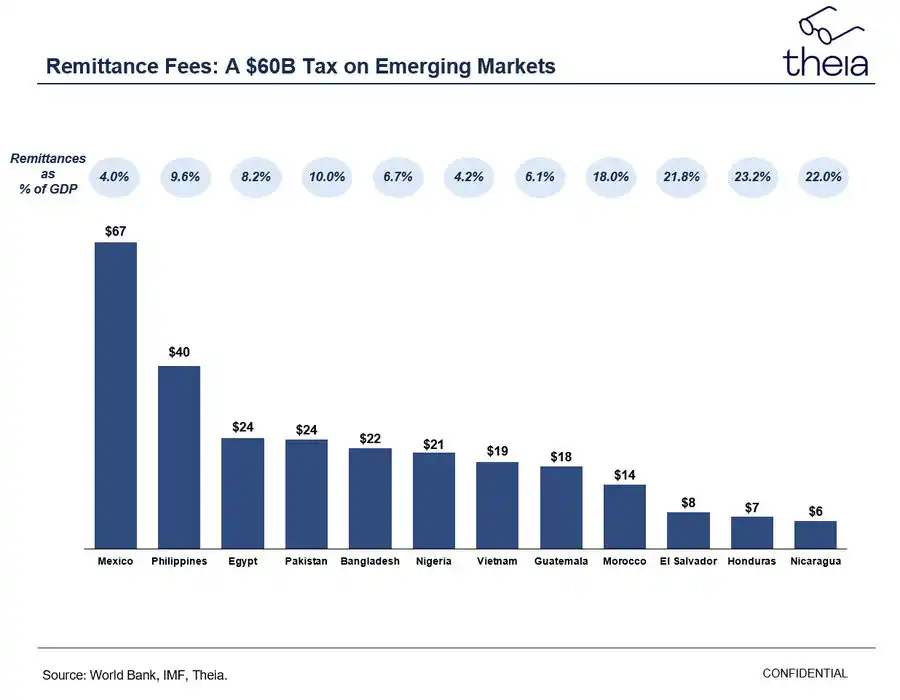
Our current financial system, based on permissioned siloed servers, cannot achieve free cross-border capital movement. Every local banking oligopoly leverages its privileged position over the recipient—controlling the local server and in/out channels—to extract rent. Taking remittances as an example, this dynamic is easy to understand as we intuitively know that a hardworking immigrant should not have to pay a 7% fee to send money to their mother. By 2025, the cost of remittance should be less than 0.01 USD.
For most of us, observing the same extraction process across different areas of the global financial system is more challenging as these costs are a more abstract layer. However, we can roughly estimate the true cost of local banking oligopolies by observing the Net Interest Margin (NIM)—the difference between a financial institution's cost of borrowing and its lending charges. In less developed financial systems globally, the Net Interest Margin tends to be higher—usually between 5% and 10%, but this number can be higher.
The economic distress caused by excessive Net Interest Margin is hard to overstate. A banking system with extractive Net Interest Margin means that the cost of a mortgage is higher than it should be. Higher mortgage costs mean fewer people can afford to buy houses, which translates to fewer homes being built.
This situation can be extrapolated to the entire economy. More expensive commercial loans mean hardworking entrepreneurs have to pay more "rent" to local banks, reducing the number of entrepreneurs starting businesses. In Nigeria, a young professional cannot afford a car loan, so she cannot take a job 50 minutes away. Extractive Net Interest Margin affects various aspects of society, indicating lower GDP growth and fewer employment opportunities.
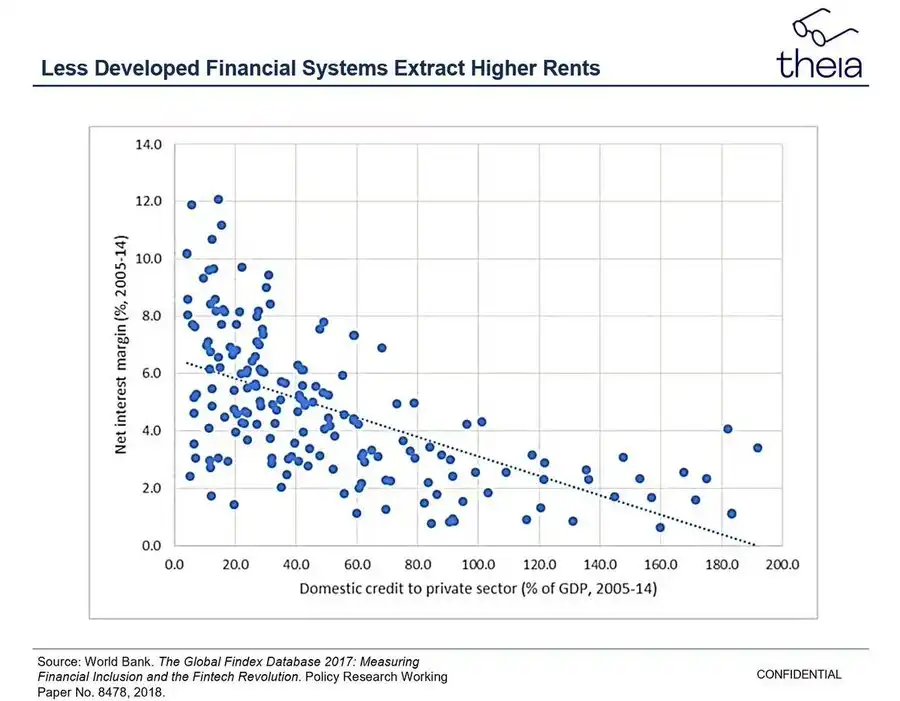
The global internet financial system addresses this issue by providing more high-yield and diversified investment opportunities for large investors, especially in less developed economies.
Suppose you are running a diversified high-yield fund in Dubai and believe that Colombian car loans offer a good risk-adjusted return. Under the existing permissioned, siloed server system, it is not easy for Dubai's fund to access Colombian car loans. The fund could look for a Fund of Funds (FoF) within New York that is connected to a local credit fund in Colombia, but this already involves three layers of fees.
Within the framework of the internet financial system, Colombian car dealerships directly issue car loans on the blockchain. This way, they can access the lowest cost of capital as it is the most liquid locally. An algorithm can rank Colombian car loans based on predicted default rates, allowing Dubai's fund to precisely filter the desired investment exposure.
You should envision a globalized system where capital can easily flow around the world for the most efficient use; a financial system where the net interest margin is compressed to the cost of capital.
Let's take another example—a hotel operator in Indonesia raises funds through the internet instead of dealing with the high fees of the local banking system. Why do we assume that the hotel operator would prefer to raise funds directly on the internet? This is because of the critical concept of the network effect.
If you wanted to sell an old-school game console, such as a Sega Dreamcast, you would go where the most buyers are because that's where you're most likely to find the highest bidding buyer. Similarly, buyers would go where the most sellers are because more sellers mean a higher chance of finding someone willing to sell at a reasonable price.
This is why most markets tend to result in winner-takes-all outcomes. The Chicago Mercantile Exchange (CME) dominates the traditional derivatives market, the New York Stock Exchange dominates the U.S. equity and fixed-income markets, and eBay dominates the global Sega market.
The network effect of auctions is why we expect the internet to become the world's deepest capital market. The internet will serve as a global market connecting people of all kinds in need of capital with those who have capital to deploy, offering the lowest cost of capital.
We are not suggesting that national financial regulation and capital controls will disappear in the face of internet finance. Although the foundational financial system will be globalized, allowing capital to flow freely across borders, sovereign nations will still overlay their legal and regulatory frameworks.
While technology may enable you to do certain things, it does not mean that those things are legal or permissible. You can think of internet finance as similar to a car; it enables humans to do things that were previously impossible but does not mean complete immunity from local laws. However, we anticipate that national laws will adapt to internet finance consistent with economic policy and financial regulation.
2. The Internet Finance System Will Enhance Property Rights Protection for 5 Billion People Worldwide.
The existing global financial system has not provided property rights protection for the majority of people. While some developed economies have robust property rights protections, most emerging markets still rely on assets that are easily subject to devaluation, confiscation, and abuse by arbitrary legal systems for savings.
The 20 largest emerging markets in the world together have a population of over 5 billion people, and their Heritage Foundation property rights scores average below 43. Such low scores mean that your property rights depend on politics and are often influenced by bribery and favoritism. This means that you could invest in a piece of land for a decade only to find out that the governor's brother has had his name added to the land title, making him the new owner.
A score of 43 means you might have invested in a local stock, only to find out that the largest shareholder—a well-connected businessman—restructured the company at the expense of minority shareholders. This means that the company you have diligently built may be expropriated by local cronies or rendered uncompetitive due to arbitrary taxation, fines, and constraints. Investing in countries with weak property rights is extremely challenging.
If you live in countries like the US, Australia, or Europe—where most readers likely reside—you may not fully grasp this predicament as you most likely live in a country with a property rights score close to 95.
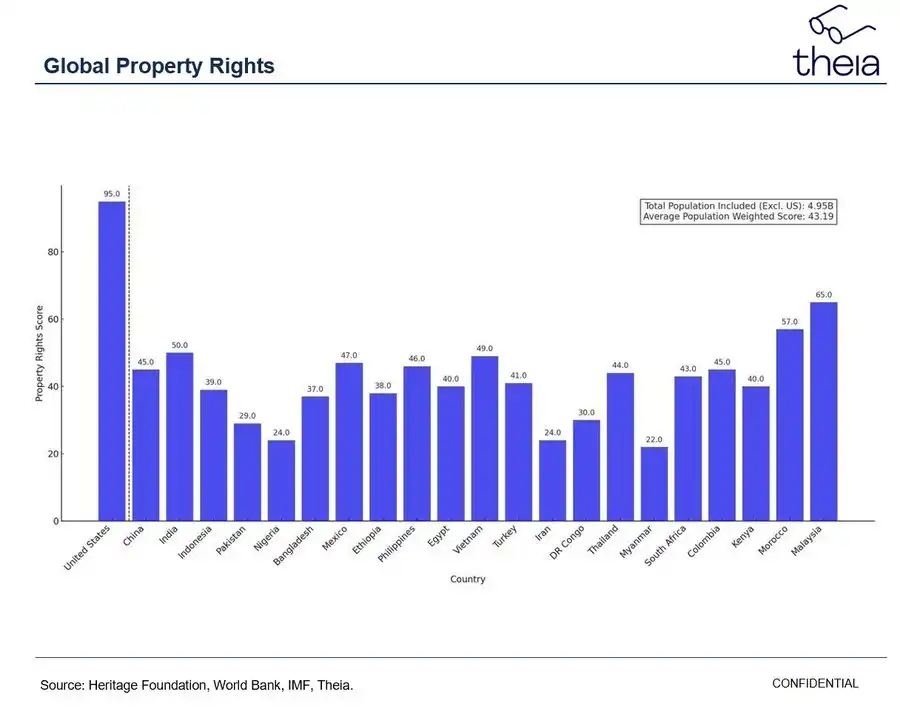
The combined population of the top 20 emerging markets exceeds 5 billion, with an average sovereign wealth fund property rights score below 43. The issue of weakened property rights protection is intertwined with arbitrary monetary supply expansion. Over 80% of the global population lives in a high inflation environment—defined as annual monetary supply growth exceeding 12% over the past 30 years. Most are forced to hold their domestic currency due to limitations in local banking systems and payment channels.
There are numerous ways to trap capital in fiat currency—such as controlled exchange rates, high fees to convert to USD, or even direct government commands. These currencies cannot survive without capital controls as people are more inclined to hold low inflation USD rather than their high inflation domestic currency.
In emerging markets, holding USD is difficult, leading to the erosion of savings. On average, local currencies devalue by 65% against the USD every fifteen years.
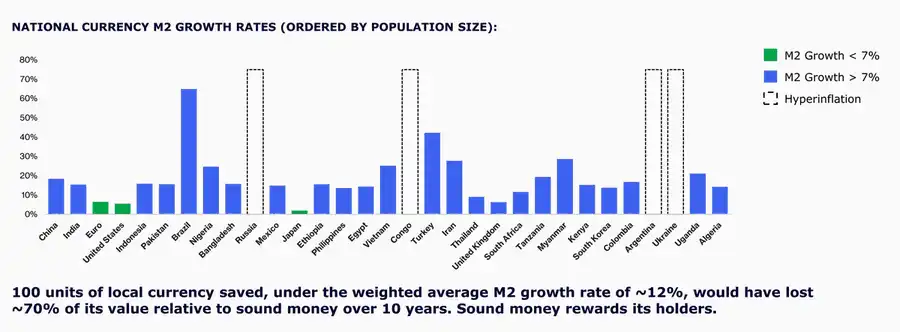
Saving in an environment of weak property rights and high inflation is like climbing an ice-covered mountain full of soap. You can choose to save in pesos, but over time, most of your savings will gradually evaporate; or you can invest in local assets, but then you would have to live under the sword of arbitrary property regimes.
We haven't even touched on the issue of financial exclusion. Globally, about one-third of adults are unbanked, meaning over 1.4 billion adults lack access to any financial system. The number of people without credit and good savings options is even larger.
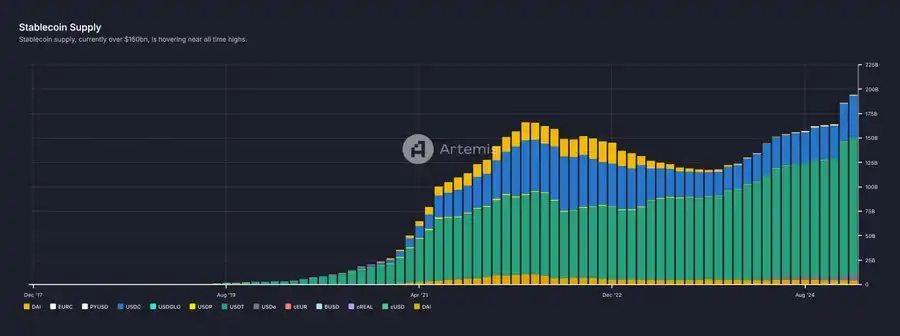
Stablecoins provide an opportunity for these individuals to hold USD directly in the decentralized finance system without relying on local banking systems. In just five years, the total supply of stablecoins has grown to $200 billion.
The next step in global property rights protection is for the United States to allow trusted companies like BlackRock to tokenize real-world assets such as stocks, bonds, and ETFs through a regulated custody model. These assets will be held by regulated U.S. entities, and the government can seize these assets from sanctioned accounts at any time.
Imagine Apple, Amazon, Google, and Berkshire Hathaway stocks being put on the blockchain alongside the S&P 500 and Nasdaq. This will provide a better savings option for billions of people worldwide while expanding the ownership base of U.S. assets.
High-quality assets on the internet will provide a better savings option for people in emerging markets, which is a positive change in itself. We also anticipate that emerging markets will strengthen their property rights protection through internet-based financial tools. A reformist government could directly place land registration on a globally unified property rights server, thereby avoiding corrupt behavior by local governments. For example, a Uruguayan company could embed minority shareholder protection directly into its smart contract code to better safeguard the legitimate rights to the assets.
While this may seem like a naive prediction, from a mathematical perspective, there is actually ample hope. The long-standing issue with property rights in emerging markets is that removing corruption is very difficult, and even if successful, succeeding governments are likely to overturn these small achievements. Property rights reform is a problem that N governments must address together, with each government needing to prioritize property rights from a multi-generational perspective.
Internet financial tools will simplify the property rights reform issue into a problem that a single government can solve. As long as a reformist government puts land registration onto the internet financial system, this decision is unlikely to be reversed.
3. The Internet Financial System Will Tokenize Global Assets and Drive Financial Innovation
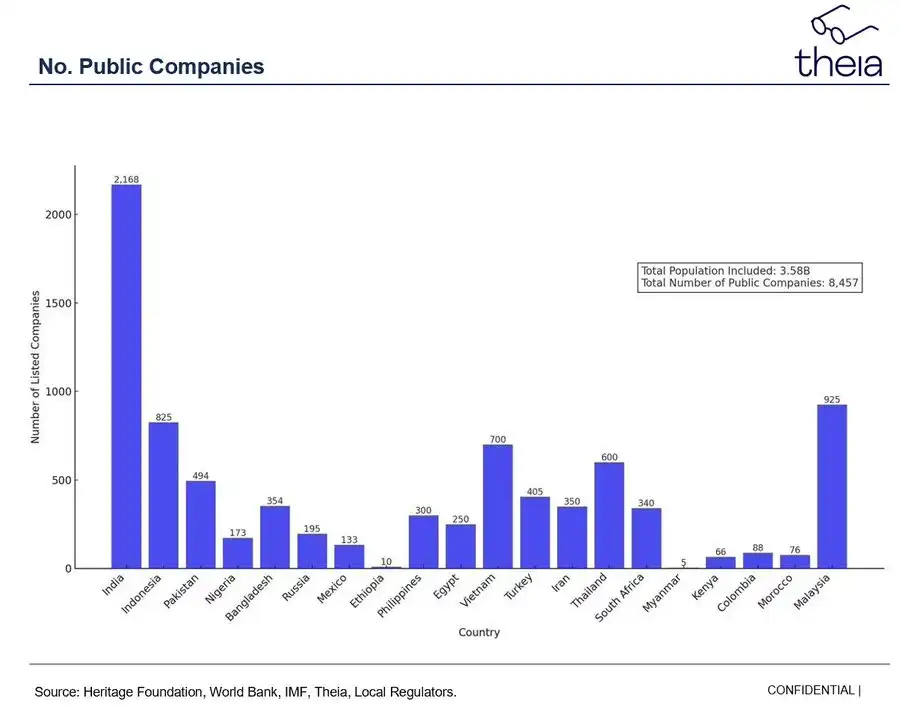
The existing financial system does not allow small companies to access the global capital market. This means that smaller companies need to pay higher capital costs and rent to intermediaries. By population, the top 20 emerging markets globally consist of 3.5 billion people and 8,457 listed companies. You cannot connect them, like in Mexico, which has a population of 128 million but only 133 listed companies. This is far from enough.
Even in the United States, similar issues exist. The number of listed companies available for U.S. investors to choose from once exceeded 8,000, but over the past 20 years, it has halved. The listing process is cumbersome and costly (with costs exceeding $2 million plus an IPO income of 5-7%, coupled with long-term reporting and compliance costs).
We are already witnessing an explosive growth in the quantity of on-chain financial assets. For example, Pump.fun—an on-chain memecoin launchpad based on Solana—has launched over 5 million unique tokens since March 2024. Metaplex has launched over 9 million non-fungible tokens (NFTs) in the last 3 years.
Many observers have underestimated the scale of these achievements because they tend to conflate the quality of on-chain assets (mostly memecoins and JPEG NFTs) with the quality of the financial infrastructure behind them. In reality, the true signal is how easy it has become to launch assets on the internet once the high barriers to entry as liquidity bottlenecks in the traditional financial system are removed.
We anticipate that eventually there will be regulatory demands for token listings, but any reasonable demands would result in issuer costs decreasing by over 90%.
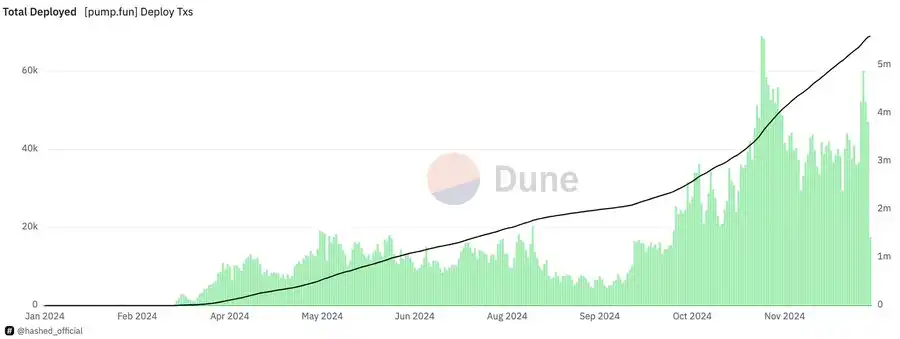
Since March 2024, the Pump.fun platform has launched over 5 million tokens.
We expect that in the future, small businesses will be able to directly raise equity and debt financing over the internet. We have already discussed small business owners in emerging markets. Mid-sized U.S. firms will also be able to trade on liquid markets, democratizing access to the best-performing asset class of the last forty years for everyone globally.
The variety of tools for corporate financing will continue to evolve to fit cheaper and more flexible infrastructures. Apple could issue a blended debt product that pays out daily based on 10% of each iPhone sale. Starbucks could issue revenue-sharing tokens for only the 200 new stores they are opening in the Pacific Northwest, allowing market prices to give management feedback on the value of expansion plans.
The Cambrian Explosion will not only be reflected in the growth of asset quantity. We also anticipate a significant acceleration in financial innovation. Consider some products that already exist in the internet financial system as signs of what might develop in the future.
1. A Universal Margin Account that lets you borrow against assets such as houses, stocks, Bitcoin, or even assets only eligible as collateral in a smart contract financial system (like music royalty income).
2. A Rainbow Option where an investor graphs out a payout chart and an algorithm designs a matching financial instrument by combining existing financial products. Without smart contracts, constructing a Rainbow Option requires an experienced options trading team and multiple attorneys, but using smart contracts can accomplish this within seconds. The key advantage of Rainbow Options is to provide cheaper and more bespoke hedging solutions.
3. A deep and global prediction market can improve the quality of forecasts we use in our everyday decision-making. In the 2024 election, the prediction market demonstrated a strong ability to better predict Biden's unexpected loss and the final election outcome. Imagine if there had been a prediction market in the early days of COVID-19 or the U.S.-Iraq conflict; prediction markets are better than most experts at integrating information and publicly disclosing the best information. They can help people make better decisions and hedge against global conflicts and adverse electoral outcomes.
4. Yield-collateralized credit cards reduce lenders' risk while increasing borrowers' interest rates. You can hold real estate as an NFT and use a credit card to pay, which can increase your mortgage credit limit to a certain extent. Increasing good collateral can reduce interest rates by up to 10%.
5. Decentralized exchanges have reduced the issuance cost of liquid assets by 1000 times. This is precisely the example of Pump.fun and Raydium we mentioned earlier. DEX also reduces transaction fees for retail investors, with retail investors only paying a single-digit fee, unlike retail trading platforms like Coinbase and Robinhood, which charge 1-5% fees.
6. Lending protocols allow customers with compatible collateral to borrow, comparable to the U.S. corporate debt market. On the Euler platform, anyone with an internet connection can borrow dollars using ETH at an annual interest rate of less than 7%.
7. Futarchy is a way to make wiser decisions by leveraging market prediction power. A classic example is when a fierce activist movement demands the resignation of a company's CEO. The board can set up a Futarchy market that allows investors to purchase shares based on the condition of the current CEO resigning or staying. The board can refer to market prices to help make decisions.
This is just some "0 to 1" innovation in the Internet financial system. Low barriers to entry allow for low-risk experimentation in financial design, leading to many failed projects but also some outstanding innovations. Innovation in the traditional financial system, on the other hand, is inhibited by high barriers and experimentation costs.
Take Chicago University Professor Steve Budish as an example. He designed batch auctions to address many of the issues faced by high-frequency trading (HFT). However, Professor Budish failed to convince any large Wall Street firms to adopt his design because existing financial institutions were reluctant to experiment in the highly valuable HFT space. In contrast, some startup teams, after reading his paper, directly implemented his design in the decentralized Internet, and some of these teams have achieved quite impressive results.
4. Internet Finance Is More Efficient
Finance is an indispensable part of our civilization, and I greatly appreciate our work in the financial services sector. We strive to understand how society should allocate resources, predict the future, and provide funding for worthy projects. We carefully consider risk and seek to mitigate it as much as possible. As John Maynard Keynes said, we strive to overcome the ignorance shrouding the future and the dark forces of time.
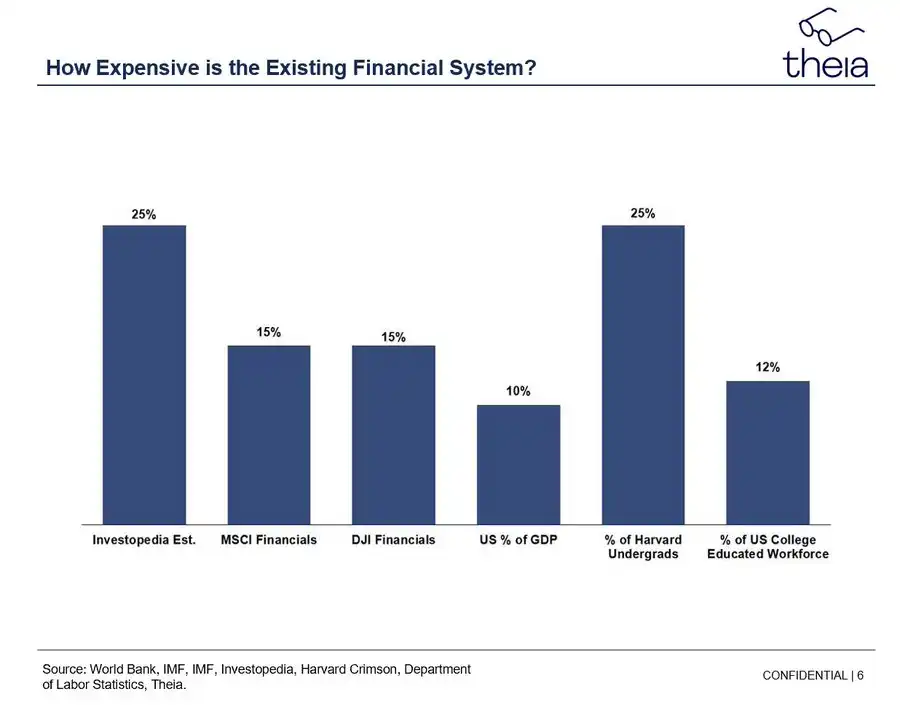
However, we do indeed allocate a significant amount of resources to maintaining this permissioned, siloed server-based financial system. In the United States alone, there are 8.5 million financial services workers, accounting for over 12.5% of all college-educated workers in America. Over the past few decades, roughly 20% to 30% of Harvard University undergraduates have entered the financial services sector. Even top-tier institutions like Yale University see fairly similar numbers.
We can automate a large portion of tedious financial work through smart contracts. We have already seen that certain protocols, in small team settings, have surpassed billions of dollars in transaction volume and loan sizes. For instance, Kamino manages $22 billion in assets with only 20 employees (over $1 billion per employee), while Raydium has facilitated over $550 billion in trade volume with fewer than ten employees. These figures still underestimate the efficiency of smart contracts because both Kamino and Raydium have been able to grow their assets and transaction volumes tenfold without significantly increasing their team size.
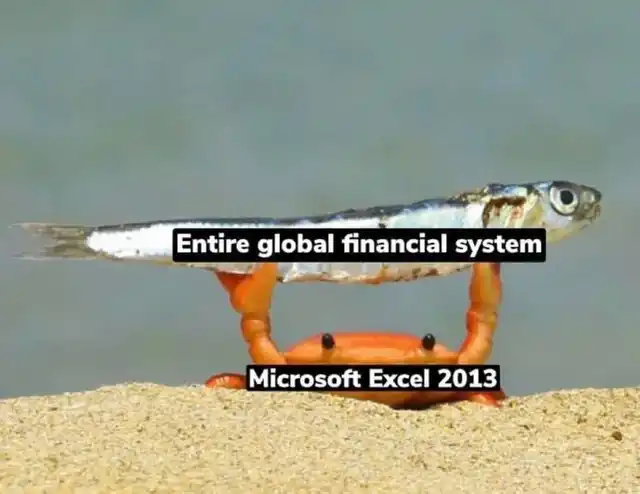
The efficiency of smart contracts is hard to overstate. A machine learning algorithm written by a small team of talented engineers can underwrite millions of loans globally. A global coffee company in Central America can use an open-source asset-liability matching program to continually hedge its commodity risk. A cleverly designed order book system can replace an entire floor of traders in Midtown Manhattan. Smart contract code can increase the efficiency of a senior lawyer's work tenfold. Imagine a laptop replacing a skyscraper.
The nature of work in financial services will change. Brokerage work will mean designing order book mechanisms rather than connecting traders via phone calls in bustling trading pits. Underwriting work will involve outstanding analyst-engineer teams writing algorithms and collaborating with Large Language Models (LLMs).
Liquidity investing will involve sifting through hundreds of thousands of financial assets to find an industry leader in Thailand whose stock should be trading at twice the market cap. There will be specialized funds for predicting the market that will attract the brightest minds. Paperwork will decrease, deep thinking will increase, and financial services workers will excel at what they do best: predicting, risk management, and capital allocation.
Let's take a slight detour to look at the Financial Report - Industrial Complex, a process that has unfolded within it.
In the isolated server financial system, many are involved in managing financial data. A medium-sized enterprise may have dozens of employees responsible for managing its various core systems (such as point of sale systems, enterprise resource planning, etc.). The accounting and finance teams spend hundreds of hours each quarter integrating output data into neat spreadsheets and ensuring its reconciliation. Bankers and financial analysts put in extra hours trying to understand the data and feed it into financial models. Financial institutions spend months tracking every expenditure and expense for auditing purposes. The financial data of our world lives in the ruins of thousands of fragmented spreadsheets.
Internet finance has addressed this issue by unifying financial data storage on cloud servers. A small team of data scientists only needs to establish a financial reporting structure once for the raw data stream. As the business grows, they only need to spend a few hours each month maintaining the reporting code, and that's it. We have seen the prototype of such a system, with data providers like Dune, Token Terminal, and Artemis making this a reality. These data websites, on a very small team scale, have already covered the entire sub-segment of the Internet finance system.
I have also benefited from unified on-chain data. I once spent hundreds of hours building an industrial transaction spreadsheet model. This process required a small team, and the result was a static spreadsheet model that only we could operate and update, with each update taking hours. Now, we only need a few hours to build active real-time models for on-chain business that update automatically. We used to spend months on auditing work. Now, we operate an on-chain fund, basically just sending a few wallet addresses and answering a few questions. The saved time and effort are truly exponential.
5. Internet Finance System Will Promote Faster GDP Growth
Joseph Schumpeter once stated that a more complex financial system can promote faster economic development. Since he made this point almost 100 years ago, countless economic papers have empirically validated his assertion. While specific estimates vary, a doubling of financial system depth typically results in 50 to 100 basis points of annual economic growth over several years.
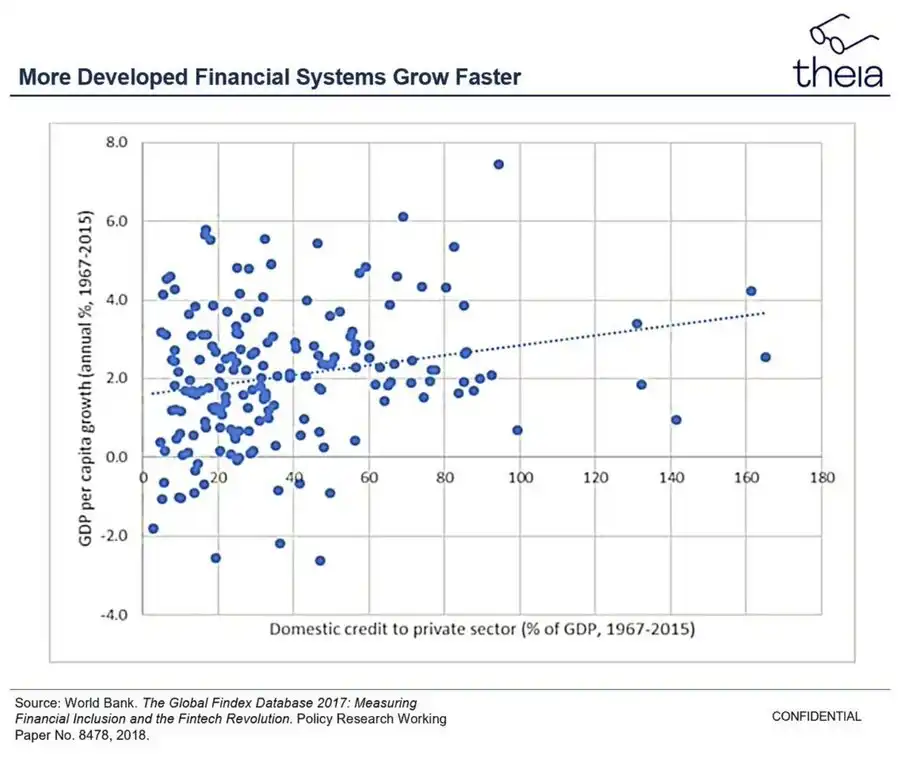
It's not hard to understand why GDP growth would be faster within the framework of an internet finance system. Capital can flow across borders to the best opportunities without being hindered by local banking oligopolies. The net interest margin will narrow, reducing the real interest rates in emerging markets. The high-quality asset choices provided by the internet make it easier for people in emerging markets to save and invest.
Stronger property rights protection directly drives GDP growth. Our financial services workers can spend more time on high-value forecasting, capital allocation, and risk management. Innovative products like futarchy and prediction markets will bring higher-quality information and capital allocation. Countless innovations will help businesses better access capital and manage risks.
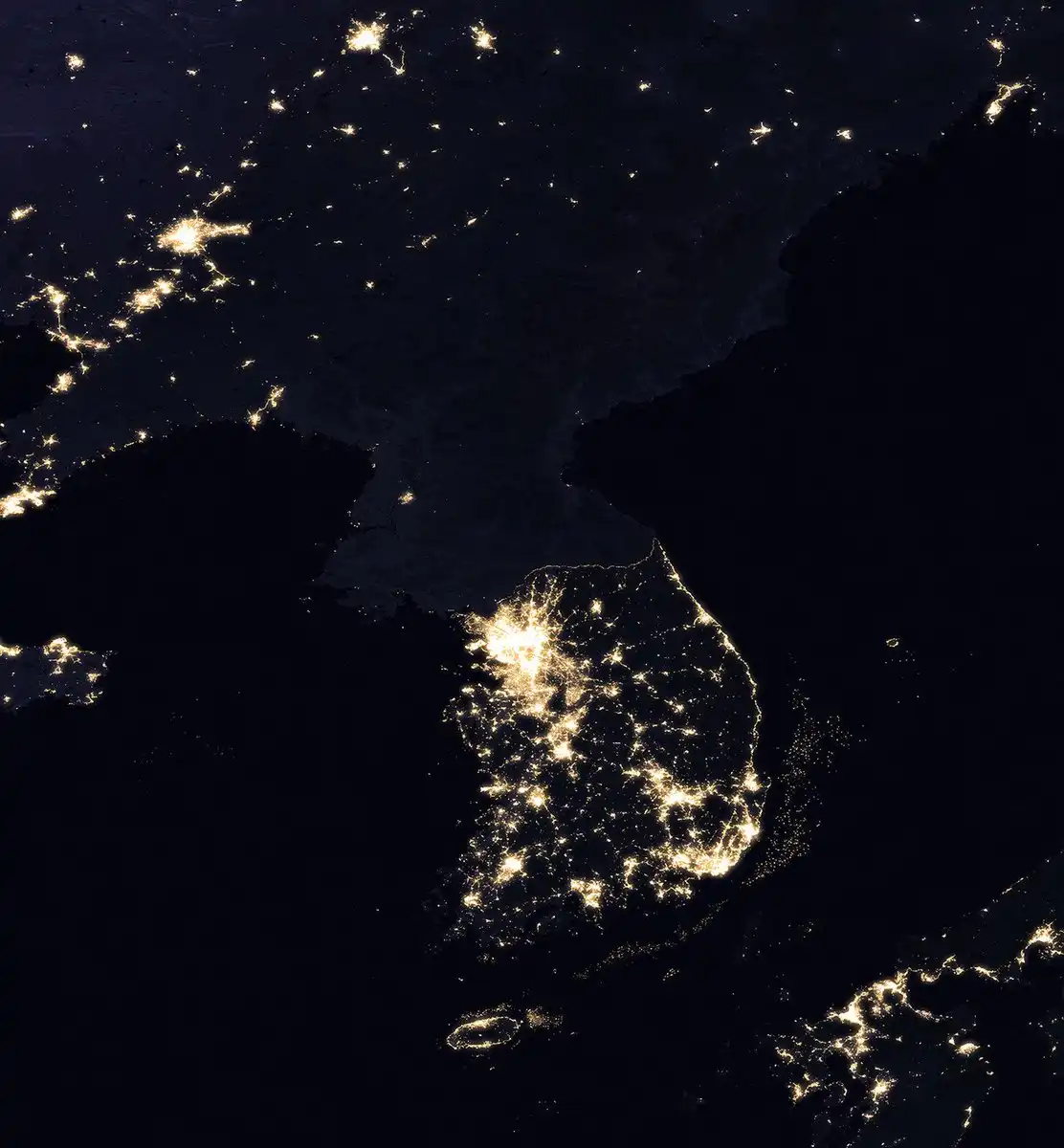
The famous nighttime map of North and South Korea demonstrates the importance of property rights and inclusive economic institutions.
I believe that an additional 75 basis points of GDP growth is entirely possible. This means adding $15 trillion to the GDP over 20 years. It's equivalent to adding the entire economies of the UK, Germany, France, Russia, Italy, Brazil, Spain, and Mexico to the global economy. It's worth a try.
Here, I would like to take this opportunity to make a brief recommendation to entrepreneurs and financiers preparing to transition into internet finance. I believe that your personal GDP growth rate will far exceed an additional 75 basis points per year. Entrepreneurs committed to internet finance and long-term development will reap generous rewards. The global financial system is so profitable that even with a 90% reduction in income, it will bring a few generations of success to startups. Financial services are the world's largest and most disruptive market.
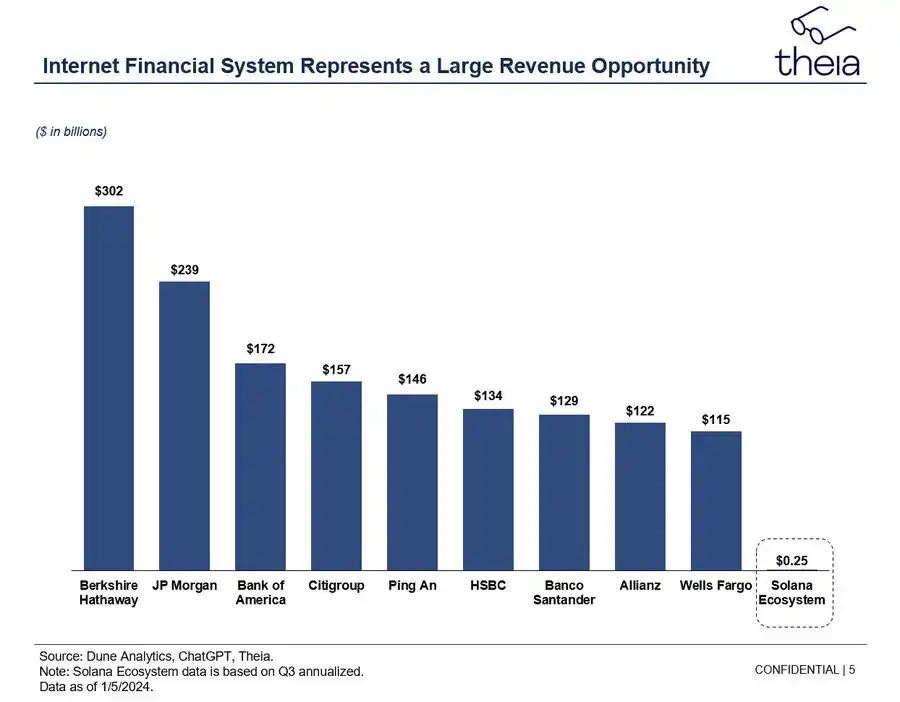
A Better Financial System in the Cloud
The significance of internet finance to the financial market is akin to the impact of the Gutenberg printing press on books, education, and civilization. Before Gutenberg's invention of the printing press, fewer than 1,000 books were printed in Europe annually, and many of the most educated scholars on the continent worked as copyists. Books were almost unattainable for everyone except the wealthiest—Dante Alighieri once boasted of owning 20 books—the limited supply of books meant content was restricted to the Bible and a few classics.
Everything changed when Gutenberg reduced the cost of printing books by over 90%. In the 50 years after his invention of the printing press, 20 million books were published, heralding the ongoing publishing and learning revolution. Writing, buying, and reading books became easier. We witnessed an explosive growth of literary genres and literary geniuses. Global literacy rates increased, and now every university freshman has the opportunity to read "Aristotle's Politics."
The purpose of this article is to tell you why we are so excited about the Internet financial system. The two core innovations of permissionlessness, unified cloud servers, and smart contract code have reduced transaction costs and barriers to entry, while also dismantling the entrenched oligopolistic system. This is a paradigm shift with far-reaching implications.
This is also why there is so much buzz around cryptocurrency. It is a dream—a noble dream—and it is achievable. The Internet financial system is a hammer blow to the world's ossified and exploitative financial institutions. It is a replacement with an open bazaar.
You may also like

Morning Report | OpenAI has submitted an S-1 registration statement draft to the U.S. SEC; Morpho completes $175 million financing

Galaxy Deep Research Report: How Hyperliquid's HIP-4 Upgrade Changes the Landscape of Prediction Markets?

Latest research from 13 top universities including Cornell University: The current state, challenges, and misconceptions of the fusion of Crypto and AI

Deconstructing Anthropic: The Best AI Company, Possibly Also a Type of Organizational Invention

Every exchange is a "Universal Exchange."

The counterattack of traditional finance: Alliance chains are quietly reviving
Pantera Capital Partner: How Tokenization is Restructuring the Private Equity and Early Investment Ecosystem?

Mastercard Launches Agent Pay for AI, Plans to Record AI Agent Payment Authorizations on Polygon
Mastercard launched Agent Pay for AI, a new payment protocol designed to help AI agents make small payments such as pay-per-use access to data and APIs. The system plans to record human-granted AI agent permissions on Polygon, focusing on verifiable authorization, identity, and payment controls.

Curve Deploys Llamalend v2 on Optimism With 250,000 OP Incentives
Curve launched Llamalend v2 on Optimism with 250,000 OP incentives from the Optimism Foundation. The upgrade expands Llamalend beyond its earlier crvUSD-focused model, adding broader collateral support, LlamaRisk market reviews, and the ability to use Curve LP tokens as collateral.

Raydium Old Liquidity Pool Reportedly Exploited, With $1.34 Million Moved to Ethereum and Tornado Cash
An old Raydium liquidity pool was reportedly exploited for around $1.34 million in USDC, RAY, and wSOL, with the stolen funds bridged to Ethereum and deposited into Tornado Cash. The incident highlights the tail risks of legacy DeFi pools, old contracts, and cross-chain fund laundering paths.
Kalshi Executive Challenges “SBF Backed AI Unicorns” Narrative, Says Leopold Aschenbrenner Was Key Figure
Kalshi executive John Wang questioned the “SBF backed AI unicorns” narrative, saying Leopold Aschenbrenner was the key figure behind major AI investment decisions.

New York Proposes Stricter Stablecoin Issuer Rules Aligned With Federal GENIUS Act
NYDFS proposed stricter stablecoin issuer rules aligned with the GENIUS Act, covering reserves, custody, redemption timelines, audits, and capital buffers.

CryptoQuant Says Bitcoin Profitable Supply Is Near 45% Pressure Zone as On-Chain Data Points to Market Repricing
CryptoQuant said Bitcoin’s profitable supply is nearing the 45% pressure zone, signaling rising market stress, unrealized losses, and a possible on-chain repricing phase.

Bitcoin Falls Below 200-Week Moving Average as On-Chain Data Shows Over Half of Supply in Loss
Bitcoin dropped below its 200-week moving average as on-chain data showed over 50% of circulating supply is now in loss, signaling rising market stress.

CFTC Reportedly Plans New Prediction Market Rules Focused on Manipulation Risk and Public Interest Review
The CFTC is reportedly preparing new prediction market rules focused on manipulation risk, public interest review, and retail trader protections.

Meet the new WEEX trial fund—your gateway to greater profits

WEEX Labs Lands at Dutch Blockchain Week: A Disruptive Crypto × AI Conversation Sets Sail in Amsterdam
SK Hynix Reportedly Plans U.S. ADR Listing as Early as August, With SEC Approval Possible in Late June
SK Hynix may pursue a U.S. ADR listing as early as August, with SEC approval reportedly possible in late June amid strong AI chip supply chain demand.
Morning Report | OpenAI has submitted an S-1 registration statement draft to the U.S. SEC; Morpho completes $175 million financing
Galaxy Deep Research Report: How Hyperliquid's HIP-4 Upgrade Changes the Landscape of Prediction Markets?
Latest research from 13 top universities including Cornell University: The current state, challenges, and misconceptions of the fusion of Crypto and AI
Deconstructing Anthropic: The Best AI Company, Possibly Also a Type of Organizational Invention
Every exchange is a "Universal Exchange."
The counterattack of traditional finance: Alliance chains are quietly reviving


