Coinbase's $25 Million NFT Purchase: A 3-Year Journey




On October 21, 2025, an Ethereum wallet labeled as "coinbase.eth" sent 25 million USDC to crypto KOL Cobie to purchase an NFT called UpOnly.
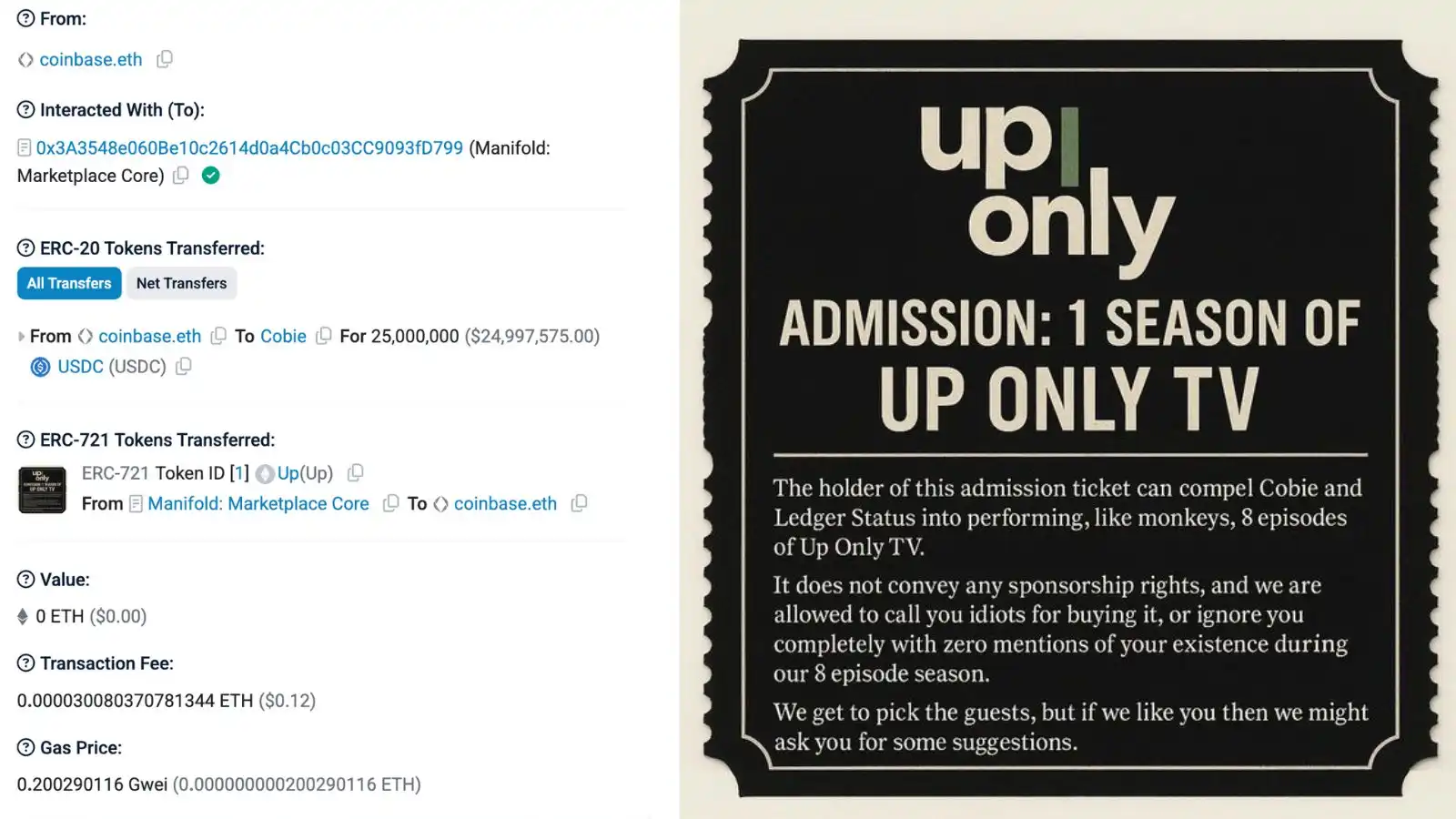
UpOnly was once the hottest podcast in the crypto community, hosted by Cobie and his partner Ledger, interviewing heavyweights like Vitalik Buterin, SBF, and more. The show ceased airing in 2022 after the FTX collapse, and this NFT was issued by Cobie that year. The holder has the option to burn it, prompting the two hosts to record a new season.
One hour later, Cobie tweeted on X: "It's been three years since UpOnly ended. I was in my early twenties when we started the show, and now I have gray hair. We should rename it 'Unc Only,' and I will spend $25 million on plastic surgery. See you soon."
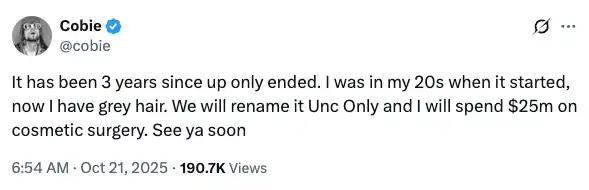
This reaction is very Cobie—self-deprecating, humorous, tinged with a hint of resignation.
In the spring of 2022, he exposed Coinbase employees' insider trading by analyzing on-chain data. Cobie publicly shared his analysis on social media, suggesting possible internal leaks at Coinbase. Several months later, the U.S. Department of Justice indicted former Coinbase product manager Ishan Wahi for insider trading using his position. In 2023, Wahi was convicted and sentenced to two years in prison.
Back then, Cobie always enjoyed unmasking the pretentiousness of large corporations, taking a stand against Coinbase. Now, Coinbase has acquired his NFT. To be precise, they acquired the rights to compel him and co-host Ledger Status to produce an 8-episode UpOnlyTV series.
Simultaneously, Coinbase CEO Brian Armstrong confirmed on social media: "The rumors are true; we bought this NFT. UpOnly is coming back."
The crypto community's discussion immediately exploded. Some cheered, "The bull market is really back," while others questioned, "Is Coinbase trying to control the narrative?" Some asked, "Why is a podcast NFT worth $25 million?"
To understand this transaction, we need to go back three years. At that time, the NFT market was booming, UpOnly was the hottest podcast in the crypto community, and Cobie had just made what seemed like a joking decision: to write the ownership of the show into an NFT smart contract.
The Three-Year Journey of an NFT
From 2021 to 2022 was the golden age of UpOnly and also the most fervent period for NFTs.
Every Thursday night at 8 pm, Cobie and Ledger would livestream on Twitch, interviewing the most influential people in the crypto community. Ethereum founder Vitalik Buterin came to talk about Layer 2 scaling solutions, FTX founder SBF came to discuss regulatory strategies, and Terra founder Do Kwon came to talk about the future of algorithmic stablecoins.
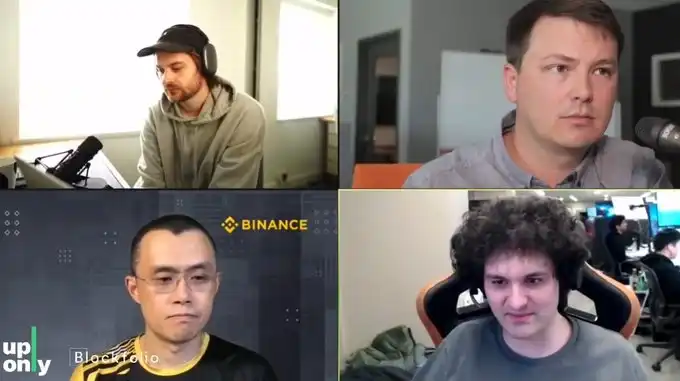
UpOnly episode featuring CZ and SBF as guests
The hallmark of the show was its unconventionality: the hosts dared to ask sharp questions, and the guests didn't hold back. The show's self-introduction read: "A crypto podcast once described as childish, unprofessional, and weird. Prioritizes entertainment over Alpha but usually has neither."
In November 2022, UpOnly witnessed one of the most dramatic moments in crypto history, the FTX Tower Collapse.
On November 2nd, CoinDesk reported on the Alameda Research balance sheet issue. The trading firm founded by SBF had around $58 billion of FTX's platform coin FTT within its $146 billion in assets. This exposed the highly intertwined nature of these two supposedly "independent" entities, with the deeper issue being FTX using client funds to cover Alameda's losses. Panic spread through the market. On November 6th, Binance CEO Changpeng Zhao announced he would sell off his FTT holdings, triggering a run on the bank. Customers went into a frenzy of withdrawals, and FTX's liquidity evaporated within days.
On November 10th, UpOnly held an emergency livestream, interviewing former FTX employee Zane Tackett.
Zane had just resigned and was trying to help FTX's top brass find a solution. The livestream went on for three hours, with Cobie and the guests barely speaking, just staring at the news and social media, watching a once multi-billion dollar empire crumble in real time. The next day, on November 11th, FTX filed for bankruptcy, and SBF resigned.
Shortly after that livestream, UpOnly went off the air. Cobie said he had a significant amount of funds stored in FTX and incurred substantial losses. But the deeper reason was that FTX's collapse tore open the wound of the entire crypto content ecosystem.
FTX was not just an exchange; it was the industry's main benefactor. It sponsored nearly all mainstream crypto media, paid podcasters, sponsored conferences, and paid KOLs for advertisements. It spent $135 million to acquire naming rights for the Miami Heat arena, enlisted Tom Brady and Gisele Bündchen as endorsers, and poured tens of millions of dollars into advertising. The goal of this spending was crystal clear: to control the narrative, shape the image, and make everyone believe that FTX was a "safe and reliable industry leader."
After FTX's collapse, these fund flows dried up, putting numerous crypto media outlets in survival mode. The Block's CEO resigned amid a scandal of concealing a massive loan from FTX, CoinDesk was forced to lay off employees, and many small independent media outlets closed down. The KOLs who had taken money from FTX either fell silent en masse or busied themselves disassociating from the exchange.
Trust was shattered.
UpOnly also lost the motivation to continue. Cobie transitioned into entrepreneurship, launching an angel investment platform called Echo in 2022 and later introducing the token sale platform Sonar in 2025. He thought he could step out of the spotlight and become a backstage investor.
However, at the peak of UpOnly's popularity, Cobie made a decision: to issue an NFT that encoded the show's control into a smart contract.
This NFT was named "Up Only Television Season Pass." It was not a profile picture or an artwork. According to the description on the Manifold platform: "If the holder destroys this NFT, a new season of UpOnlyTV will premiere within three months."
Interestingly, this "contract" had some unusual clauses. As per previous reports, it explicitly stated that the purchase did not include any sponsorship rights and allowed the host to ignore or ridicule the buyer on the show.
This design was counterintuitive. In traditional content sponsorship, buyers pay for exposure, integration, and control of the narrative. But Cobie's NFT clearly stated that you could pay to have me host a show, but you couldn't dictate what I say—I could even insult you on the show.
From 2022 to 2024, the NFT market collapsed. Most of the avatar NFTs that once sold for hundreds of thousands of dollars plummeted to zero. OpenSea's trading volume dropped from a monthly average of tens of billions of dollars at its peak to less than $1 billion. The Bored Ape Yacht Club's floor price fell from a high of 150 ETH to less than 30 ETH. Criticism of the "JPG scam" abounded, and NFTs became synonymous with speculation and bubble.
But the UpOnly NFT did not go to zero. Because it doesn't represent just an image, but a real right: forcing two influential people to do something valuable.
This is exactly what NFT technology originally promised: to record rights on the blockchain and execute rules with smart contracts. It's just that in the 2021 frenzy, this promise was drowned in avatar hype.
In October 2025, Bitcoin reclaimed its all-time high, and various ecosystems became active again. At this point, Coinbase offered $25 million to buy this NFT.
From Head-to-Head to Sitting at a Table
Cobie, originally Jordan Fish, born in the 1990s in the UK, graduated from the University of Bristol with a major in computer science. He first encountered Bitcoin in the early 2010s and gradually became an active trader in the crypto community. His online alias, Cobie, comes from the early gaming community, a name that later became one of the most influential tags in the crypto world.
Cobie's career has been diverse. He has worked as a product manager, delved into growth operations, and invested in numerous projects. He was an early supporter of Lido Finance, a liquidity staking protocol that later became one of the largest TVL projects in the DeFi space. He founded Echo, an angel investment platform for early-stage projects, and later launched Sonar, a token launch platform aiming to redefine the ICO model.
But what truly made Cobie famous is his outspoken nature.
He is known for being blunt on social media, daring to criticize major projects, expose issues, and say things others dare not. In the spring of 2022, he noticed unusual trading patterns before Coinbase listings and publicly questioned insider trading. This exposure ultimately led to the indictment of Coinbase's former product manager, Ishan Wahi, who was sentenced to two years in prison in 2023.
At that time, Cobie was the epitome of the "independent voice" in the crypto community. He did not belong to any exchange, did not take money from any project teams, earned through trading and investing, and spoke through influence. UpOnly was the same, not accepting sponsorships, not engaging in advertorials, and freely criticizing anyone.
But the FTX collapse changed everything.
Cobie suffered financial losses in FTX, and while he did not disclose the exact amount, he mentioned it was "not small." More importantly, the FTX collapse showed him the ugliest side of the crypto community, where media and KOLs who speak for money fell silent collectively in times of crisis. Credibility was shattered, trust collapsed, and the entire content ecosystem needed to be rebuilt.
Cobie has chosen to take a temporary hiatus. He is focusing his energy on Echo and Sonar, attempting to change the industry from an investment and infrastructure standpoint. UpOnly has gone off the air, with that NFT lying quietly in a wallet until Coinbase comes knocking.
Why Coinbase? Why now?
Coinbase needs narrative power. Not the official, serious, educational narrative power it already has—Coinbase Learn has hundreds of tutorials covering everything from Bitcoin basics to advanced DeFi.
What it needs is the UpOnly kind of narrative power, loved by the youth, retweeted by KOLs, able to spark discussions, able to drive the narrative.
More importantly, it needs "authenticity."
FTX's lesson was profound. Those bought-out voices all ended up as jokes. The truly influential ones are those who dare to speak the truth. Cobie has exposed Coinbase's insider trading, but it is precisely because of this that his words carry weight. If he were to say on UpOnly that Coinbase is doing well, people would believe him; if he were to say Coinbase has issues, people would also believe him.
This kind of trust cannot be bought with $25 million. But Coinbase can acquire a distribution channel, allowing this trust to work in its favor.
So Coinbase bought this NFT. Yet Cobie can criticize Coinbase on the show, question its policies, expose its problems. Coinbase spent $25 million to buy a platform that can criticize itself.
It may sound absurd, but it might be exactly what Coinbase wants. Because only truly independent voices have credibility. Only those who dare to criticize you can help you build trust.
Cobie has transformed from being an exposé figure to Coinbase's "partner," yet he still retains the freedom to criticize. But the question is, how long can this freedom last? When Coinbase becomes your benefactor, can you still be as sharp as before?
The New Battlefield of Narrative Power
In the traditional financial world, exchanges and media have clear boundaries. NYSE does not run The Wall Street Journal, and Goldman Sachs does not buy Bloomberg. The existence of this boundary is to maintain market fairness and information independence.
But in the crypto world, this boundary never existed.
In the era of FTX, this logic was endorsed. FTX paid nearly every mainstream crypto media for exposure and positive coverage. It spent $135 million to acquire the naming rights for the Miami Heat arena, enlisted Tom Brady for endorsements, aired ads during the Super Bowl, sponsored esports teams, and named crypto conferences. FTX's founder SBF himself became a media darling, frequently interviewed and portrayed as the "savior of the crypto world" and a practitioner of "effective altruism."
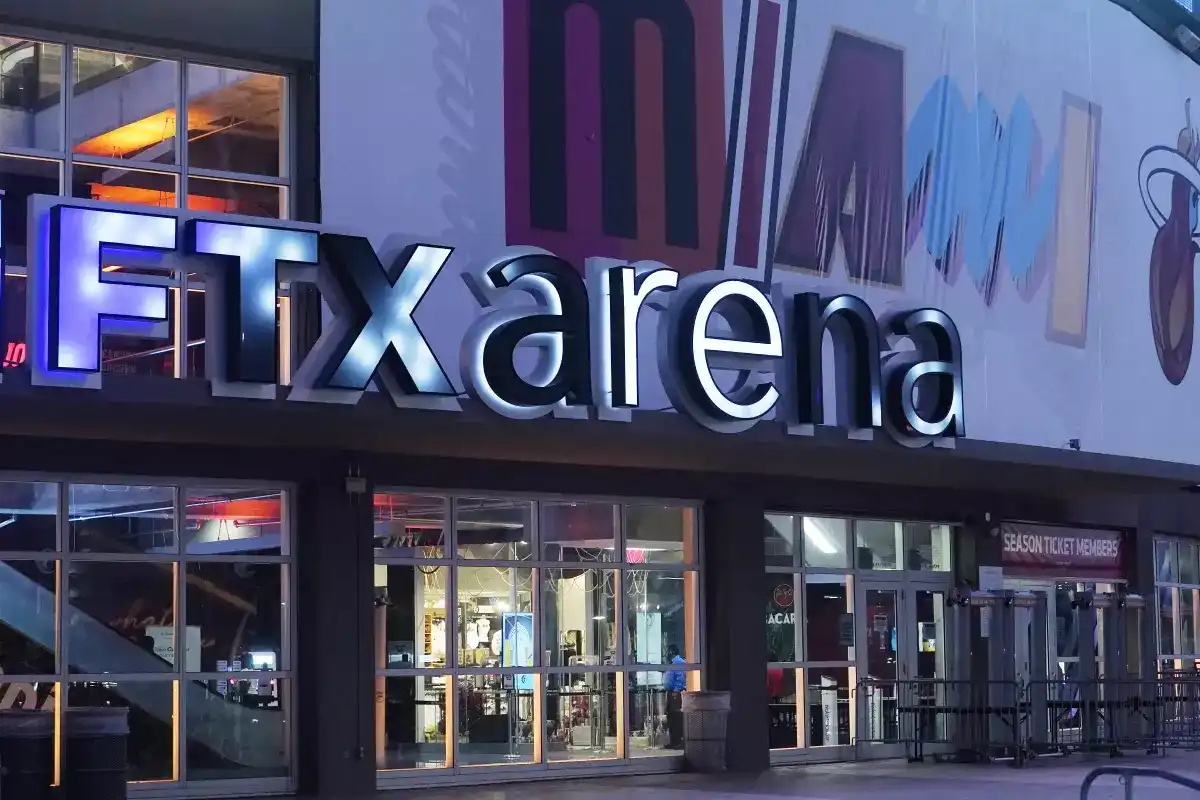
FTX-named Miami Heat arena | Image Source: Los Angeles Times
And we all know the outcome. In March 2024, SBF was sentenced to 25 years in prison on charges of embezzlement of customer funds, telecommunication fraud, money laundering, and seven other major crimes. The court found that he transferred around $10 billion in customer funds to Alameda Research for high-risk investments, political donations, and personal expenses. Those in the media and key opinion leaders who took FTX's money either went silent during the collapse or were busy disassociating themselves.
Coinbase took a different approach. It didn't control the media through sponsorships but instead owned content IP directly. However, its method of ownership was also unique—it didn't acquire companies or hire employees but bought an NFT to gain a transparent, smart contract-based right.
This choice embodies the essence of Coinbase.
In August 2023, Coinbase launched Base, an Ethereum-based Layer 2 blockchain. Base's mission was clearly stated: "Build a global on-chain economy that fosters innovation, creativity, and freedom." Jesse Pollak, the head of Base, repeatedly emphasized one concept: "Make on-chain the next online," with the goal of bringing 1 billion people onto the blockchain.
Now, Coinbase has completed a $25 million content partnership using an NFT smart contract. This act itself is a demonstration of the "everything on-chain" concept. It's not through traditional paper contracts, lawyers, or intermediaries but through blockchain recording rights and smart contracts enforcing rules.
From this perspective, Coinbase's acquisition of the UpOnly NFT is not just a marketing move but also a demonstration of our belief in on-chain operations and conducting business in an on-chain manner.
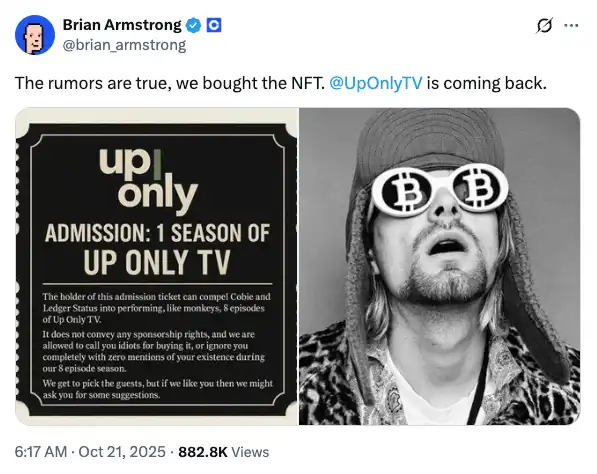
The rights Coinbase acquired are very specific, for 8 episodes. It's not permanent control, not a complete acquisition, just these 8 episodes, only these 8 episodes.
Imagine this: a new season of UpOnly airs, Cobie and Ledger still interview various people, still ask tough questions, still criticize industry problems. But everyone knows that this show is funded by Coinbase. This in itself is a narrative: Coinbase supports independent voices, Coinbase is not afraid of criticism, Coinbase is different from those exchanges that seek to control the narrative.
This is a more advanced discourse strategy, not just having the media speak for you, but having the media's presence endorse you.
But this strategy comes with risks. What if Cobie really criticizes Coinbase on the show? What if he exposes new issues? Can Coinbase take it?
The moment Coinbase bought an NFT, they accepted this risk. This is a gamble. Coinbase is betting that in the new bull market, authenticity and credibility are more valuable than control.
The question is, is this redefinition creating a healthier ecosystem, or is it building a new monopoly? When the largest exchange owns the most influential content platform, even if the contract guarantees independence, power asymmetry still exists.
Will this model succeed? We don't know yet. When will the new season of UpOnly air, what will Cobie say on the show, how will Coinbase respond to potential criticism, all these questions remain unanswered.
Cobie said he wants to rename the show "Uncle's Corner" and spend 25 million on plastic surgery. This is his consistent style, using self-deprecation to diffuse awkwardness. But behind the joke is someone who has exposed the machinations of giants, and the giant that was exposed, redefining the possibilities with a $25 million NFT.
Three years ago, Cobie inscribed the control of UpOnly into an NFT. Three years later, that NFT sold for 25 million dollars.
Coinbase is betting that in the new bull market, authenticity and credibility are more valuable than control; Cobie is betting that independence and capital can coexist.
The story is just beginning.
You may also like
The impact of OUSD on Circle, Tether, and Paxos: not a single negative factor, but a more complex reshaping of competition
A valuation of 8 billion dollars, doubling in 8 months! What makes the crypto-friendly bank Erebor Bank stand out?
340 billion valuation: Li Yanhong's largest IPO, a seat in Kunlunxin's shares is hard to come by
Stablecoins are the "royalists" of the crypto world: Open USD brings the old currency system into play
Cape Verde 2-3 Argentina: The Underdog Team That Stunned the World in Defeat
Cape Verde's run ended in a 3-2 defeat to Argentina, but their journey — three unbeaten draws, one heroic goalkeeper, and a fight that pushed the defending champions to the brink — is the kind of story markets recognize too: small caps can rattle blue chips long before anyone expects it.
Semiconductor stocks plummet, yet Anthropic wants to create a 2nm chip
Where is Zhao Changpeng's billion-dollar investment going? YZi Labs' investment landscape fully revealed
Ethereum Foundation Report: A Basic Guide to Ethereum for Governments and Financial Institutions
A pre-announced harvesting case: After the cryptocurrency price dropped by 99%, the public chain Saga exited to transform into AI
When American giants collectively "defect" from Chinese AI models
BIS Report Compliance Observation: The Real Risks of Stablecoins, Not Just "Depegging"
Portugal 2-1 Croatia: Ronaldo's 20-Year Knockout-Stage Drought Ends With a Debt Finally Collected
Portugal beat Croatia 2-1 in the 2026 global football championship's knockout rounds as Ronaldo scored his first-ever knockout-stage goal, Gonçalo Ramos struck a stoppage-time winner, and VAR ruled out a late equalizer for offside.
Bitcoin Price Prediction July 2026: Will BTC Recover to $70K or Drop Below $55K?
A South Korean company that learned the strategy of hoarding coins, from a bull market to delisting?
WEEX API Broker Program: Turn Your Trading Platform Into a Revenue Engine
How to choose between buying discounted ETH, Bitmine, and SharpLink?
Wosh: Inflation has cooled in recent weeks, AI is reshaping the economy, and forward guidance has lost its necessity
From Pump.fun to Collector Crypt: Has Solana's income throne changed hands?
The impact of OUSD on Circle, Tether, and Paxos: not a single negative factor, but a more complex reshaping of competition
A valuation of 8 billion dollars, doubling in 8 months! What makes the crypto-friendly bank Erebor Bank stand out?
340 billion valuation: Li Yanhong's largest IPO, a seat in Kunlunxin's shares is hard to come by
Stablecoins are the "royalists" of the crypto world: Open USD brings the old currency system into play
Cape Verde 2-3 Argentina: The Underdog Team That Stunned the World in Defeat
Cape Verde's run ended in a 3-2 defeat to Argentina, but their journey — three unbeaten draws, one heroic goalkeeper, and a fight that pushed the defending champions to the brink — is the kind of story markets recognize too: small caps can rattle blue chips long before anyone expects it.
Semiconductor stocks plummet, yet Anthropic wants to create a 2nm chip