
 Buy Crypto
- Markets
 Futures
- Spot
- Copy Trade
- Earn
- More
Bitcoin Solaris Mobile Mining to Capture 5% of Crypto Market by 2025, Analysts Predict
By: finbold|2025/05/09 18:15:03
0
Share
The below article is Sponsored Content. Finbold does not verify any claims, statistics, or information contained in this article. Finbold does not conduct due diligence on featured projects nor endorse any investments mentioned and expressly disclaims any liability. RISK WARNING: Cryptocurrencies are high-risk investments and you should not expect to be protected if something goes wrong. Don’t invest unless you’re prepared to lose all the money you invest. ( Click here to learn more about cryptocurrency risks.) By accessing this Site, you acknowledge that you understand these risks and that Finbold bears no responsibility for any losses, damages, or consequences resulting from your use of the Site or reliance on Sponsored Content. Click here to learn more . Bitcoin Solaris Mobile Mining to Capture 5% of Crypto Market by 2025, Analysts Predict Crypto mining has long been dominated by resource-heavy protocols and large-scale operators. But with rising mobile adoption and increasing energy awareness, analysts are pointing to new infrastructure as the next major shift in mining — and Bitcoin Solaris is leading that wave. According to projections based on app rollout, token distribution, and blockchain accessibility, Bitcoin Solaris could realistically capture up to 5% of the global mining market by 2025. Unlike traditional protocols, it doesn’t demand high-powered GPUs or staked capital. It runs directly from mobile devices — allowing users around the world to contribute to the network and earn rewards without technical barriers. Rethinking Mining for a Mobile World The majority of crypto mining today still relies on hardware-intensive infrastructure. Bitcoin requires ASIC rigs and vast amounts of electricity. Ethereum has shifted to Proof-of-Stake, but that still favors large holders and centralized validators. This leaves out a huge segment of potential users: those who want to earn crypto but don’t have access to capital, hardware, or complex staking mechanisms. Bitcoin Solaris changes that equation with a system designed for phones. Its upcoming Nova App allows users to mine BTC-S tokens by allocating small portions of their device’s storage and idle CPU. The mining process is lightweight, energy-efficient, and requires no additional equipment. Once active, the app runs in the background and distributes rewards automatically. With over 6 billion smartphone users globally, even modest uptake could shift market share quickly. 10,000 TPS and Built for Scale Performance also matters. Bitcoin Solaris supports over 10,000 transactions per second, with sub-second finality. That makes it suitable not only for personal mining and staking, but also for micro-transactions, mobile payments, and high-frequency usage. These features are all powered by the network’s dual-layer architecture and its Helios Consensus Mechanism, which combines: Proof-of-Stake (PoS) Proof-of-Capacity (PoC) Proof-of-History (PoH) Proof-of-Time (PoT) Blending energy-efficient consensus types with strong validator diversity, Helios allows the network to operate at scale without sacrificing decentralization or accessibility. A Fixed Supply and Accessible Presale At the core of the project is BTC-S — a token with a total capped supply of 21 million, modeled after Bitcoin’s scarcity. A full 20% of that supply (4.2 million tokens) is allocated to the public presale. Bitcoin Solaris is now in Phase 2, with tokens priced at 2 USDT each. These are liquid tokens with no lockups, immediately usable once the Nova App launches. Early adopters who acquired BTC-S during Phase 1 purchased at 1 USDT. With Phase 2 still open, users have a final chance to access tokens before exchange listings and broader market exposure. Security and Audit Verification All of Bitcoin Solaris’s infrastructure has been fully audited by multiple independent firms, including: Cyberscope Audit Freshcoins Audit KYC Verification The mining logic, staking structure, token issuance, and reward schedule are all on-chain, open-source, and verifiable. There are no central nodes or third-party control points. Network participants validate, mine, and earn directly — often from devices they already own. To understand how Bitcoin Solaris is positioned to disrupt mobile and desktop-based mining alike, watch Crypto Chino’s in-depth breakdown of its ecosystem and performance potential. For years, crypto mining has been gated behind hardware, capital, and complexity. Bitcoin Solaris opens that gate — with an energy-efficient, phone-friendly design that brings rewards and participation to users everywhere. As mobile mining goes live and presale access winds down, Bitcoin Solaris is redefining who gets to be part of the next phase of crypto. And the numbers suggest it’s just getting started. Website: https://bitcoinsolaris.com/ X: https://x.com/BitcoinSolaris Telegram: https://t.me/Bitcoinsolaris
You may also like

Reflections and Confusions of a Crypto VC
As the tide recedes, crypto VCs face a life-and-death test. The bubble of blind token overvaluation has been burst, and the industry's valuation logic is returning to real revenue. In the face of increasingly savvy retail investors and dried-up liquidity, VCs that can only throw money around are des...

Morning News | Ether Machine terminates $1.6 billion SPAC deal; SpaceX holds approximately $603 million in Bitcoin; Michael Saylor releases Bitcoin Tracker information again
Overview of Important Market Events on April 12

Crypto ETF Weekly | Last week, the net inflow for Bitcoin spot ETFs in the U.S. was $816 million; the net inflow for Ethereum spot ETFs in the U.S. was $187 million
Bitwise updates Hyperliquid ETF application documents, with the trading code set as BHYP.

This week's news preview | The U.S. will release March PPI data; French President Macron will give a speech at Paris Blockchain Week
Highlights of the week from April 13 to April 19.

How Do Digital Assets Self-Custody? OpenAI Cofounder's 15-Step Checklist
It's time to outsource our memory to AI
Circle Product Management Director: The Future of Cross-Chain: Building an Interoperability Technology Stack for Internet Financial Systems
Building on the foundation laid by CCTP, Circle is increasing its investment in three main areas: settlement acceleration, broader asset interoperability, and orchestration, making cross-chain value flow more seamless and efficient, and achieving internet-level usability.
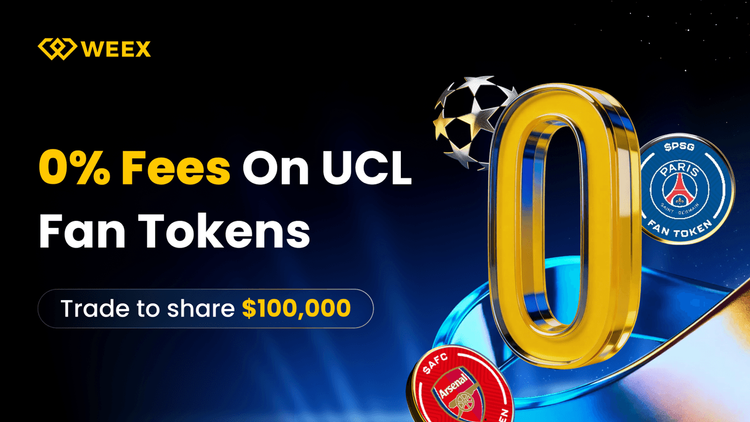
UCL Fan Tokens 2026 Guide: How to Trade UEFA Champions League Crypto with Zero Fees on WEEX
Discover UCL fan tokens like PSG, Barcelona, and Man City. Learn how to trade UEFA Champions League crypto with zero fees and earn rewards on WEEX.

WEEX Poker Party Season 2: Check How to Earn Crypto Rewards Now!
Learn how WEEX Poker Party Season 2 (Joker Card Event) works. Discover rules, scoring, rewards, and strategies to earn crypto rewards through gamified trading.

Yu Weiwen: Steady Development of Hong Kong's Compliant Stablecoin Ecosystem
The President of the Hong Kong Monetary Authority, Eddie Yue, published an article titled "Steady Development of Hong Kong's Compliant Stablecoin Ecosystem" in the official column "Hui Si," in which he pointed out that this licensing marks a new stage in the regulation of stablecoins in Hong Kong.

After TACO Ceasefire, Iran War is Just on Pause
Ceasefire Eased Market Sentiment but Did Not Address Core Conflict

The 17-Year Mystery Will Be Solved, Who is Satoshi Nakamoto?
The New York Times Traces the Mystery of Satoshi Nakamoto, with Clues Pointing to Adam Back

5 Minutes to Make AI Your Second Brain
It's time to outsource memory to AI

Uniswap is trapped in an innovation dilemma
The various iterations of Uniswap are one of the sources of vitality in the DeFi market, but since 2023, Uniswap has not proposed any substantial innovations, instead adhering to traditional business explorations in application chains, Launchpads, etc., leading to a slump in token prices and market ...

What is the key to competition in crypto banking?
Digital banks, crypto cards, wallets, super apps, and DeFi protocols are all converging towards the same goal: to become the primary gateway for your savings, spending, earning, and transferring in the new era.

The flow of stablecoins and the spillover effects in the foreign exchange market
Research has found that an exogenous increase in net inflows of stablecoins significantly widens the price deviation between stablecoins and traditional foreign exchange, leads to depreciation of the local currency, and worsens the financing conditions for synthetic dollars (i.e., increases the doll...

After two years, Hong Kong's first batch of stablecoin licenses finally issued: HSBC, Standard Chartered make the cut
The regulated entity is set to launch a stablecoin in the first half of this year.
The person who helped TAO rise by 90% has now single-handedly crashed the price again today
As long as people are around, the story continues. But once they're gone, you may not even find a worthy opponent to play against.
3-Minute Guide to Participating in the SpaceX IPO on Bitget
Bitget IPO Prime brings a rare opportunity for global users to participate in world-class unicorn IPOs, allowing ordinary users to equally access the potential economic benefits of top-tier IPOs.
Reflections and Confusions of a Crypto VC
As the tide recedes, crypto VCs face a life-and-death test. The bubble of blind token overvaluation has been burst, and the industry's valuation logic is returning to real revenue. In the face of increasingly savvy retail investors and dried-up liquidity, VCs that can only throw money around are des...
Morning News | Ether Machine terminates $1.6 billion SPAC deal; SpaceX holds approximately $603 million in Bitcoin; Michael Saylor releases Bitcoin Tracker information again
Overview of Important Market Events on April 12
Crypto ETF Weekly | Last week, the net inflow for Bitcoin spot ETFs in the U.S. was $816 million; the net inflow for Ethereum spot ETFs in the U.S. was $187 million
Bitwise updates Hyperliquid ETF application documents, with the trading code set as BHYP.
This week's news preview | The U.S. will release March PPI data; French President Macron will give a speech at Paris Blockchain Week
Highlights of the week from April 13 to April 19.
How Do Digital Assets Self-Custody? OpenAI Cofounder's 15-Step Checklist
It's time to outsource our memory to AI
Circle Product Management Director: The Future of Cross-Chain: Building an Interoperability Technology Stack for Internet Financial Systems
Building on the foundation laid by CCTP, Circle is increasing its investment in three main areas: settlement acceleration, broader asset interoperability, and orchestration, making cross-chain value flow more seamless and efficient, and achieving internet-level usability.


 App
App