
ArkStream Capital: Why Did We Invest in Ethena After Trump Took Office?


Original Article Title: "ArkStream Capital: Why We Invested in Ethena After Trump Took Office"
Original Source: ArkStream Capital
The Dawn of a New Era in Strategic Investment: Ethena
On November 5, 2024, Trump successfully won the U.S. presidential election, marking the beginning of an economic transformation in the United States led by traditional industry and decentralized finance. Trump's core policy is to break the shackles of the U.S. dollar hegemony on the domestic economy, revitalize the industrial economy, and weaken the excessive control of the Democratic Party and its financial capital over the U.S. economy. In early November, ArkStream Capital keenly recognized the pivotal role Ethena (ENA) plays in this historic moment and strategically invested $5 million in Ethena. As one of ArkStream's flagship investment projects, Ethena has performed as expected, delivering outstanding financial returns.
Ethena, as an innovator in the DeFi space, is committed to providing a variety of stable and scalable native cryptocurrency solutions. Its first stablecoin is the crypto-native synthetic dollar USDe, with the core innovation being the use of the Delta hedging strategy to hold a mix of mainstream crypto assets long and corresponding short positions to maintain intrinsically stable value. This design does not rely on traditional USD bank reserves, bypasses the Democratic Party-dominated traditional financial system, and emerges as a new USD alternative tool.
The second stablecoin, USDtb, is jointly developed with the well-known RWA institution Securitize, leveraging BlackRock BUIDL to connect traditional financial products such as the U.S. dollar, short-term U.S. treasuries, and repurchase agreements, creating a digital dollar backed by real-world asset-stabilized income to efficiently channel funds into the U.S. domestic industry and real economy, supporting Trump's core goal of reviving industry and creating jobs.
It is worth noting that World Liberty Financial, led by the Trump family, while not adopting a DAO model, has shown its grand vision in the DeFi space by driving DeFi into the mainstream U.S. financial market. In the DeFi space, among numerous niche markets and infrastructure projects, projects that can generate sustainable income are particularly highlighted, such as the lending platform AAVE, oracle network LINK, RWA-backed ONDO, and the ENA driving the crypto-native stablecoin solution. It is reported that WLFI has accumulated a $750,000 investment in Ethena tokens through on-chain transactions, while also announcing a partnership, planning to use Ethena's income-bearing token sUSDe as collateral for WLFI's lending platform.
Source: https://x.com/ethena_labs/status/1869413546225983536
Stablecoin Investment Perspective on RWA
RWA (Real World Assets), Payments, and Stablecoins constitute the intertwined core elements in the financial field, which can be considered either as a whole in a specific financial scenario or as distinct specialized tracks. Among these three, the concept of Payments is relatively clear, with its application scenarios similar to the traditional financial world. The other two, RWA refers to assets that are digitized through Web3 technology and transformed into transparent and easily tradable assets on the blockchain. This process covers a diverse range of asset classes, including stablecoins, private credit, US Treasury bonds, commodities, and stocks, among others. Given the significant proportion occupied by stablecoins, stablecoins can also be considered as a separate track. This chapter will start from an investment perspective to explore the growth rate and market space of RWA and stablecoins, focusing on the evolution of the stablecoin market landscape, the development trajectory of crypto-native stablecoins, and the challenges they face.
Outstanding Growth Rate and Broad Prospects
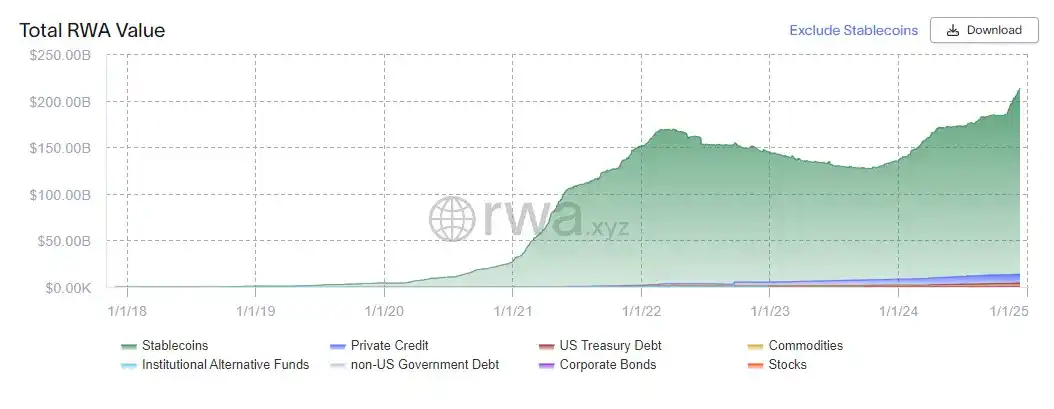
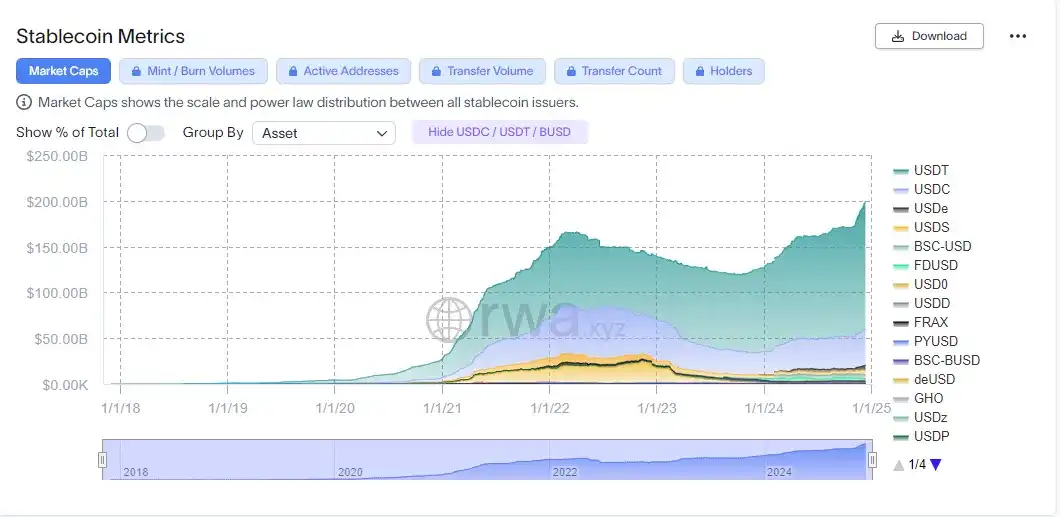
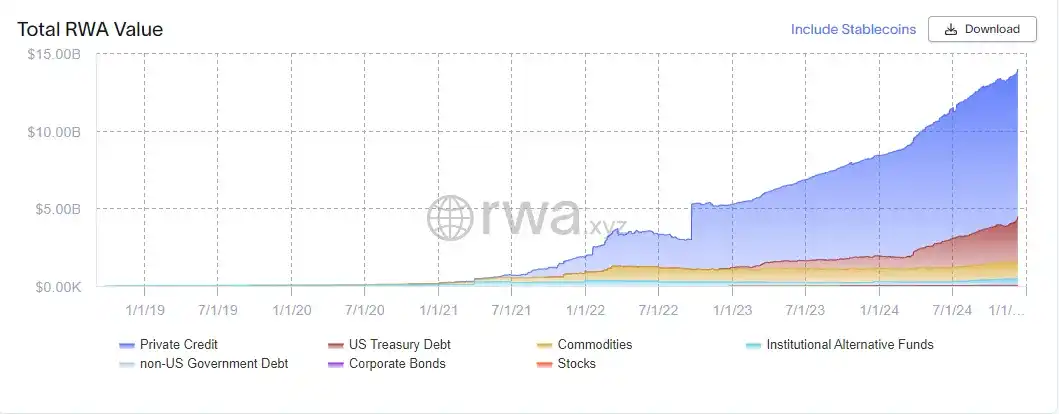
By combining the total asset value trend of RWA and stablecoins, we can intuitively grasp their market size and growth dynamics. Currently, the total asset value of the RWA market is approximately $2.183 trillion, with the stablecoin market size reaching $2.034 trillion, accounting for a high 93.2% share. The stablecoin market has grown from $30 million at the beginning of 2018 to the current $2.034 trillion, such significant growth not only reflects the strong development momentum of stablecoins but also highlights their enormous market potential. In the non-stablecoin RWA field, the total asset value has grown from $10 million in 2018 to $200 million in 2021, and then surged to the current $14.9 billion, with the corresponding compound annual growth rate also showing impressive performance. In this growth process, private credit and US Treasury bonds have played a key driving role.
Total RWA Market Value (including stablecoins) Source: https://app.rwa.xyz/
Stablecoin Market Cap Source: https://app.rwa.xyz/stablecoins
RWA Total Market Cap (Excluding Stablecoins) Source: https://app.rwa.xyz/
Stablecoins, as a unique and key asset class within the RWA domain, deserve special attention and analysis. Before diving into that discussion, let's first have a brief understanding of the U.S. Dollar and its related assets. The U.S. Dollar, with its outstanding international status, has become a critical currency for cross-border transactions, financial settlements, and global investments worldwide. The U.S. Dollar and its related assets, such as U.S. Treasury bonds, play a central role in the financial markets, further solidifying the U.S. Dollar's position as the global reserve currency, making it a symbol of global hard currency.
In the cryptocurrency market, since 2018, USD-pegged stablecoins have played a crucial role. They not only serve as the benchmark currency unit for trading but also act as shadow USD assets, active in various scenarios such as transfer payments. Taking the on-chain average daily transfer volume as an example, the current daily transfer volume remains in the high range of $250 billion to $300 billion, even during market downturns, with this data never falling below $100 billion. In terms of trading volume, according to CCData's report, the monthly trading volume of stablecoins on centralized exchanges reached a high of $1.8 trillion in November 2024, surpassing half of the cryptocurrency industry's total market capitalization. Combining industry data from CoinMarketCap, we can estimate the daily average trading volume for November to be $200 billion, resulting in a monthly trading volume of $6 trillion, indicating stablecoins account for 30% of the industry's trading volume on centralized exchanges. This ratio does not yet include on-chain stablecoin trading volume, meaning their actual share may be even higher. In addition to these two core metrics of trading volume and transfer volume, stablecoins have also introduced stable-yield assets such as U.S. Treasury bonds as underlying assets, providing stable and sustainable returns, bringing positive externalities to the industry, further promoting the connectivity and integration of Web3 with the real world.
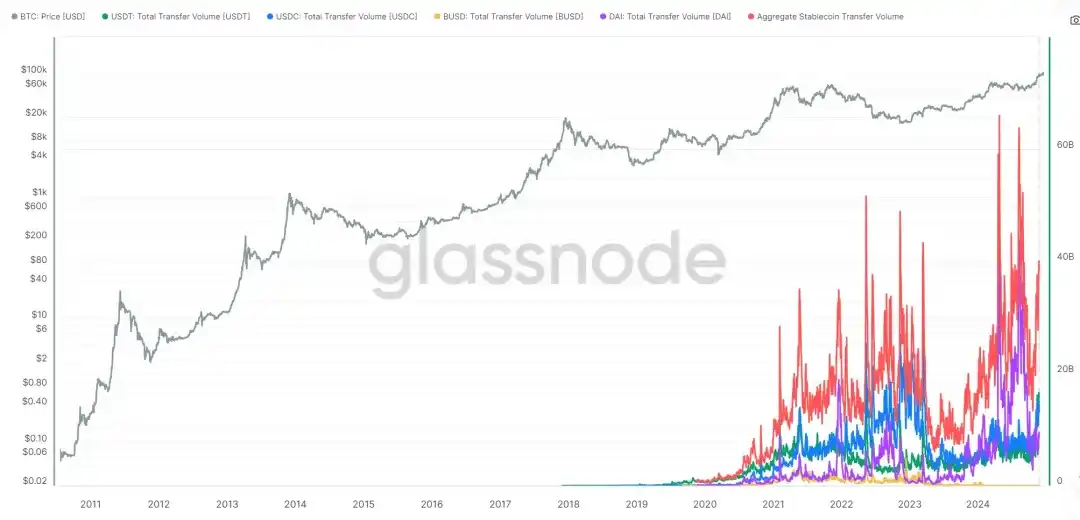
Stablecoin Daily Trading Volume Source: https://studio.glassnode.com/charts/usd-transfer-volume
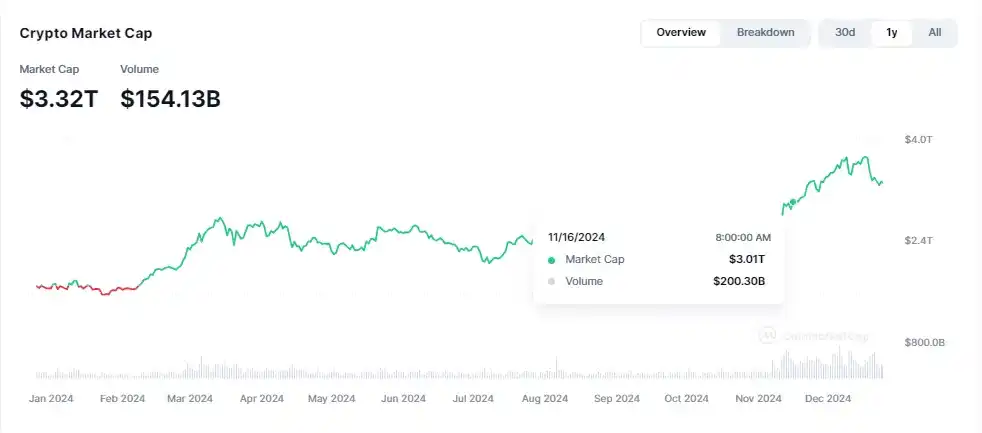
Stablecoin Market Cap and Trading Volume Source: https://coinmarketcap.com/charts/
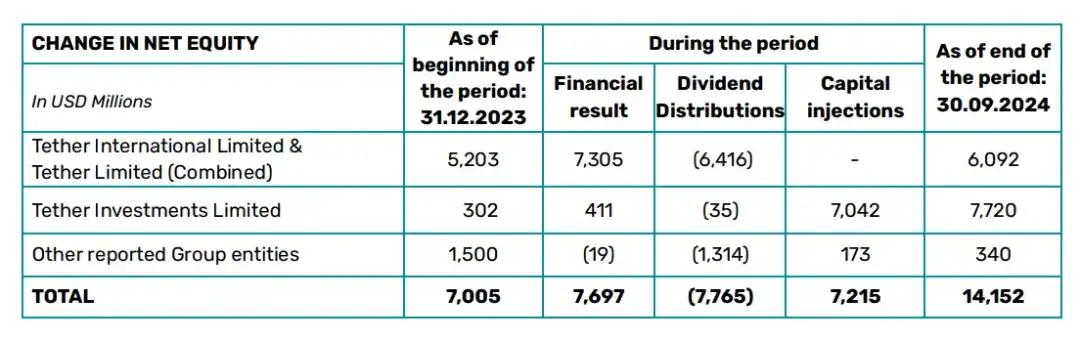
Tether's Q1-Q3 2024 Profit Source: https://tether.io/news/tether-hits-7-7-billion-2024-nine-month-profits-102-5-billion-in-u-s-treasury-holdings-almost-120-billion-usd₮-circulation-and-an-over-6-billion-reserve-buffer-in-q3-2024-attestation/
With the approval of Bitcoin and Ethereum spot ETFs in 2024, inflows of funds have driven the cryptocurrency industry's total market cap to a new high. We expect that with the growth of the industry's market cap and the continuous expansion of the user base, stablecoins are also poised to reach new all-time highs in key data metrics such as market cap size, transfer volume, and trading volume.
The Evolution of the Stablecoin Market Landscape
The birth of stablecoins stemmed from the cryptocurrency industry's strong demand for price stability tools. In the early stages, mainstream cryptocurrencies such as Bitcoin and Ethereum, due to their price volatility, were not ideal as stable units of account. Stablecoins, by pegging to fiat currencies like the US Dollar, provided a relatively stable value store and medium of exchange. This allowed users to hold a digital asset resistant to market fluctuations and conducive to swift fund transfers. With the increasing market demand for stablecoins, various types of stablecoins have emerged, including fiat-backed stablecoins, decentralized collateralized stablecoins, algorithmic stablecoins, and more. These stablecoins offer users diverse options to meet various market demands and risk preferences.
When exploring the stablecoin market, we will focus on analyzing several representative stablecoins. These include USDT issued by Tether, USDC issued by Circle, DAI/USDS issued by the MakerDAO protocol, and UST, an algorithmic stablecoin issued by Terra. Through a fundamental analysis of these stablecoins, we aim to understand the characteristics of various stablecoins and their market performance.
USDT, as an early entrant into the cryptocurrency market, has gained wide market support and recognition since 2018. It has not only been adopted by numerous exchanges but has also further penetrated into the first and second-tier markets, DeFi protocols, many public chains, and Layer2 after 2020. Therefore, USDT's market share has always maintained a leading position. Currently, USDT's underlying assets mainly include US Treasury bonds and overnight repurchase agreements. Due to the non-real-time transparency of these assets, USDT has experienced several instances of depegging events in its history, with the largest deviation approaching 10%. Nevertheless, leveraging its first-mover advantage and global applicability, USDT still dominates the trading volume of mainstream exchanges in spot and derivative markets. Mainstream exchanges commonly use USDT as a core quote currency pair, even though they also support other stablecoins such as USDC or FDUSD. The trading volume and market depth of USDT still far exceed other stablecoins.

Tether's Q3 2024 Reserves Report Source: https://tether.to/en/transparency/?tab=reports
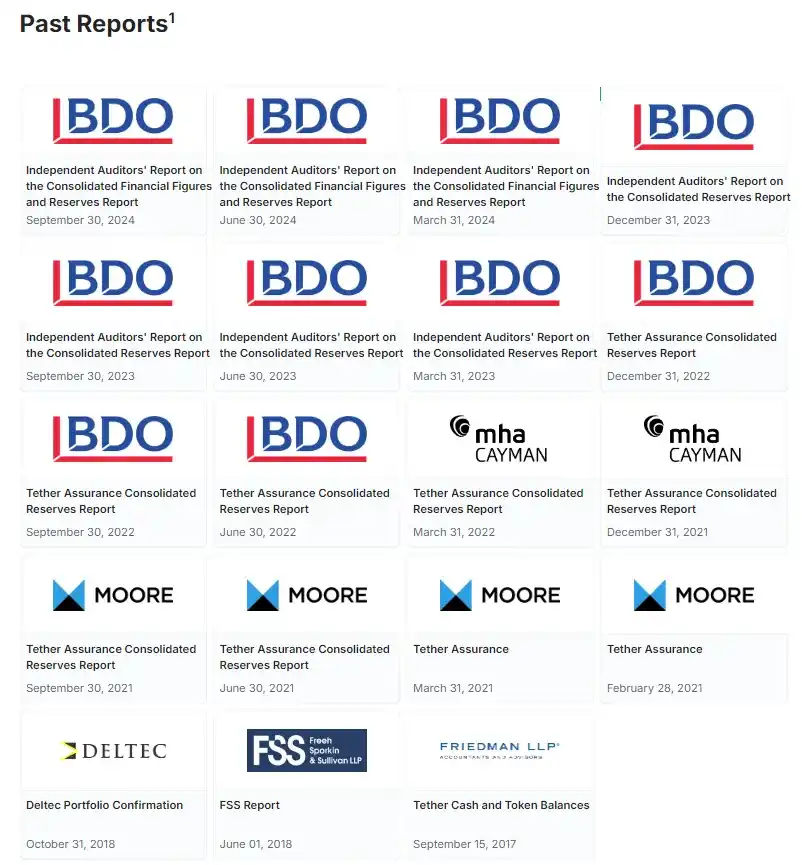
Tether's Historical Transparency Reports Source: https://tether.to/en/transparency/?tab=reports
USDC, issued by Circle, a company with strong regulatory resources and multiple asset management licenses. Since its launch in October 2018, USDC has long been the second-largest stablecoin in the cryptocurrency market, with a market share of approximately 20.9%. Based on its outstanding compliance and transparency, USDC's underlying assets mainly consist of US dollars, short-term Treasury bonds, and US overnight repurchase agreements. Most of the USDC reserves are held in the Circle Reserve Fund (registered with the SEC as a 2a- government money market fund). The fund provides daily investment portfolio reports through BlackRock to ensure transparency. At one point, the circulation of USDC once approached 77.6% of USDT's, but in the Silicon Valley Bank (SVB) bankruptcy event in March 2023, about $3.3 billion of Circle's ~$40 billion USDC reserves were held at SVB, accounting for a small part of its total reserves. This news briefly caused market panic, leading to a sharp drop in USDC's price and depegging, triggering even a run on the bank. However, with the joint bailout plan of the Federal Reserve and the Treasury Department, Circle announced that the SVB deposits were 100% safe, gradually calming the market panic, and the USDC price also recovered to near-normal levels. After this incident, the vulnerability of USDC in the face of risks in the traditional banking system was fully exposed, and its circulation began to decline. To enhance the stability and transparency of USDC, Circle has implemented a series of measures. Despite the failure to restore its market share to previous highs, USDC's inherent compliance has kept it competitive with USDT in key on-chain metrics such as transaction volume and number of transactions.

Circle Reserve Fund Source: https://www.blackrock.com/cash/en-us/products/329365/
DAI/USDS is a decentralized stablecoin issued and managed by MakerDAO, designed to maintain a 1:1 fixed exchange rate with the US dollar. Initially, DAI was generated through an overcollateralization mechanism, where users could lock up collateral in the form of crypto assets (such as Ethereum) in Maker Protocol's smart contracts to generate DAI. This mechanism required the value of the collateral to be greater than the amount of DAI generated to ensure the stability of DAI's value. However, price fluctuations in DAI could lead to a cascade of liquidations, coupled with the on-chain transparency of transactions, making the liquidation price an easy target for front-running, resulting in failed liquidations and bad debt. To mitigate these risks, MakerDAO introduced additional collateral options, such as USDC and wBTC, and established a dedicated risk management team. The decentralized nature of DAI provides unique advantages in certain applications, especially playing a core role in the DeFi space, serving not only as a medium of exchange but also widely used in lending, payments, staking, and various other financial activities. Although DAI's market share is smaller compared to centralized stablecoins like USDT and USDC, it still holds a significant position in the global stablecoin market.

Collateral List for DAI / USDS Source: https://makerburn.com/#/rundown
UST, as a decentralized algorithmic stablecoin in the Terra ecosystem, is designed to maintain a 1:1 fixed exchange rate with the US dollar. It relies on Terra blockchain's smart contracts, with Luna token as the value anchor. Users burn an equivalent amount of Luna when minting UST and redeem an equivalent amount of Luna when burning UST, while market arbitrageurs help maintain price stability. During periods of Luna price appreciation, UST's mechanism can promote a positive feedback loop, known as an "upward spiral." However, when Luna's price falls, due to Luna's market capitalization struggling to support UST's market cap, UST is prone to entering a "death spiral," where price declines lead to UST losing its peg. UST has offered high yields through the Anchor Protocol, attracting user deposits to scale up and becoming one of the major stablecoins in the market. Unfortunately, during the May 2022 Terra ecosystem collapse event, UST's price stability mechanism faced a significant challenge, ultimately causing it to detach from the US dollar and its price to collapse to zero. This event highlighted the risks and challenges of pure algorithmic stablecoins in terms of market confidence and algorithmic design, especially under extreme market conditions where these challenges become particularly evident.
It is evident that in the stablecoin market, fiat-collateralized stablecoins have already taken the majority of the market share and the market size continues to grow. However, due to the continuous emergence of trading demand in the market, decentralized stablecoins have been exploring new paths. Among them, Ethena has emerged as a standout player, and Ethena's issuance of USDe, as a synthetic dollar, has carved out a space in the DeFi field with its innovative financial solution. A key feature of USDe is its use of advanced Delta hedging strategy to maintain its peg to the dollar, setting it apart from traditional stablecoins. Additionally, USD0 issued by Usual is also noteworthy, as this stablecoin introduces Real World Assets (RWA) as underlying support, integrating the robustness of traditional financial instruments with the transparency, efficiency, and composability of DeFi. USD0, with its permissionless and compliant framework, directly rewards community users with real income from RWA, demonstrating the competitiveness of new types of stablecoins in the market. The emergence of these new stablecoins has not only enriched the market's diversity but also brought more choices and investment opportunities to users.
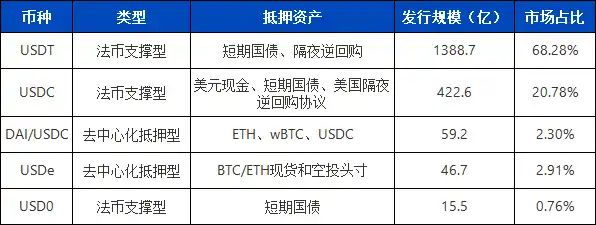
Core Metrics of Native Crypto Stablecoins
We define stablecoins that do not rely on fiat backing, such as USDe and USD0 mentioned above, as "native crypto stablecoins." These stablecoins include those collateralized by mainstream cryptocurrencies like Bitcoin and Ethereum, algorithmically pegged stablecoins, and stablecoins adopting a neutral strategy to anchor value.
When evaluating these native crypto stablecoins, we consider multiple dimensions, with the most important being the stablecoin's stability, market capitalization, and use cases (including DeFi integration and support from centralized exchanges).
Stability is a key metric for measuring the value of a stablecoin. The core value of a stablecoin lies in its value stability, the ability to maintain a stable exchange rate with the anchor asset. If a stablecoin cannot maintain this anchoring relationship, its "stable" characteristic will be questioned, thereby losing its basic function as a stablecoin.
While ensuring the stablecoin price is anchored, a stablecoin must achieve a certain market size to become a mainstream currency and establish a presence in the financial ecosystem. If a stablecoin fails to achieve scale, its influence and usability will be limited, making it difficult to have a significant impact in a competitive market.
The market size of a stablecoin depends on the widespread use cases. Stablecoins without practical use cases, regardless of their market value, will struggle to solidify their market position, like a tree without roots. Therefore, stablecoins must do everything possible to gain a broader user base and diversified use cases to ensure the stability of their value and enhance their liquidity.
Why We Invested in Ethena
Ethena's vision is to bridge the gap between DeFi, CeFi, and TradFi by reshaping the cryptocurrency ecosystem to foster the prosperity of the next generation of Internet finance. Its flagship stablecoin, USDe, has achieved deep integration in various key areas of DeFi, including money markets, leverage collateral in the derivatives market, stablecoin infrastructure, interest rate swap protocols, and spot AMM DEX. In the exchange realm, Ethena's liquidity pools not only support existing centralized and decentralized trading platforms but also help emerging exchanges address the liquidity challenge during their early stages, making Ethena a market-leading provider of deep and off-exchange liquidity. For TradFi, Ethena's USDe is favored for its unique yield, combining two native real yields in the billion-dollar-scale cryptocurrency and featuring a weak negative correlation with traditional financial rates, with the underlying assets custodied by TradFi-recognized institutions. USDe provides a convenient way for large investors to access excess returns in the cryptocurrency market through a single asset. With the decline in real rates, the market's speculative interest in cryptocurrency and the growth in leverage demand are expected to further boost the yield of Ethena's USDe, making it a key incentive for trillion-dollar-scale TradFi entities to invest in the Ethena ecosystem.
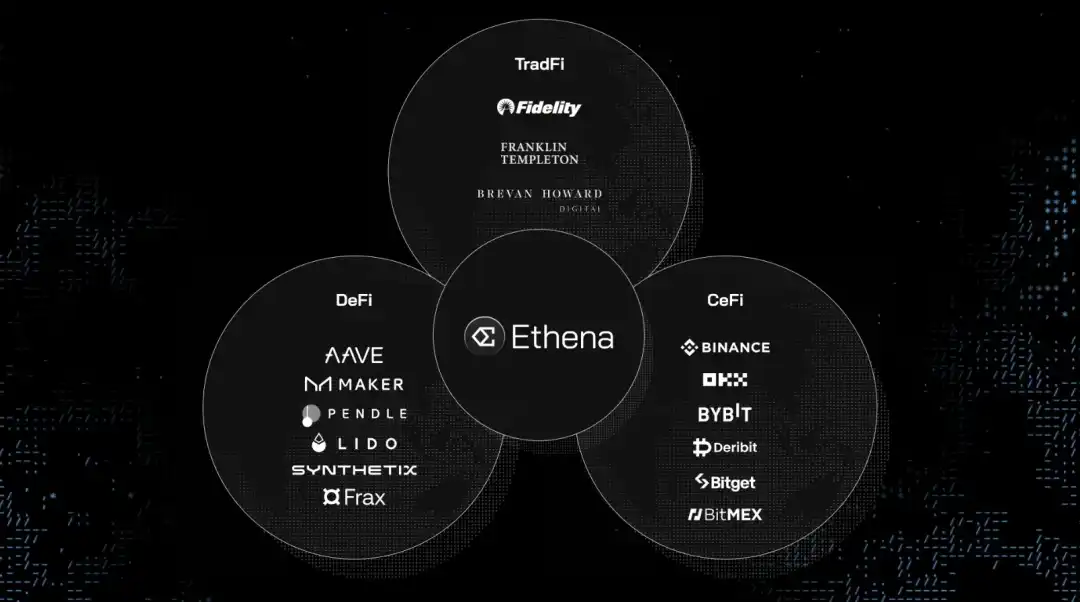
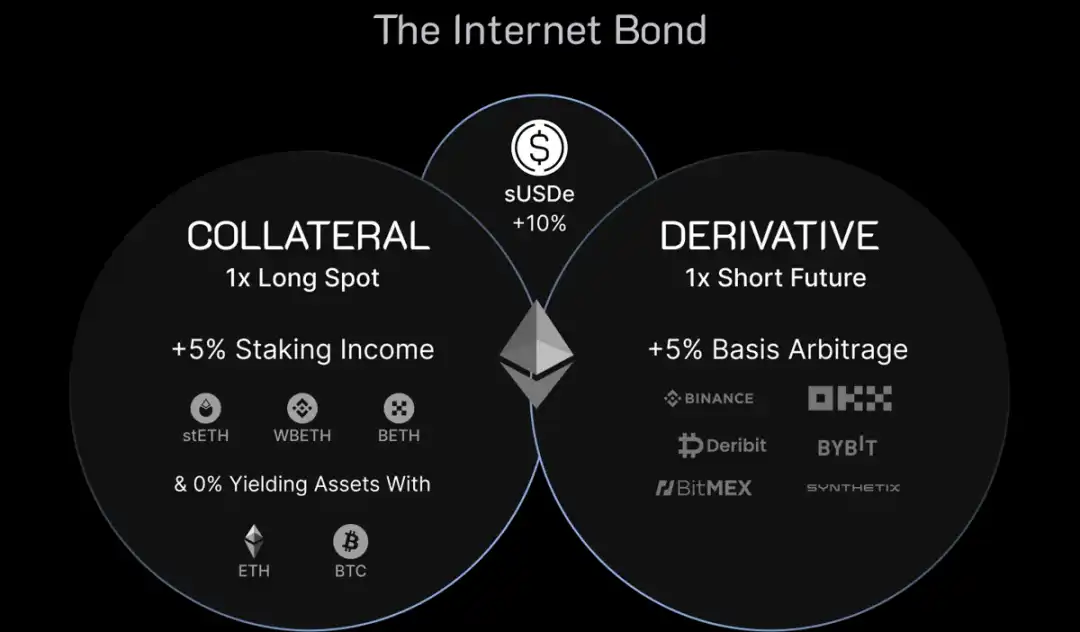
Delta-Neutral Synthetic Dollar, USDe
The USDe stablecoin introduced by Ethena, as a native cryptographic asset, differs from USD-pegged stablecoins relying on traditional assets such as U.S. Treasuries. Its issuance mechanism involves holding mainstream cryptocurrency spot and establishing short positions on exchanges. This innovative stablecoin model plays a crucial role in the market by not only locking in the value of mainstream crypto assets but also injecting liquidity into the derivatives market. Especially during bull markets, as mainstream asset prices rise and derivative contract sizes expand, the scale of USDe also grows. Additionally, USDe's short-side funding rate provides holders with a more attractive yield compared to traditional stablecoins like USDT. This advantage has attracted more users to choose USDe, further driving the expansion of USDe's scale.
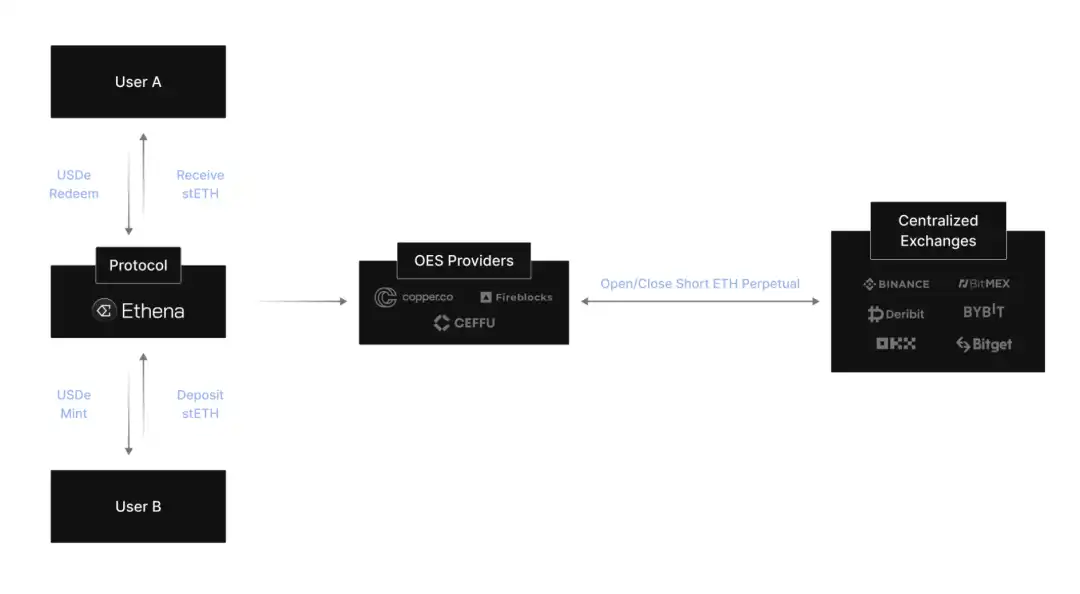
Minting, Redemption, and Staking
The minting process of USDe allows users to exchange underlying assets for USDe by sending them to the protocol, while redemption involves users burning USDe to redeem the original underlying assets. Staking USDe allows users to lock USDe in a smart contract to earn yield. When users stake USDe, they receive sUSDe, the value of which increases with the protocol's accrued yield. Users can unstake sUSDe at any time to receive the accumulated value in USDe.
Delta Neutral Anchoring Mechanism
The anchoring mechanism of USDe is mainly achieved through the execution of automated and programmatic Delta-neutral hedging strategies to maintain stability relative to its underlying collateral asset. This strategy involves establishing short positions in the derivatives market that are equivalent to the spot asset, to hedge against price fluctuations of the spot asset, thereby keeping the synthetic dollar value of USDe relatively stable under most market conditions. Additionally, the revenue streams of the Ethena protocol, including spot collateral yield and funding rate revenue from short positions, further enhance the stability of USDe. Through this series of mechanisms, USDe is able to become a reliable medium of exchange and store of value in the crypto market, maintaining a stable peg to the dollar.
Hedging Strategies and Risk Control
Ethena's hedging mechanism is a system composed of off-chain application services that interact with on-chain smart contracts and the Ethereum blockchain, responsible for fetching market data, validating data integrity, calculating risk exposure, coordinating internal system information, publishing prices for minting and redeeming USDe, determining order routing and execution venues, real-time validation of information and operation integrity, monitoring availability of dependencies, coordinating collateral flow, and publishing real-time developments. This system, centered around protecting the protocol's collateral, ensures the stability of USDe and the real-time integrity of the system. Furthermore, Ethena has a profound awareness of various potential risks, including smart contract risk, external platform risk, liquidity risk, custody operation risk, exchange counterparty risk, and market risk. To address these challenges, Ethena actively takes measures to mitigate and diversify these risks, enhancing the robustness and reliability of the entire system.
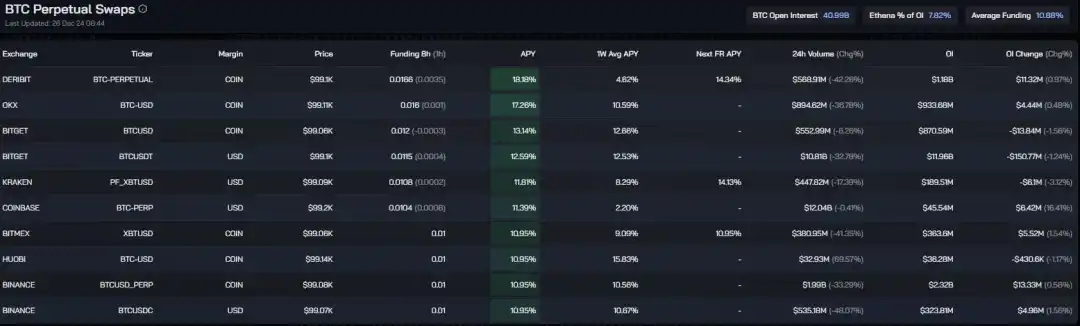
Transparency and Fund Security
The core value of a stablecoin lies in its anchoring ability, namely, maintaining stability with the fiat currency value it is pegged to. Historically, some stablecoins like USDT and USDC have experienced de-pegging due to lack of transparency and inadequate risk control mechanisms. Therefore, Ethena ensures the stability and transparency of its asset management through a mechanism of multi-signature and asset custody, as well as deep collaboration with exchanges. Additionally, to address rate volatility in extreme market conditions, Ethena has established an ample reserve fund. These strategies not only enhance the reputation of USDe but also provide a solid security guarantee for USDe's earnings, ensuring the interests of holders and market stability.
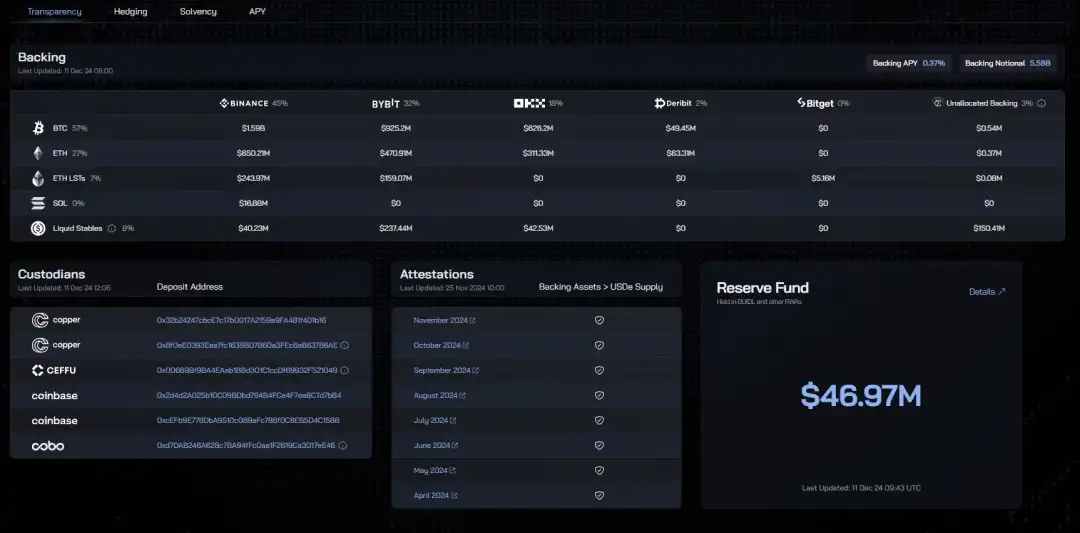
TradFi-Friendly Digital Dollar USDtb
USDtb is an institutional-grade stablecoin backed by the world's largest asset management company BlackRock's BUIDL, with its underlying assets including high-quality short-term government bonds, ensuring its outstanding security and trustworthiness. In the DeFi space, USDtb is not only fully accessible and easy to integrate but can also be used as collateral on centralized exchanges and major brokers, providing traditional financial institutions with a direct gateway to DeFi. Furthermore, USDtb also features a unique on-chain direct minting and redemption mechanism, providing round-the-clock service, further enhancing its competitiveness and convenience in the digital asset market.
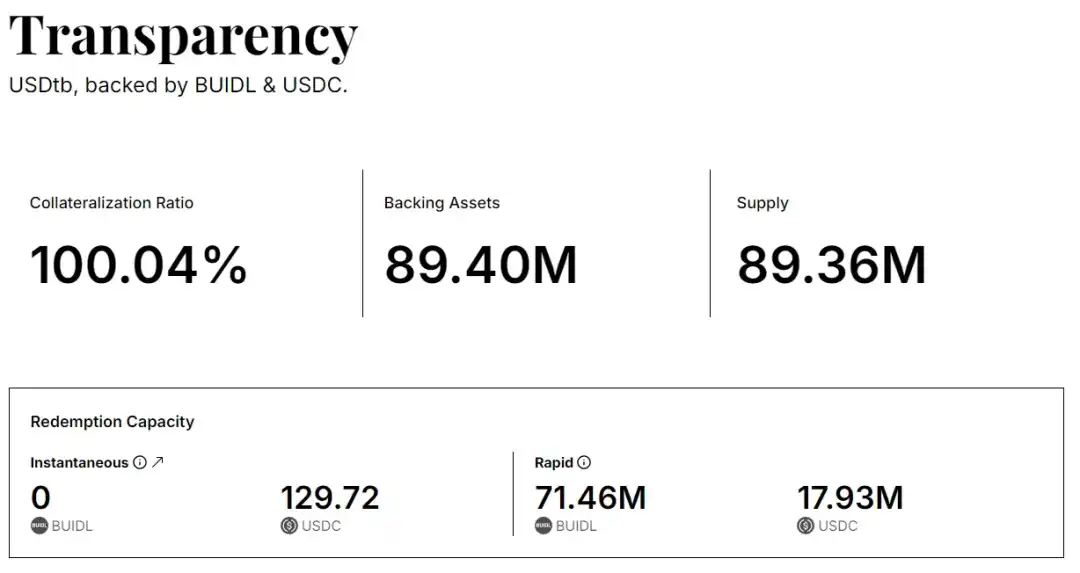
As a product independent of USDe, USDtb provides users with a new option with a distinctly different risk profile. Its presence allows USDe to more effectively address market challenges, especially during periods of negative interest rates, as Ethena can close USDe's hedging positions and reallocate assets to USDtb to mitigate related risks, enhancing the overall system's stability and resilience.
ENA Token Design
The ENA token plays a key role in the Ethena ecosystem, serving as a governance token that empowers holders to participate in key decisions such as electing members of the risk committee and shaping policy direction, while also providing the opportunity to stake as sENA for additional rewards. With ENA set to be used as a voting tool for the Ethereal derivatives exchange in the future, its importance in the Ethena development roadmap is becoming increasingly prominent. These functions not only solidify ENA's position as a core of the Ethena protocol but are also crucial for maintaining the protocol's decentralized governance and incentivizing user participation.
In terms of liquidity, ENA has performed exceptionally well on mainstream exchanges, consistently ranking high in trading volume. This not only demonstrates the market activity of the Ethena protocol but also indicates its widespread market recognition and acceptance.
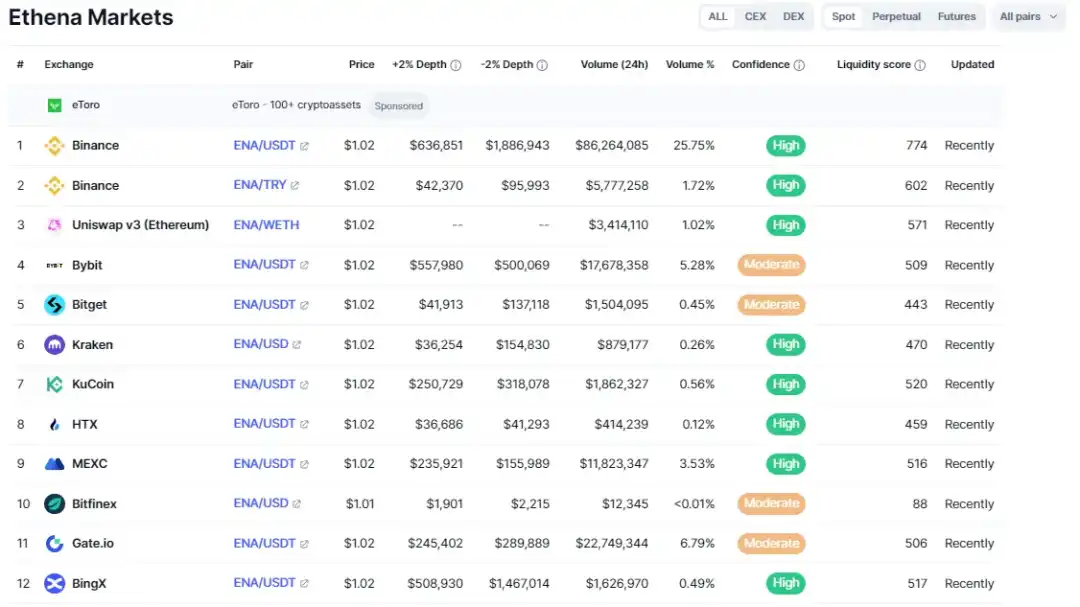
Operational Resources
Through deep partnerships with major well-known exchanges, Ethena has implemented a series of hedging strategies to address sudden market events in derivative markets such as contracts, ensuring the stability and security of USDe. Additionally, the use of USDe as a trading pair is gradually being implemented, thanks to Ethena's efforts to increase liquidity to mitigate risks. In terms of resources, Ethena collaborates with several top global market makers, who provide liquidity and market depth, further enhancing USDe's market adaptability and resilience.
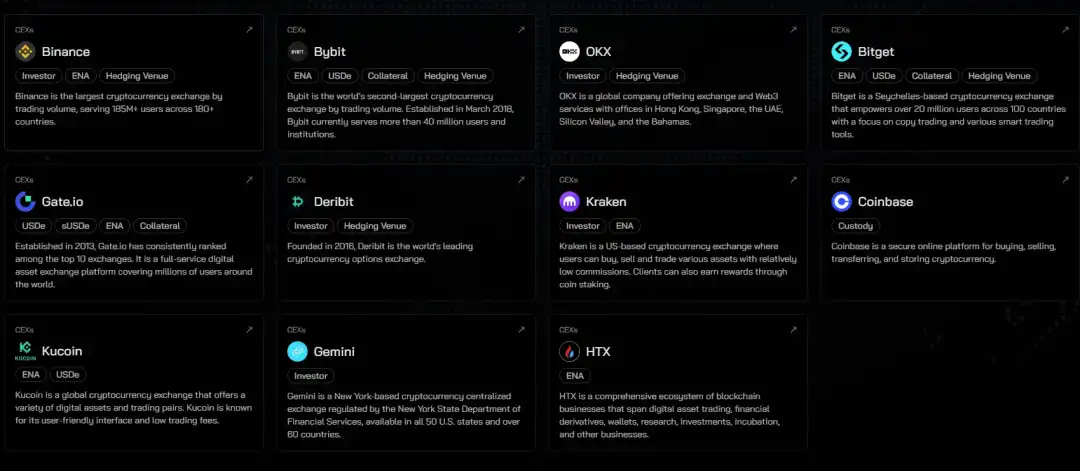
Source: https://ethena.fi/ecosystem

The Future Prospects of Ethena
In the stablecoin field, the competitive landscape is far from determined. While USDT and USDC currently hold a leading position, emerging competitors have the full capability to challenge their market dominance. The key is to choose stablecoin protocols that have unique mechanisms, can stably anchor value, increase market capitalization, and expand use cases. Just as DEXs have captured 10% of CEX trading volume, decentralized financial products are rapidly gaining market share due to their verifiability and convenience. We anticipate that by 2025, decentralized stablecoins represented by Ethena will continue to grow their market size, reaching a 10% market share, equivalent to $200 billion.
At the same time, we believe Ethena will become a key financial tool for the implementation of Trump policies. The implementation of Trump policies will also propel Ethena to a strategic position in the revitalization of the U.S. economy and the reshaping of global finance, becoming a key pillar of the U.S. domestic and global digital financial ecosystem. As a pioneer in the industry, ArkStream Capital will witness this great transformation of the decentralized financial era alongside Ethena.
References:
Official Documentation: https://docs.ethena.fi/
USDtb: https://usdtb.money/
BlackRock BUILD: https://securitize.io/learn/press/blackrock-launches-first-tokenized-fund-buidl-on-the-ethereum-network
Proposal for USDtb as a USDe Backing Asset and Eligible Asset for the Reserve Fund: https://gov.ethenafoundation.com/t/proposal-usdtb-as-a-usde-backing-asset-and-eligible-asset-for-the-reserve-fund/385
Transparency of USDtb: https://usdtb.money/transparency
https://mirror.xyz/0xF99d0E4E3435cc9C9868D1C6274DfaB3e2721341/_qreGT_6NMoq-YcUwRNk0WGUea2ciuehovSmamJPw9w
BlackRock BUILD: https://intel.arkm.com/explorer/address/0x13e003a57432062e4EdA204F687bE80139AD622f
https://intel.arkm.com/explorer/entity/blackrock
BlackRock BUILD: https://etherscan.io/token/0x7712c34205737192402172409a8f7ccef8aa2aec
BlackRock BUILD: https://app.rwa.xyz/assets/BUIDL
Stablecoin Trading Volume in November: https://cointelegraph.com/news/stablecoin-trading-volume-surges-1-8-t-november
Ethena FAQs: https://www.notion.so/ethena/Ethena-FAQs-3ccc1437e13343f8b74c0d005e4f5128?pvs=4
Ethena Chartbook: https://ethena.notion.site/Ethena-Chartbook-c35c316346ee4c7e97aff49a9eadd87e
Ethena 2024 Roadmap: https://mirror.xyz/0x29a99F7Fe080F72223dAd48D5E1E86670a984326/odrjQynMr3PrtRhCzHa2k7tcdNIpibJLyRe7yXY944Q
Dust on Crust Part Deux: https://cryptohayes.medium.com/dust-on-crust-part-deux-85a4670239d6
Circle: https://www.circle.com/usdc
Tether: https://tether.to/
You may also like

Galaxy Deep Research Report: How Hyperliquid's HIP-4 Upgrade Changes the Landscape of Prediction Markets?

ZachXBT: Humanity private key leak and abnormal surge in H token should be viewed separately
On June 9, according to related disclosures, on-chain investigator ZachXBT posted an update on Humanity’s roughly $31 million security incident, saying that after further analyzing fund flows, he currently tends to believe the project team was not involved in an “inside job” or a self-staged attack. According to him, the official explanation about the private key leak was broadly accurate, but before the token unlock, the price of H had been artificially pushed higher, and the hacker later took advantage of that market environment; therefore, the private key leak and the earlier abnormal price pumping should be regarded as two separate and independent events. This reframing has shifted the market’s understanding of the nature of the incident. Earlier discussion around Humanity had focused on whether the team directly participated in the attack or used the security incident to cover up internal operations. ZachXBT’s latest remarks shift the focus from “whether it was self-theft” to “whether there were pre-unlock market structure issues.” He also questioned whether the team may have.

Morning Report | OpenAI has submitted an S-1 registration statement draft to the U.S. SEC; Morpho completes $175 million financing

Morning Report | BitMine increased its holdings by 126,971 ETH last week; trader Eugene announced his exit from the crypto market

Wang Chuan: How can one not feel anxious after the neighbor Old Wang made thirty times profit by investing in storage stocks? (Seven) - A quarter-century cycle

Cryptocurrency CEXs are flocking to sell US stocks, and traditional brokerages are facing an "uninvited guest."
$75 billion in foreign capital has fled, and South Korean retail investors have absorbed it all using leverage

Japan’s Three Megabanks Plan Joint Stablecoin Issuance in Fiscal 2026
MUFG, SMBC, and Mizuho reportedly plan to jointly issue fiat-pegged stablecoins in fiscal 2026, signaling Japan’s growing push into bank-led digital payment infrastructure.

Humanity Discloses H Token Dual-Chain Attack Details, With Losses on Ethereum and BSC Exceeding $36 Million
Humanity said the H token attack across Ethereum and BSC caused more than $36 million in losses after leaked ProxyAdmin keys enabled malicious contract upgrades and token minting.
White House Discusses CLARITY Act With Law Enforcement Ahead of Senate Vote
The White House discussed the CLARITY Act with law enforcement ahead of a Senate vote, focusing on illicit finance risks and developer protections.

Bitcoin Trading Guide 2026: Strategies for Experienced Traders

What Is XAUT and PAXG? Why Tokenized Gold Is Booming in 2026

Will the SpaceX IPO Hurt Bitcoin? Here's What Traders Are Watching

Foreign selling in the South Korean stock market accelerates, with cumulative net sales reportedly reaching $75 billion this year
On June 9, The Kobeissi Letter, citing Goldman Sachs data, reported that global investors are selling South Korean stocks at an unusually rapid pace. In the latest trading session, foreign investors sold about $801 million worth of Kospi constituent stocks again; total foreign outflows last week reached about $10 billion, and the market has been in net foreign selling on nearly every trading day over the past month. According to the data cited in the report, foreign investors have sold about $75 billion worth of South Korean stocks so far this year. Meanwhile, South Korean retail and institutional investors together recorded roughly $69 billion in net buying over the same period, suggesting that the market’s main buying support has come from domestic capital rather than returning overseas funds. The information currently disclosed still mainly comes from The Kobeissi Letter’s retelling and Goldman Sachs data summaries, while public details on the statistical period and the specific definition of “selling” remain relatively limited.

Fortune Warns of Strategy’s Financing Structure Risks as Bitcoin Premium Narrows
Fortune warned that Strategy’s Bitcoin treasury model faces growing financing risks as MSTR’s net asset premium narrows and preferred stock dividend pressure increases.

Ferrari Challenge Le Mans: Carl Moon to Dominate in WEEX Livery

Sahara AI Responds to SAHARA’s Sharp Drop: No Contract or Product Security Issues Found, Internal Investigation Underway
Sahara AI responded to SAHARA’s 60% price drop, saying no token contract or product security issues have been found and an internal investigation is underway.

WEEX Deposit/Withdrawal Dynamic Island: Your Asset Status, Always in Sight
Galaxy Deep Research Report: How Hyperliquid's HIP-4 Upgrade Changes the Landscape of Prediction Markets?
ZachXBT: Humanity private key leak and abnormal surge in H token should be viewed separately
On June 9, according to related disclosures, on-chain investigator ZachXBT posted an update on Humanity’s roughly $31 million security incident, saying that after further analyzing fund flows, he currently tends to believe the project team was not involved in an “inside job” or a self-staged attack. According to him, the official explanation about the private key leak was broadly accurate, but before the token unlock, the price of H had been artificially pushed higher, and the hacker later took advantage of that market environment; therefore, the private key leak and the earlier abnormal price pumping should be regarded as two separate and independent events. This reframing has shifted the market’s understanding of the nature of the incident. Earlier discussion around Humanity had focused on whether the team directly participated in the attack or used the security incident to cover up internal operations. ZachXBT’s latest remarks shift the focus from “whether it was self-theft” to “whether there were pre-unlock market structure issues.” He also questioned whether the team may have.
Morning Report | OpenAI has submitted an S-1 registration statement draft to the U.S. SEC; Morpho completes $175 million financing
Morning Report | BitMine increased its holdings by 126,971 ETH last week; trader Eugene announced his exit from the crypto market
Wang Chuan: How can one not feel anxious after the neighbor Old Wang made thirty times profit by investing in storage stocks? (Seven) - A quarter-century cycle
Cryptocurrency CEXs are flocking to sell US stocks, and traditional brokerages are facing an "uninvited guest."


