
$250 Billion, 6723 Rounds of Funding: Where Did Crypto VCs Invest in 2025?

 Prefer us on Google




Original Title: Claude and I Analyzed 6,723 Crypto Funding Rounds. This is What VC's Are Funding
Original Author: @dudu_bitcoin, Lombard Ambassador
Original Translation: Saoirse, Foresight News
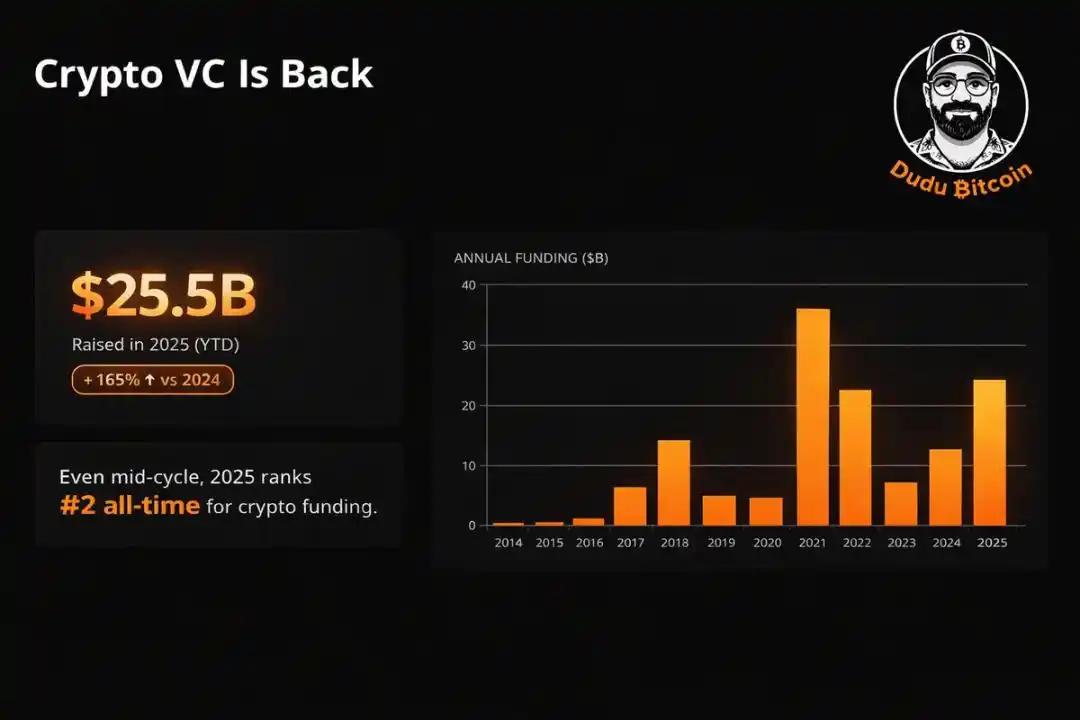
In 2025, the cryptocurrency funding resurgence is compared to the peak of Dennis Rodman's career.
The total funding for the year reached $25 billion, marking the second-highest year on record, second only to the frenzy of 2021.
But a key difference this year: the current funding fervor is actually more sustainable. To understand where the money is flowing, I spent weeks analyzing 6,723 funding rounds.
Winning Sectors: Prediction Markets, AI Storage, and RWA
Prediction markets emerged as the biggest winners, which is not surprising.
For prediction markets, 2025 was a bountiful year—it was the only track within Web3 that successfully attracted a mainstream consumer base. Platforms like Polymarket and Kalshi found themselves in fierce competition, both striving to secure more top-tier partnerships. Today, prediction markets are embedded in Google searches and major mainstream media outlets, further integrating into the public sphere.
Real-world assets (RWA) and the cybersecurity sector have risen to the top of the funding charts, confirming a key point: cryptocurrency is gradually maturing and becoming an integral part of the financial system, with a stronger foundation.
However, for entrepreneurs focused on NFT development, this year's situation is not optimistic.
Seed Round Funding is Maturing
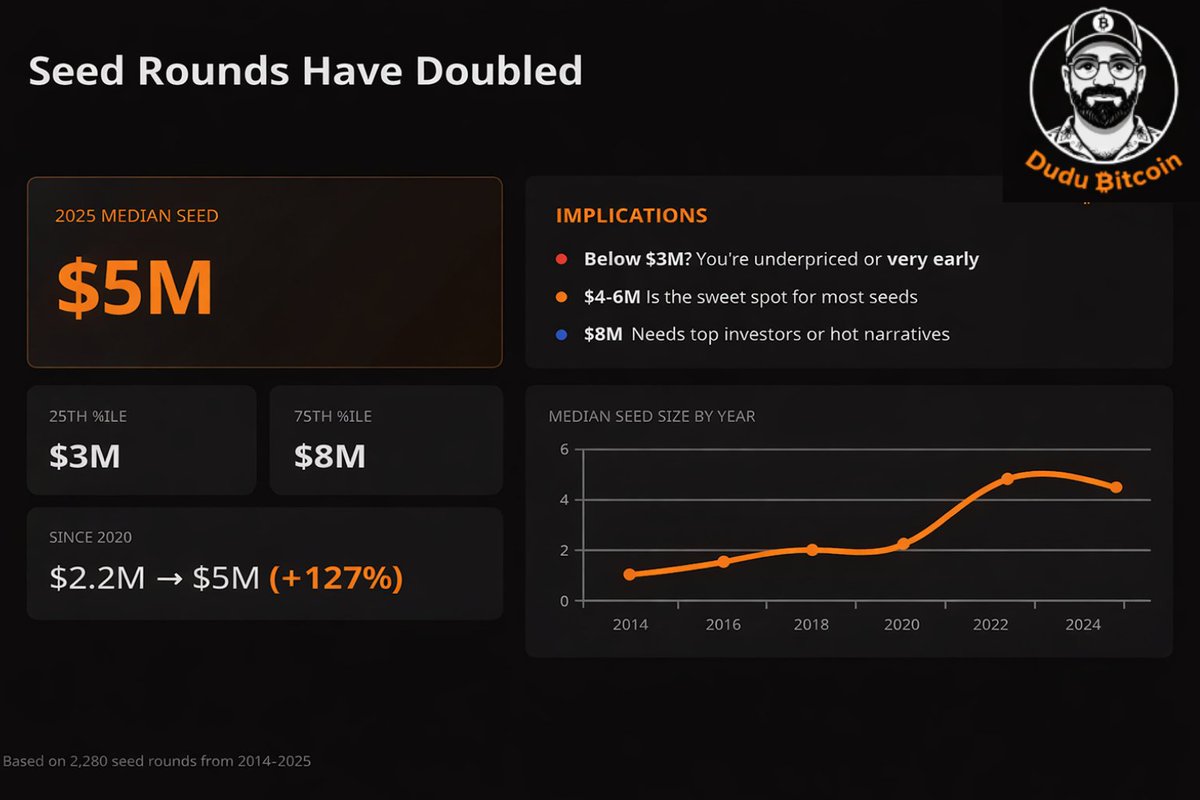
The era of launching a project with small seed funding is long gone. In the age of AI, the resources needed to develop a product used by people have significantly decreased. This means that entrepreneurs can operate "bootstrapped" for longer, only seeking funding when they have a truly tangible result to show.
Recommendation: Strive to Collaborate with Coinbase Ventures
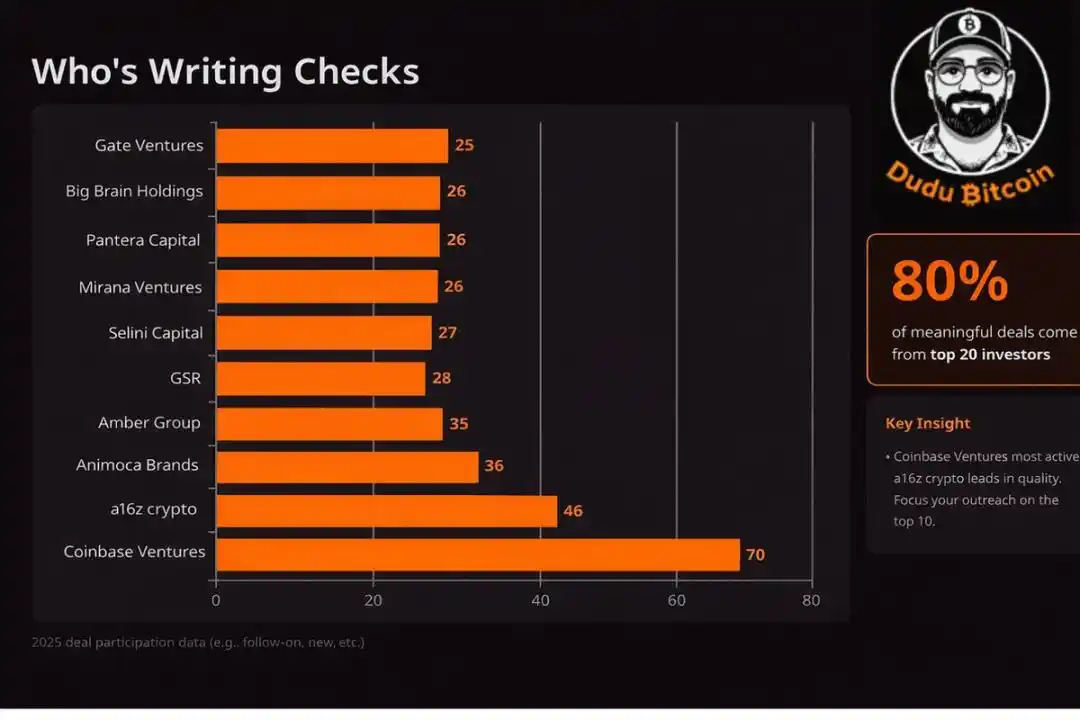
I've seen too many so-called "investment matchmakers" — they help connect entrepreneurs with investors, but take a commission for it. What's more, most of these matchmakers only know third-tier investors, so the time cost for entrepreneurs is simply not worth it. Therefore, if you're looking, find someone who can connect you with top-tier institutions like Coinbase Ventures, rather than niche organizations like the "Soulja Boy Fund" (Note: Soulja Boy is an American rapper, and the fund under his name has a small scale and limited investment influence).
Cryptocurrency Is Gradually Maturing
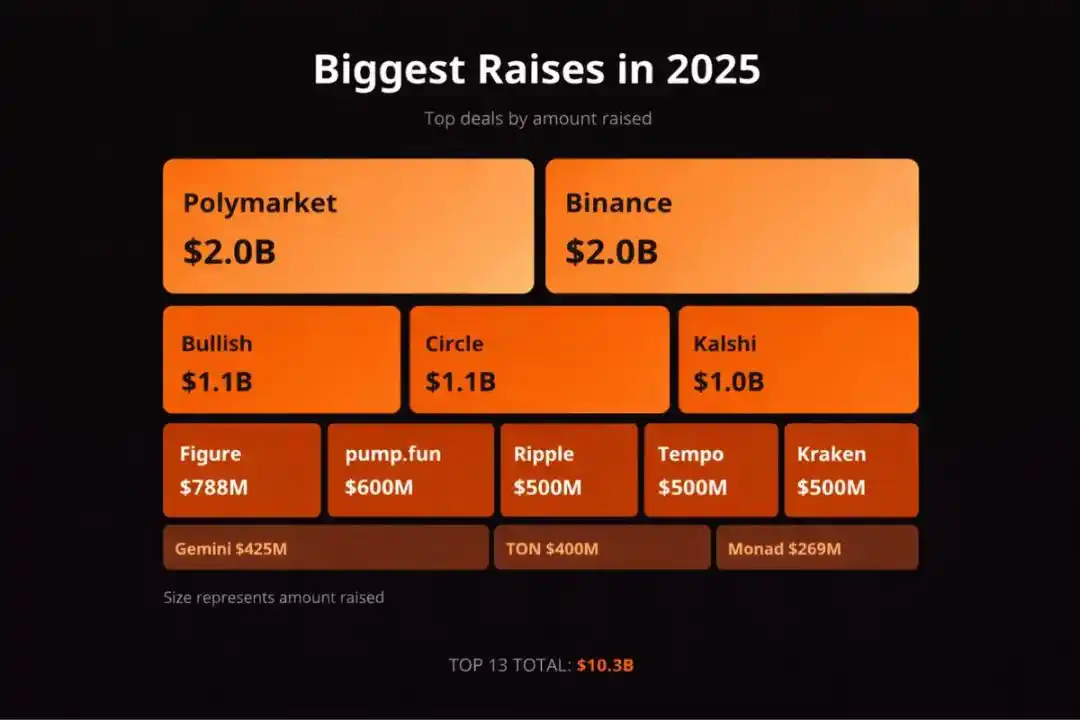
Look at the largest funded projects this year, and the trend is quite clear.
Of course, the crypto space still retains some "speculative vitality" (Note: referring to the crypto field's unique high-risk, high-speculation trend):
· Binance: Received a huge amount of funding from the UAE to build a top-tier meme coin exchange platform;
· Pump.fun: Set a record for the issuance of meme coins per second;
· TON: Leveraging Telegram's widespread popularity in the crypto space, it has gained considerable attention;
· Monad: Its L1 public chain has accumulated a large following in the community, but the subsequent TGE performance was disappointing.
Every industry cycle needs some "stimulating elements," but if you take a step back from a short-term perspective, you will clearly see the maturity trend in the crypto space.
Two of the largest funded projects this year come from the prediction market — Polymarket and Kalshi.
As mentioned earlier, 2025 is a bumper year for prediction markets, the only track in the Web3 space that truly attracts mainstream consumer groups. Polymarket and Kalshi are still in fierce competition, fully striving to secure more tier-one partners. Their services are now embedded in Google Search and major mainstream media outlets.
The stablecoin sector has also performed well in 2025:
· Bullish: Co-founded by Brendan Blumer, who previously sparked controversy with the EOS project, its IPO raised $1 billion.
· Ripple: Successfully attracted Wall Street funds and expanded into the stablecoin field;
· Circle: Raised $1 billion through an IPO, followed by a significant surge in its stock price;
· Payment giant Stripe: Launched the L1 blockchain "Tempo," proving that fintech companies are also actively entering the crypto space;
· Figure: Completed a billion-dollar IPO, also focusing on stablecoin-related business.
Finally, cryptocurrency exchanges Kraken and Gemini also completed fundraising rounds, likely the final ones before their IPOs.
The total funding for the above four "speculative" projects is approximately $3.27 billion; the predicted market area has raised a total of $3 billion; and projects in the more mature track of the Web3 space have raised a total of $3.4 billion.
Today's cryptocurrency is no longer limited to a single attribute. It is splitting into three parallel tracks of development:
· Speculation and Cultural Track (such as Meme coins, niche public chains);
· Information and Truth Market Track (with prediction markets at its core);
· Real-world Financial Infrastructure Track (such as stablecoins, RWAs).
This content is provided for general informational purposes only and doesn't constitute financial, investment, legal, or tax advice. Any events, rewards, online promotions, or related information mentioned herein should not be considered a recommendation, solicitation, or invitation to purchase, sell, trade, or otherwise deal in any crypto assets. Crypto assets are highly volatile and may result in loss. The availability of WEEX services, products, and related events may vary by region. You are responsible for ensuring that your participation is in accordance with applicable local laws and regulations.
You may also like

Grayscale Sees Three Forces Supporting Bitcoin Adoption Despite Bear Market

Robot maker Unitree is going public. Hyperliquid traders see 4x upside from IPO price

Blockchain is secure, but information needs to be filtered

web3: Tudor Investment Increases IBIT Spot Holdings
Morgan Stanley Bitcoin ETF Retains Clients: Only Bitcoin Price Drops
Wall Street Only Looked Like This in 1929 and 2000: What It Means for Bitcoin?
BRICS+ Change: The Hidden Detail That Redefines Economic Sovereignty
Binance Becomes the New Battleground for Weekend Stock Markets: Using Perp to Seize Price Power and bStocks for Inventory and Error Correction System
Overview of Fusion Startups Securing Over $100 Million in Funding
Today, the World Finally Sees Why the 'AI Stock God' Fell
Bitcoin’s $16.3 billion Wall Street stress test splits into four positional patterns

Michael Saylor: Bitcoin Attempts to Monetize Digital Scarcity, Reshaping Wealth Storage and Value Transfer

Clarity survives (barely), Strategy sells and the untold story of Mastercard's $1.8 billion deal: Crypto's week in 5 stories

Binance's Lawsuit Delays RedotPay's US IPO Plans, Postponement Likely Until 2027
Optimal Strategy Under AI Bubble: Long Tech Leaders and Undervalued Assets, Short AI Bonds

ChatGPT Predicts Best Crypto for 2026 – Bitcoin, XRP, or Solana?
Wall Street's private blockchain obsession is a 'race to the bottom,' Ethereum advocate Raman warns

Dartmouth crypto ETF holdings drop 15% in Q2
Delphi Digital Researcher: How to Determine if a Project is Truly Undervalued?
web3: Quantum Computing Approaches, Crypto Industry Prepares for Large-Scale Migration
The Fixed Term Deposit, Increasingly Questioned: Everything You Need to Know About This Tool

Follow the Money: Nearly $4.5 Billion in Web3, 'Venture Assault on AI' and eToro's Expansion in the US
Robinhood’s $225.5M venture fund opens below IPO price

Bitcoin: Is AI More Dangerous Than Quantum? 2 Developers Explain Everything You Need to Know

An Uncontrollable AI in Two Years? Brian Armstrong from Coinbase Believes So
Nasdaq Aims to Simplify Launching Options on Crypto ETFs
[SCAN 2026 Final Interview] ②J0y_B0y: The Four Students from Jordan's Applied Science Private University Unite
6 out of 10 XRP Investors at a Loss – Is Buying XRP Smart Now or Too Early?
Global Trade Exposes Risks: 27 Key Maritime Chokepoints Carry Most Trade Flow, Hormuz Crisis Sounds Alarm
Crypto VC will prioritize quantum-ready infrastructure heading into 2027, Moon Pursuit founder says
Grayscale Sees Three Forces Supporting Bitcoin Adoption Despite Bear Market
Robot maker Unitree is going public. Hyperliquid traders see 4x upside from IPO price
Blockchain is secure, but information needs to be filtered
web3: Tudor Investment Increases IBIT Spot Holdings
Morgan Stanley Bitcoin ETF Retains Clients: Only Bitcoin Price Drops
Wall Street Only Looked Like This in 1929 and 2000: What It Means for Bitcoin?