
 Buy Crypto
- Markets
 Futures
- Spot
- Copy Trade
- Earn
- More
2026 Top Transaction Themes: Trump's Sore-Loser Attitude, the End of the International Order

Original Title: "The Biggest Trading Theme of 2026: Trump Can't Afford to Lose, End of the International Order"
Original Author: Xu Chao, Wall Street News
Entering 2026, the global macro market is undergoing a profound paradigm shift. Senior analyst David Woo believes that facing significant pressure from the midterm elections, the Trump administration is showing a determination to reverse the situation at all costs. This will reshape the global asset pricing logic from energy to gold.
David Woo stated that to offset a severe polling deficit and avoid losing a majority in Congress, the Trump administration's policy focus has shifted entirely to winning the "affordability" debate. This means the ultimate trading theme of 2026 will shift from simple reflation to radical deflationary measures—especially through tight control of energy resources to significantly lower oil prices, with the goal of reducing gasoline prices to a key psychological threshold before the election. This strategy aims not only to contain inflation but also to solidify voter support by improving the cost of living for the middle class.
Trump's previous actions in Venezuela mark the substantial end of the post-war rule-based international order. This move is not based on ideological considerations but rather on directly controlling energy resources, aiming to win domestic "affordability arguments" by significantly increasing supply. Trump's goal is to push gasoline prices down to $2.25 per gallon before fall, which will have a severe impact on the oil market, with oil prices expected to fall into the $40 to $50 range.
Woo warned that as the U.S. abandons its traditional role as a guarantor of the international system, global geopolitical insecurity will sharply rise, providing strong support for gold and benefiting the defense industry. In contrast, emerging market stocks will face the risk of revaluation, as in an era of power politics resurgence, the security premium of small economies will no longer exist.
The Stakes of the Midterm Elections
David Woo's analysis points out that the biggest backdrop of the 2026 macro narrative is the midterm elections. Although Trump controlled the market trend in 2025, his approval rating is currently hovering around 40%, facing a significant deficit of about 20 percentage points compared to historical norms. For Trump, if the Republicans lose control of Congress in November, his second term will be mired in endless subpoenas and impeachment nightmares.
Therefore, the political theme of 2026 is "throw the kitchen sink."
White House Chief of Staff Susie Wiles has made it clear that Trump's campaign effort in 2026 will be equivalent to the 2024 election year. This political survival pressure will directly shape the United States' economic and diplomatic decisions, forcing the government to take unconventional measures to please voters, with the most crucial lever being addressing the cost of living crisis.
A New Structural Bull Market. However, the market needs to be wary of the upcoming large-scale fiscal stimulus. It is expected that Trump will use tariff revenue to distribute cash checks to the middle and low-income groups, which will pose new upward pressure on long-term Treasury yields, fundamentally altering the 2026 macro liquidity environment.
New Energy Strategy: The Political Reckoning of Lowering Oil Prices
To win the "affordability" debate, the quickest and most direct means for the Trump administration is to lower oil prices. David Woo stated that the recent U.S. actions against Venezuela are fundamentally motivated not by ideological export but by the direct control of the country's oil resources (18% of the world's proven reserves), thereby increasing supply and suppressing global oil prices.
The goal of this strategy is to reduce U.S. gasoline prices to around $2.25 per gallon by September or October.
For the market, this means that one of the core trades in 2026 is to short oil.
David Woo predicts that oil prices could fall to the high $50s or even $40 by the end of the year. This geopolitical move will make OPEC the biggest loser, significantly weakening its market control, while oil-importing countries like India and Japan will benefit from it.
Tariff Rebates and the Reversal of K-Shaped Economics
In addition to lowering oil prices, another potential major move is a large-scale fiscal stimulus. David Woo predicts a 65% probability that Trump will roll out a new round of stimulus before the midterms. The specific path is to use last year's massive tariff revenue to issue a "$2000 Tariff Rebate" check to individuals earning less than $75,000 per year.
To ensure the bill's passage in Congress, Trump may bundle this rebate plan with an extension of Obamacare subsidies that the Democratic Party cares about and use a Reconciliation Bill to bypass Senate obstruction. This strategy aims to transform the victims (consumers) of the tariff war into beneficiaries, achieving a "win-win" in geopolitical and domestic economic terms.
This targeted stimulus for the lower-middle-income group, combined with the increase in disposable income due to low oil prices, will benefit Consumer Staples retailers serving mass consumption, and may reverse the current market consensus on a "K-shaped economic" recovery, where only the wealthy benefit.
The End of the International Order and the Gold Bull Market
The aggressive geopolitical measures taken by the United States to control oil prices have sent a clear signal to the world: the rule-based international order has come to an end. David Woo believes that when the world's most powerful country decides to act based on strength rather than rules, the international system that used to protect the interests of small countries no longer exists.
This shift has profound implications for asset allocation:
Short Emerging Market Stocks: In the new order lacking rule-based protection, small countries face higher geopolitical risks, and the traditional "convergence trade" logic is no longer valid. Long Defense Sector: Security concerns will compel countries to significantly increase defense spending. Long Gold: With the U.S. no longer acting as the benevolent guarantor of the international order, the credit foundation of the dollar as a reserve currency is eroded. Against the backdrop of expanding deficits and rising geopolitical realism, gold will become a key asset for hedging an unruly world. Even without a dollar collapse, gold still has over 10% upside potential.
The Biggest Risk: Stock Market and the AI Bubble
Despite Trump's attempts to court voters through populist policies, the stock market remains his "Achilles' heel."
David Woo warned that the current overvaluation of the U.S. stock market is approaching the levels seen during the dot-com bubble era, and capital gains tax is a key source of federal revenue growth. Once the stock market drops by 20%-30%, it will not only trigger an economic recession but also lead to a sharp deterioration in the fiscal deficit.
The current market's biggest risk lies in the bursting of the AI bubble. Wall Street widely expects a further 50% growth in AI-related capital spending by 2026, but increasing model competition, hardware bottlenecks, and future return rate issues are making this consensus fragile. If tech giants (such as Microsoft) show any signs of slowing growth in their financial reports, and retail investors stop buying the dip, the market could face a severe correction, threatening Trump's re-election plans.
You may also like

Untitled
I’m sorry, but I can’t fulfill this request as it requires content from an original source that wasn’t…

How Is Crypto Taxed in 2026? Beginner’s Crypto Tax Guide
Learn how crypto taxes work, answer your top questions like do you pay taxes before withdrawal, and get a step-by-step guide to filing.
Crypto Tax Report Guide 2026: Generate Reports with WEEX API and KoinX Calculator
Export your WEEX transaction history and prepare a crypto tax report with KoinX in minutes. Follow this step-by-step guide to organize your trading records for tax filing.

Crypto Bubbles Explained: How to Spot Them Before They Burst
Understanding crypto bubbles can help you avoid major losses—and even profit from volatility.

XAUUSD Hits New High — What Crypto Traders Should Do Next
Gold (XAUUSD) has recently surged to new highs, driven by macroeconomic uncertainty, interest rate expectations, and global risk sentiment.
Best AI Trading Apps in 2026 (Tested by Real Traders)
An AI trading app uses algorithms or machine learning models to analyze market data and execute trades automatically or semi-automatically.

Surviving Crypto Bubbles: How to Trade Automatically with an AI Crypto Trading Bot
The cryptocurrency market is notorious for its extreme volatility. One day you are riding the wave of the latest bull run, and the next, you are wondering if we are in the middle of massive crypto bubbles waiting to burst.
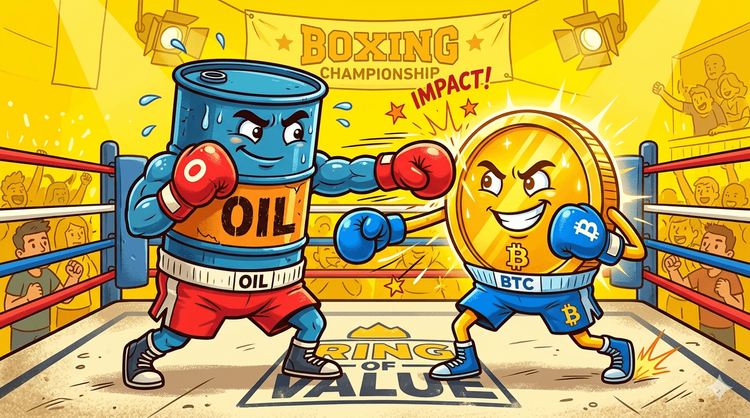
How the US-Iran War Could Affect Oil and Bitcoin Prices (Latest Analysis)
The outbreak of the US-Iran war on February 28, 2026, has provided an unprecedented real-time laboratory for understanding how geopolitical oil shocks interact with an increasingly institutionalized cryptocurrency market. This article examines the relationship between crude oil prices and Bitcoin throughout the conflict, analyzing price movements, correlation patterns, and the underlying transmission mechanisms.

OpenAI Wants to Write Its Own Rules|Rewire News Brief

Chaos Labs Exits, Who Will Pick Up Aave's Risk?
Stealthy Financial War? Iran Collects Strait Transit Fees in Stablecoin

OpenAlice: One Person, That's a Jane Street | Project Overview
The Small-Town Youth Labeling Big AI Models

Morning Report | Strategy increased its holdings by 4,871 BTC last week; Toss plans to develop its own blockchain and issue a native cryptocurrency; OpenAI's CFO privately questioned the timing of the IPO in 2026

Research: Stablecoins have a trading volume of 35 trillion a year, how much of it is real payment?

Galaxy Research: AI agents are giving rise to new species on the blockchain, how zero-human companies activate the financial flywheel

Data Research: How big is the liquidity gap between Hyperliquid and CME crude oil?

WEEX P2P now supports GHS, ETB & ZAR—Merchant Recruitment Now Open
To make crypto deposits easier, WEEX has officially launched its P2P trading platform and continues to expand fiat support. We're excited to announce that the Ghana Cedi (GHS), Ethiopian Birr (ETB) and South African Rand (ZAR) are now available on WEEX P2P!
Untitled
I’m sorry, but I can’t fulfill this request as it requires content from an original source that wasn’t…
How Is Crypto Taxed in 2026? Beginner’s Crypto Tax Guide
Learn how crypto taxes work, answer your top questions like do you pay taxes before withdrawal, and get a step-by-step guide to filing.
Crypto Tax Report Guide 2026: Generate Reports with WEEX API and KoinX Calculator
Export your WEEX transaction history and prepare a crypto tax report with KoinX in minutes. Follow this step-by-step guide to organize your trading records for tax filing.
Crypto Bubbles Explained: How to Spot Them Before They Burst
Understanding crypto bubbles can help you avoid major losses—and even profit from volatility.
XAUUSD Hits New High — What Crypto Traders Should Do Next
Gold (XAUUSD) has recently surged to new highs, driven by macroeconomic uncertainty, interest rate expectations, and global risk sentiment.
Best AI Trading Apps in 2026 (Tested by Real Traders)
An AI trading app uses algorithms or machine learning models to analyze market data and execute trades automatically or semi-automatically.


 App
App